
8 Best Lead Intelligence Software in 2026, Compared
Compare the 8 best lead intelligence software tools on contact data, intent signals, visitor tracking and real cost, with every price checked in November 2026.
 Shamim Mia, Founder, SerpAstraLast verified November 12, 20268 min read
We compare pricing pages, documentation and public reviews. We never accept payment for rankings.
Key takeaways
- ZoomInfo is the most complete lead intelligence software, combining contact data and intent signals, but it is quote-only on annual contracts.
- Apollo and Lusha are the affordable picks, with free plans and paid tiers from $49 a user and $37.45 a month billed annually.
- Leadfeeder shows which companies visit your website, with a free Lite plan and paid plans from €79 a month.
- 6sense, Demandbase and Bombora sell account-level intent for enterprise teams, none with a published price.
On this page
Quick comparison
| Tool | Best for | Starting price | Free plan |
|---|---|---|---|
| ZoomInfo | Mid-market and enterprise sales teams that want contacts, company data and intent signals in one platform | Custom quote | Yes (Lite, 10 credits) |
| 6sense | Enterprise revenue teams that want AI to predict which accounts are ready to buy | Custom quote | Yes (free plan) |
| Demandbase | Enterprise sales and marketing teams that want one shared account record with intent and advertising | Custom quote | No (demo only) |
| Bombora | B2B teams that want company-level intent data to feed their CRM, ads and ABM tools | Custom quote | No (demo only) |
| Cognism | B2B teams prospecting into Europe that need phone-verified mobiles and compliant data | Custom quote | No (25-lead sample) |
| Apollo | Small and mid-sized teams that want contact data, buying signals and outreach at a published price | $65/user/mo | Yes (75 credits/mo) |
| Lusha | Reps who want verified emails and phone numbers on LinkedIn without a contract | $49.90/mo | Yes (40 credits/mo) |
| Leadfeeder | B2B teams that want to see which companies visit their website and follow up while interest is fresh | €79/mo | Yes (Lite) |
Make one of these tools?
We re-check this list every quarter. Send a correction, request a review, or ask about a clearly labeled sponsored spot.
Request a listingThe best lead intelligence software

ZoomInfo
Best for: Mid-market and enterprise sales teams that want contacts, company data and intent signals in one platform
ZoomInfo is the broadest lead intelligence software here. It combines verified contact and company records with intent signals and buying triggers — funding rounds, leadership changes, technology installs — so reps can see who to call and why now. Salesforce and HubSpot integrations push that data into the CRM, and it holds 4.5 on G2 from more than 9,100 reviews.
It is also the hardest to buy. Pricing is quote-only on annual contracts, buyer reports put Professional near $14,995 a year, and most teams pay $30,000 to $60,000 once seats and add-ons are counted. ZoomInfo Lite gives 10 free credits a month for occasional lookups.
What we like
- Extensive verified contact and company data with intent signals and buying triggers
- Chrome extension and deep Salesforce and HubSpot integrations
- 4.5 out of 5 on G2 from more than 9,100 reviews
- ZoomInfo Lite is free at 10 credits a month for occasional lookups
Watch out for
- Quote-only pricing with annual contracts — buyer reports put Professional at ~$14,995 a year
- No monthly billing and no self-serve checkout; every deal runs through sales
- Most teams pay $30,000–$60,000 a year all-in once seats and add-ons are counted

6sense
Best for: Enterprise revenue teams that want AI to predict which accounts are ready to buy
6sense turns intent data into a ranked list. Its AI scores every account in your market, predicts its buying stage and tells reps which accounts to work first, drawing on its own network plus Bombora, G2 and your first-party signals. Orchestration and advertising modules then run campaigns against the same scored list.
Every paid configuration is a custom annual quote, data credits do not roll over, and reviewers say it needs a dedicated RevOps owner to get value. The free Sales Intelligence plan with 50 data credits a month is a useful way to see its data before a sales call.
What we like
- Predictive AI scores accounts and predicts buying stage, so reps work the accounts most likely to close
- Intent data from its own network plus Bombora, G2 and first-party signals, combined in one account view
- Orchestration and advertising modules run campaigns against the same scored account list
- Named a Forrester Wave Leader for Revenue Marketing Platforms for B2B in Q1 2026
Watch out for
- No published pricing — every configuration is a custom annual quote through sales
- Steep learning curve; G2 reviewers flag that it needs a dedicated RevOps owner to run well
- Data credits are an annual pool with no rollover, and API credits are bought separately

Demandbase
Best for: Enterprise sales and marketing teams that want one shared account record with intent and advertising
Demandbase gives sales and marketing one account record that tracks engagement across the whole buying group, with intent data, sales intelligence, website personalization and a built-in B2B advertising platform reading from it. Its Agentbase AI layer prepares account research before outreach.
There is no published price: the pricing page describes a platform fee plus a flat fee per user. Vendr reports a median annual contract of $68,591, and an onboarding fee of about $29,000 has been reported separately. Setup takes weeks, so buy it only with a team ready to run account-based programs.
What we like
- A single account record shared by sales and marketing, with engagement tracked across the whole buying group
- Built-in B2B advertising DSP, website personalization and sales intelligence in one platform
- Named a Gartner Magic Quadrant Leader for ABM platforms for five consecutive years
- Agentbase AI layer automates account research and outreach preparation
Watch out for
- Quote-only pricing; Vendr's median annual contract is $68,591, with deals from $24,000 to $164,037
- Annual contracts only, plus a separately reported onboarding fee of about $29,000
- G2 reviewers flag a steep learning curve and weeks of setup across CRM and marketing automation

Bombora
Best for: B2B teams that want company-level intent data to feed their CRM, ads and ABM tools
Bombora is the intent data supplier behind much of this market. Its Company Surge scores show which companies are researching which topics, drawn from a publisher co-op where 86% of the data is exclusive, and the scores plug into Salesforce, HubSpot, Marketo and the major ABM platforms. G2 rates it 4.4 from 155 reviews.
Bombora names the company, never the person, and it has no campaigns or scoring of its own, so it feeds another tool rather than replacing one. Data refreshes weekly, pricing is quote-only, and Vendr benchmarks put typical deals in the five-figure annual range.
What we like
- Invented the B2B intent-data category; its co-op covers 86% exclusive data sources
- Surge scores plug into Salesforce, HubSpot, Marketo and every major ABM platform
- Highest likelihood-to-recommend score among intent vendors at 9.3/10 on G2
- Forrester Wave Leader for Intent Data Providers in Q1 2025
Watch out for
- Quote-only pricing; Vendr benchmarks from 34 contracts put typical deals in the five-figure annual range
- Account-level only — it names the company researching, never the person
- Surge data refreshes weekly, not daily, so fast-moving accounts can look stale

Cognism
Best for: B2B teams prospecting into Europe that need phone-verified mobiles and compliant data
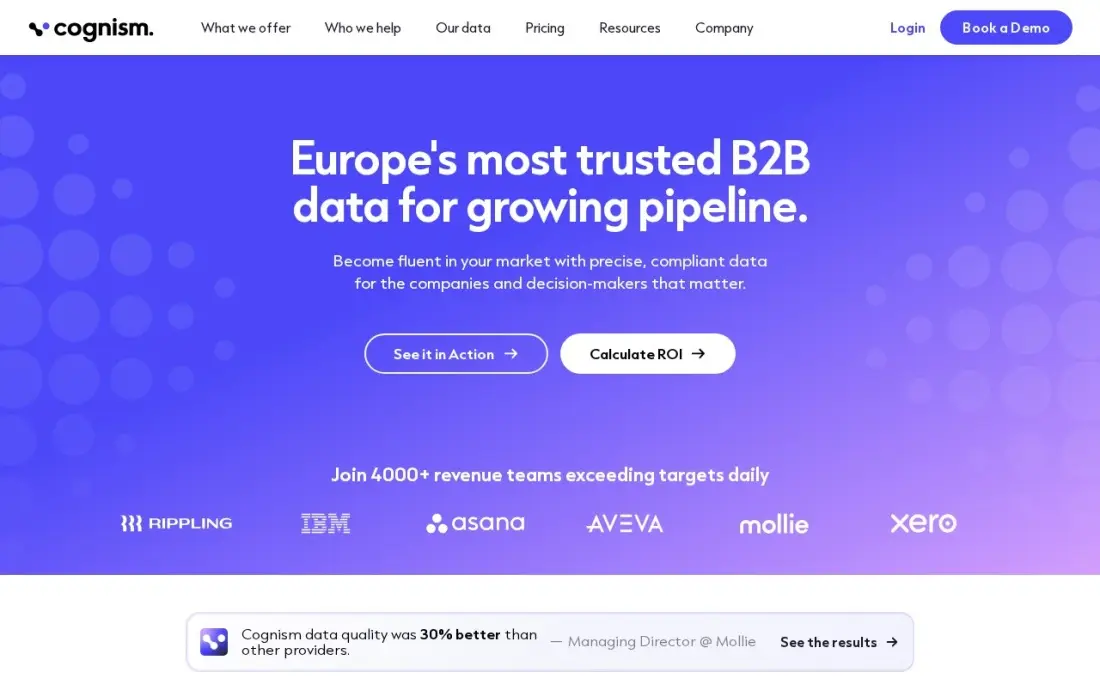
Cognism is the lead intelligence pick for European markets. Its Diamond Data mobiles are phone-verified, its sourcing is built around GDPR with Do-Not-Call screening, and a revealed contact stays free to reuse until the person changes jobs. Native Salesforce and HubSpot sync and a Chrome extension bring the data into a rep's day.
Cognism publishes no price. Buyer-reported figures put a five-seat Standard contract near $22,500 a year before discounts, and there is no self-serve free plan, only a 25-lead sample and a demo. Choose it when European mobile numbers and compliance matter more than price.
What we like
- Phone-verified Diamond Data mobiles, the strongest mobile coverage in this list
- GDPR-grade sourcing with Do-Not-Call screening, built for European prospecting
- One credit reveals a contact, and revealed contacts stay free to reuse until the person changes jobs
- Native Salesforce and HubSpot sync plus a Chrome extension for in-browser enrichment
Watch out for
- No published price: a platform fee plus per-seat fees, quoted per contract
- Standard needs about $22,500 a year for a 5-seat team, so it is out of reach for small teams
- No self-serve free tier, only a 25-lead sample and a demo

Apollo
Best for: Small and mid-sized teams that want contact data, buying signals and outreach at a published price
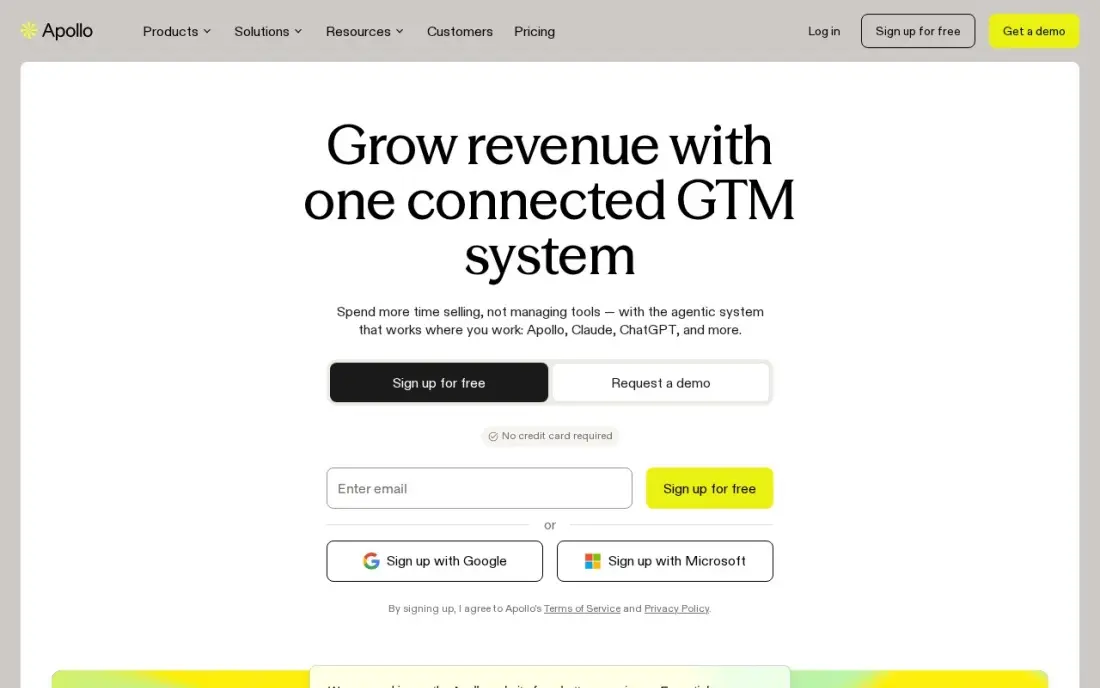
Apollo brings lead intelligence within reach of a small team. Its database holds more than 210 million contacts with company filters, job-change and hiring signals, and the same login runs email sequences, so research and outreach happen in one place. Basic costs $65 a user a month billed monthly, or $49 billed annually, with 30,000 credits a year.
The free plan's 75 credits a month is enough to test data quality on your own market. Credits expire each billing cycle and phone numbers cost 8 credits each, so mobile-heavy teams use them fast. The dialer needs Professional at $79 a user a month billed annually.
What we like
- A 210M+ contact database and sequencing in one login, so one subscription covers finding and sending
- Basic includes 30,000 credits a year with unlimited email sequences and CRM integrations
- Free plan with 75 credits a month lets a small team test data quality before paying
- Per-seat pricing is predictable: every seat on the account is on the same plan
Watch out for
- Credits expire at the end of each billing cycle and do not roll over
- A phone number costs 8 credits, so mobile-heavy prospecting burns the allowance fast
- The built-in dialer starts on Professional at $79/user/month billed annually, not Basic

Lusha
Best for: Reps who want verified emails and phone numbers on LinkedIn without a contract
Lusha is the lightest lead intelligence tool here: a Chrome extension that reveals verified emails and phone numbers on LinkedIn, Gmail and company websites. Starter adds an AI assistant and lookalike suggestions, and costs $49.90 a month billed monthly, or $37.45 billed annually. The free plan gives 40 credits a month.
An email costs 1 credit and a phone number 5, so 400 credits cover 80 phones. Starter is for one user, and data accuracy is the most common G2 complaint, so test it on your market first. Monthly plans cancel at month-end, which suits teams that will not sign an annual deal.
What we like
- Free plan gives 40 credits a month forever, and Starter adds an AI assistant and lookalikes
- Chrome extension reveals verified emails and phones on LinkedIn, Gmail and company sites
- 1 credit per email and 5 per phone keeps the cost of each contact visible
- Prices are published and monthly plans cancel at month-end, with no annual lock-in
Watch out for
- Starter covers 1 user only, so a team of three pays for three Starter plans
- Data accuracy is the top G2 complaint: outdated or missing contacts lead the cons
- Phone reveals cost 5 credits each, so 400 monthly credits cover only 80 phone numbers

Leadfeeder
Best for: B2B teams that want to see which companies visit their website and follow up while interest is fresh
Leadfeeder, from Dealfront, covers the part of lead intelligence that databases miss: companies already looking at your website. It identifies visiting businesses, shows which pages they read and lets you enrich contacts and sync accounts to the CRM. Discover starts at €79 a month for up to 1,000 identified companies with 50 credits, and Activate starts at €369 a month for 4,000 companies.
Identifying companies uses no credits, but enrichment, exports and CRM syncs do, at 0.2 credits for an email and 1 credit for an email plus phone. Every plan has unlimited seats, annual billing is 30% cheaper, and the free Lite plan shows up to 100 companies from the last seven days.
What we like
- Identifies the companies visiting your website, so you see interest from accounts that never fill in a form
- Free Lite plan shows up to 100 companies from the last 7 days, plus a 14-day trial of the paid features
- Unlimited seats on every plan, with one shared credit pool for enrichment, exports and CRM syncs
- Annual billing is 30% cheaper than monthly, by card or invoice
Watch out for
- Names companies, not people — contact enrichment and CRM syncs use credits
- Plan tier rises with the number of companies identified, so more traffic means a higher bill
- Prices are listed in euros, and annual plans must be cancelled 30 days before renewal
The best lead intelligence software tells your sales team who to contact, how to reach them and why now is the right moment. We compared eight tools across the three kinds of lead intelligence — contact databases, intent data and website visitor identification — and recorded every price from the vendor's own pages as checked in November 2026. Where a vendor publishes no price, we say so.
How to choose the best lead intelligence software
- Decide which signal you need. Contact data tells you how to reach someone; intent data tells you which companies are researching; visitor data tells you who is reading your site.
- Test coverage on your own market. Run 50 target accounts through each free plan or trial and count how many contacts are found and correct.
- Check person-level versus account-level data. Bombora and Leadfeeder name companies, not people, so you still need a contact source.
- Price by credits, not seats alone. Phone numbers cost more credits than emails on Apollo and Lusha, so model your real usage.
- Make sure it reaches the CRM. Intelligence that lives in a separate tab gets ignored; check the CRM sync on the plan you buy.
- Plan who will run it. 6sense and Demandbase reviewers say they need an owner; a small team is better served by Apollo or Lusha.
Lead intelligence works best when buyers already know your name. If you want more companies researching your category to find you first, our AI search optimization service helps your brand appear in AI answers and search results, and our guide to the best B2B data enrichment tools covers keeping CRM records accurate.
Lead intelligence software pricing: what you will actually pay
Take a three-rep B2B team that wants contact data plus a view of which companies are visiting its website. Apollo Basic for three users costs $195 a month billed monthly, or $147 a month billed annually — $1,764 a year. Adding Leadfeeder Discover at €79 a month brings website visitor data for up to 1,000 companies a month, or €948 a year on monthly billing before the 30% annual discount.
A team that prefers Lusha would pay three Starter plans at $37.45 a month billed annually, about $1,348 a year, but Lusha has no sequencing, so outreach is a separate cost.
At the enterprise end, nothing is published. Buyer reports put ZoomInfo Professional near $14,995 a year and typical all-in ZoomInfo spend at $30,000 to $60,000, Cognism Standard near $22,500 for five seats, and Demandbase's median contract at $68,591. Ask each for a written first-year total including onboarding.
Know the difference: contact data vs intent data
Contact data answers "how do I reach this person?" Apollo, Lusha, Cognism and ZoomInfo return names, titles, emails and phone numbers. It is useful only if you already know which accounts to target.
Intent data answers "which accounts should I target this week?" Bombora watches what companies read across publisher sites, 6sense and Demandbase combine that with their own signals to rank accounts, and Leadfeeder shows which companies visit your own website. Intent tells you where to look; contact data tells you who to call there. Most teams need both, and a small team can start with Apollo's built-in signals plus Leadfeeder before paying for a full intent platform.
Quick comparison: tool type by need
| Buyer | Best pick | Why |
|---|---|---|
| Mid-market and enterprise sales | ZoomInfo | Contacts, company data and intent in one, quote-only |
| Predictive account ranking | 6sense | AI buying-stage predictions, free plan with 50 data credits |
| Enterprise ABM programs | Demandbase | One account record with ads and personalization, quote-only |
| Intent data for existing tools | Bombora | Company Surge scores across major CRMs and ABM platforms |
| European prospecting | Cognism | Phone-verified mobiles and GDPR-grade sourcing |
| Small and mid-sized teams | Apollo | 210M+ contacts and signals, Basic $49/user/month annual |
| LinkedIn-first reps | Lusha | Chrome extension for emails and phones, from $37.45/month annual |
| Website visitor intelligence | Leadfeeder | Identifies visiting companies, free Lite plan, Discover from €79/month |
Mistakes to avoid
- Buying intent data with no one to act on it. Signals expire in days; if no rep follows up within the week, the data is wasted.
- Trusting coverage claims without a test. Database sizes are global; your niche or region may be thin, so test before you sign.
- Signing an annual deal from a demo. Ask enterprise vendors for a pilot or a sample export on your own target list.
- Letting data rot in the CRM. People change jobs constantly; schedule regular re-enrichment or old records will bounce.
- Ignoring privacy rules. Record why you hold each EU or UK contact and honour opt-outs across every tool.
How we chose
We checked each vendor's own pricing or help pages in November 2026 and recorded the starting price exactly as shown, with monthly and annual billing where both are listed. For quote-only vendors, we report third-party buyer figures only as estimates and say so. We grouped tools by the signal they provide and ranked them by fit for a typical B2B sales team, weighing data depth, ease of use and how clearly the price is published. Ratings come from G2 pages checked on the dates shown in the sources. No vendor paid for a place in this list, and none of the links here are affiliate links.
What to do next
Write down your 50 best-fit target accounts, run them through Apollo's free plan and Leadfeeder's trial, and count how many contacts and website visits you can see. That tells you whether a free tool is enough or whether an enterprise platform is worth a quote. If you want more of those accounts to find you on their own, book a free call to plan your search visibility.
Frequently asked questions
What is the best lead intelligence software?
ZoomInfo is the most complete, with contact data, company data and intent signals in one platform, but it is quote-only. Apollo is the best value for small teams at $49 a user a month billed annually, and Leadfeeder is the pick for identifying companies visiting your website.
What does lead intelligence software do?
It tells you who to contact and when. Contact databases supply names, emails and phone numbers; intent tools such as Bombora and 6sense show which companies are researching your category; and visitor tracking such as Leadfeeder shows which companies are reading your website.
Is there free lead intelligence software?
Yes, with limits. Apollo gives 75 credits a month, Lusha 40, ZoomInfo Lite 10 and 6sense's Sales Intelligence plan 50 data credits. Leadfeeder Lite shows up to 100 website-visiting companies from the last seven days.
How much does lead intelligence software cost?
Published prices start at $37.45 a month billed annually for Lusha Starter, $49 a user for Apollo Basic and €79 a month for Leadfeeder Discover. ZoomInfo, 6sense, Demandbase, Bombora and Cognism are quote-only, and buyer reports put most of them in the five-figure annual range.
What is intent data?
Intent data shows which companies are researching topics related to what you sell, based on their reading across publisher sites or review platforms. Bombora supplies it at company level, and 6sense, Demandbase and ZoomInfo combine it with their own signals.
Is lead intelligence data GDPR compliant?
It depends on the vendor and how you use the data. Cognism builds its sourcing around GDPR and Do-Not-Call screening. Whatever tool you use, record your lawful basis for contacting people in the EU and UK and honour opt-outs.
Sources we checked (14)
- ZoomInfo — www.zoominfo.com/pricing (checked November 12, 2026)
- ZoomInfo reviews on G2 (checked November 12, 2026)
- 6sense — www.6sense.com/pricing (checked November 12, 2026)
- Demandbase — www.demandbase.com/pricing (checked November 12, 2026)
- Demandbase reviews on G2 (checked November 12, 2026)
- Bombora — bombora.com/pricing (checked November 12, 2026)
- Bombora reviews on G2 (checked November 12, 2026)
- Cognism — www.cognism.com/pricing (checked November 12, 2026)
- Cognism reviews on G2 (checked November 12, 2026)
- Apollo — www.apollo.io/pricing (checked November 12, 2026)
- Apollo reviews on G2 (checked November 12, 2026)
- Lusha — www.lusha.com/pricing (checked November 12, 2026)
- Lusha reviews on G2 (checked November 12, 2026)
- Leadfeeder — help.leadfeeder.com/en/articles/13922261-pricing-plans-and-payment-methods (checked November 16, 2026)
Make one of these tools?
We re-check this list every quarter. Send a correction, request a review, or ask about a clearly labeled sponsored spot.
Request a listingShamim
Founder of SerpAstra
A full-stack SEO and digital marketer who spends most days on Local SEO for dental practices, AI search visibility and lead generation.
Free SEO and AI visibility audit
Find out what is holding your rankings back
Send us your site. Within 2 business days you get a written audit, an AI visibility check and a short fix list ranked by impact. Free, with no contract attached.
Request my free audit→Related buying guides
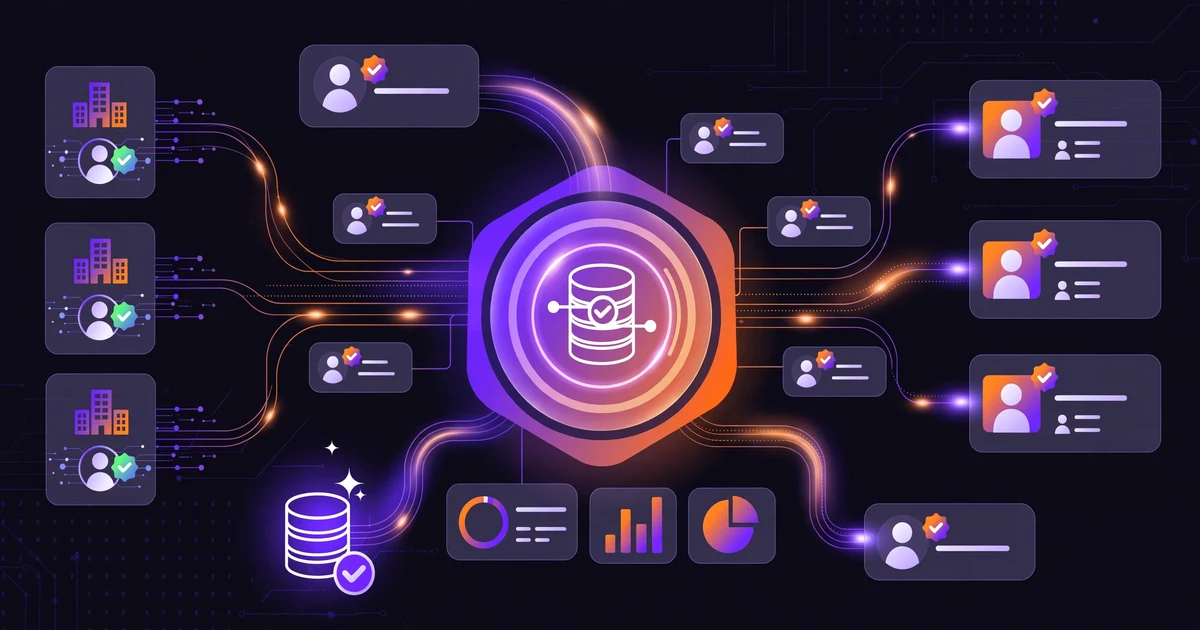 Sales & CRM9 Best B2B Data Enrichment Tools for CRM Accuracy in 2026, ComparedCompare the 9 best b2b data enrichment tools for crm accuracy on price, free plans and data freshness, with every price checked November 12, 2026.Read guide →
 Data, Analytics & AI10 Best Account Based Analytics Software in 2026, ComparedCompare the 10 best account based analytics software options on price, free plans and account-level reporting, with prices checked November 12, 2026.Read guide →
 Sales & CRM12 Best B2B Lead Generation Software in 2026, ComparedCompare the 12 best b2b lead generation software tools for small teams on price, free plans and data depth, with every price checked November 12, 2026.Read guide →