
Email marketing for local businesses (that customers actually open)
Most local businesses have an email list they never use. Here is how to turn it into repeat bookings and steady revenue, one useful email at a time.
 Shamim, founder of SerpAstraUpdated October 31, 20269 min read
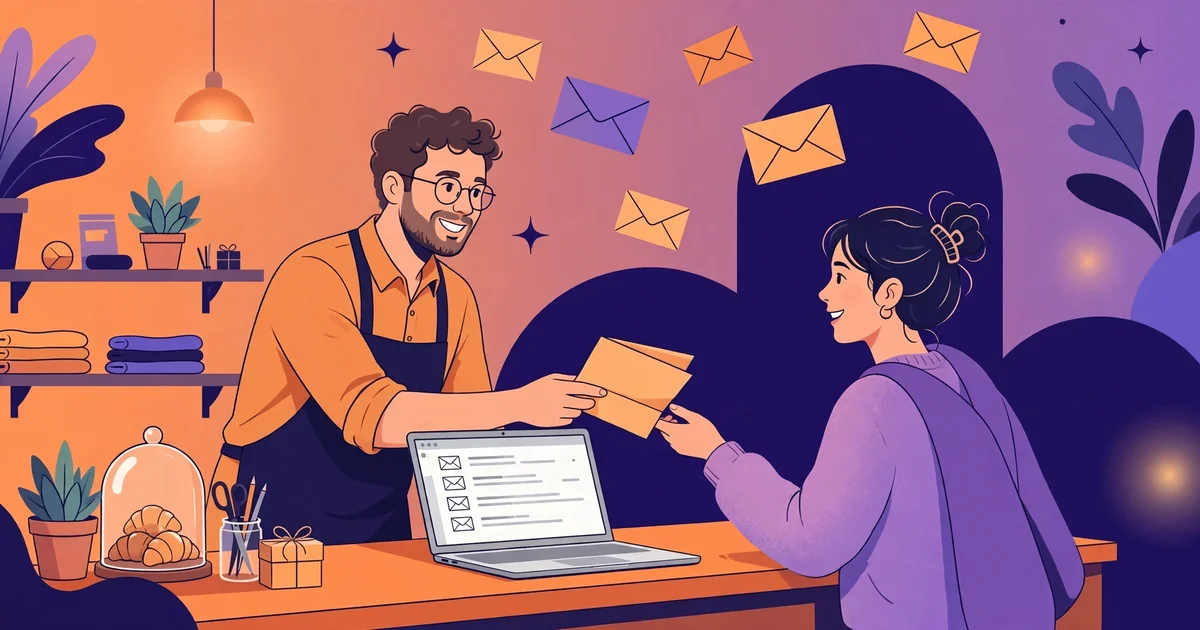
Key takeaways
- Email still beats social media for repeat business, because you own the list and nobody else controls who sees it.
- Build your list from real customers at the point of sale, never from a bought list or a scraped directory.
- Send one useful email a week: one offer, one helpful tip, one clear call to action.
- Segment by what people actually bought or asked about, so a past customer gets a reminder, not a generic blast.
- Track opens, clicks and bookings per email, and let the numbers decide what you send next.
On this page
Ask a local business owner what their email list looks like and you usually get the same answer: a spreadsheet somewhere, a few hundred addresses collected over the years, and a newsletter that went out twice in 2023. Meanwhile the same business posts on social media every day, hoping the algorithm shows it to the people who already bought from them once.
Why email still works for local businesses
Every other marketing channel rents you attention. A search ranking can move, a social post can flop, and an ad stops the moment you stop paying. An email list is an asset you own. Nobody can change the rules overnight and cut your reach in half, because the list lives in your account, not on someone else's platform. That is backwards from how most local businesses behave: they post on social media every day, hoping the algorithm shows it to people who already bought from them once, while the list they own sits unused.
That matters more for local businesses than for anyone else, because your best customers are people who have already walked through your door. A dentist does not need a million readers. They need the three hundred patients who came in last year to come back for their six-month check-up. A plumber does not need viral content. They need the homeowners in their service area to think of them first when a pipe bursts. Email reaches exactly those people, at almost no cost per send, and it lands in a place they actually check: the inbox they open every morning.
It also pairs well with everything else you already do. Good local SEO brings new people to your website, and your email list turns a share of them into repeat customers. Our guide to what local SEO is explains how search brings the first visit; email is what brings the second, third and tenth. A customer who just left a five-star review is the perfect person to invite onto your list, and our guide to ranking in the map pack covers the visibility side of the same job.
| Channel | Who controls the reach | Cost to reach a past customer | Best for |
|---|---|---|---|
| Email list | You do | Near zero per send | Repeat bookings and reminders |
| Social media | The platform does | Free to post, paid to reach | Discovery and community |
| Paid search ads | The auction does | Pay per click | Capturing urgent demand |
| Organic search | Google does | Time and effort | New customers finding you |

Build your list the right way
A good list is built one permission at a time. The fastest way to ruin email marketing is to start with a list you did not earn: bought addresses, scraped directories, or a spreadsheet of every email your business has ever seen. Those people never asked to hear from you, they will mark your emails as spam, and spam complaints damage your sender reputation so badly that even your real customers stop receiving your mail.
Start with the moments when a customer is already happy: after a completed job, a purchase, or a positive review. A simple line works: "Would you like a reminder when your next service is due, and the occasional offer? One email a week, no spam." Most people say yes, because the offer is specific and the frequency is honest.
Put the same ask on your website. A short signup form on your homepage and your contact page, offering something concrete in return, beats a pop-up that appears three seconds after someone arrives. A dental practice can offer a new-patient checklist. A home services business can offer a seasonal maintenance reminder. The incentive should cost you nothing and help the reader: that is the whole point. And if you want the website itself to convert better, the keyword research guide for local businesses will help you attract the right visitors in the first place.
What to send, and how often
Most local businesses send too little, not too much. One email a month is forgettable. One email a week is a rhythm people can get used to, as long as every email earns its place in the inbox. The rule is simple: if the email would not help the reader, do not send it.
Rotate three kinds of email. The useful tip: one short piece of advice tied to your service, such as "three things to check before the first freeze". The offer: a real discount or a limited appointment slot, with a clear deadline. The reminder: the service that is due, or the seasonal job that needs booking now. Tips build the trust that makes offers work.
Keep each email short. One idea, one call to action, and a length a busy person can read in under a minute. Long newsletters with six sections get skimmed and deleted. A single clear message gets read and acted on. And always send from a real person at your business, not a generic address. "Sarah at Bright Smile Dental" will outperform "[email protected]" every time, because people open mail from people, not from departments.
Write subject lines people open
The subject line is the only part of your email that competes for attention, and it has about three seconds to win. The subject lines that work for local businesses are specific, local, and honest. "Your furnace check is due before winter" beats "October newsletter". Write it last, keep it under fifty characters so it survives on a phone, and never use tricks: all-caps and fake urgency might lift opens once, then destroy trust permanently.
Segment so every email feels personal
The biggest improvement most local businesses can make to their email is also the simplest: stop sending the same email to everyone. A past customer and a person who only downloaded a checklist are not in the same situation, and an email that treats them identically will feel wrong to both of them.
Start with three simple groups. Customers who have bought from you get reminders, loyalty offers and requests for reviews. People who enquired but never booked get helpful content and a reason to come back, not a hard sell. New subscribers who found you online get a short welcome sequence that explains what you do and why you are different. Three groups is enough to double your relevance without turning email into a second job.
Then add one layer that fits your business. A dental practice can separate families with children from adult patients. A home services company can separate past customers by the service they bought, so a drain-cleaning customer gets a drain reminder, not a water-heater offer. Each split makes the next email feel like it was written for the reader, because it was. Our internal linking guide makes the same point about websites: the right message on the right page beats a generic message everywhere.

Automations that earn while you work
Automation is where email marketing starts paying for itself, because the emails go out whether or not you remember to send them. A welcome email goes to every new subscriber the moment they join. A birthday email goes out once a year without anyone thinking about it. A review request goes out two days after a completed job. A rebooking reminder goes out when a customer is due back. Each of these is set up once and then works quietly for years.
Start with four automations. The welcome email should arrive immediately, thank the subscriber, and tell them what to expect: one email a week, useful tips and the occasional offer. The review request should go out after the job is done, while the experience is fresh, with a direct link to your Google profile — and Google reviews help local SEO directly, so this automation does double duty. The rebooking reminder should go out before the customer is due, not after they have already gone elsewhere. And the win-back email should go to customers you have not heard from in six months, with a simple message: "We miss you. Here is 15% off your next visit."
None of this needs expensive software. Most small-business email platforms include automation in their basic plans, and the setup takes an afternoon. The mistake is to automate everything and then forget the list exists. Automation handles the routine; your weekly email is where the human voice lives.
"Your email list is the only marketing channel you truly own. Social media rents you attention. Search borrows it. Email is yours, and every past customer on it is a booking waiting to happen." — Shamim, founder of SerpAstra
Measure what matters
Email gives you honest numbers, and you should read them every month. The open rate tells you whether your subject lines and sender name are working. The click rate tells you whether the content inside earned a tap. The booking rate, which you track by asking new customers how they heard about you or by using a booking link unique to email, tells you whether any of it matters. Compare each email with your own last ten, not with industry averages: a list of your own patients will always open better than a cold list, and the trend is what matters.

The mistakes that kill your list
The first mistake is buying a list. It feels like a shortcut and it behaves like a trap: spam complaints, blacklisted sending domains, and a sender reputation that takes months to rebuild. The second mistake is emailing too rarely, then blasting the list with four emails in one week when business is slow. Consistency beats intensity. The third mistake is making every email a sale: a list that only hears from you when you want money learns to ignore you.
The last mistake is never asking for the booking. An email that informs but never invites is a magazine, not marketing. Every email should end with one clear next step: book online, call us, reply to this email. Make the step obvious and make it easy, and a share of readers will take it.
A simple first 90 days
Week one is setup: pick a platform, import your existing customer emails with their permission, add a signup form to your website, and write the welcome email. Week two is the first weekly email, sent to the whole list, short and useful. Weeks three to twelve are the rhythm: one email a week, alternating tips, offers and reminders, plus the four automations set up one at a time.
By day ninety you will have sent twelve emails, and you will know three things: which subject lines your customers open, which topics get clicks, and how many bookings email actually produces. That is enough to decide whether to invest more. Most local businesses find that email becomes their cheapest source of repeat bookings within a few months, precisely because it reaches people who already trust them.
If email is the piece your marketing is missing, it pairs naturally with a solid local search presence. A one-time SEO audit will show whether your website is turning searchers into subscribers in the first place, and you can book a free call to talk through where email fits in your plan. The list will not build itself, but it only needs an afternoon to start, and a few minutes a week to keep.
Not sure where to start?
Get a free audit - written findings in 2 business days, yours to keep.
Get my free audit→Sources we checked
- Federal Trade Commission, "CAN-SPAM Act: A Compliance Guide for Business" — the rules for commercial email, including opt-outs and postal addresses.
- Google Business Profile Help, "Tips to improve your local ranking on Google" — relevance, distance and prominence, and why reviews matter. support.google.com/business/answer/7091
- SerpAstra, "What is local SEO?" and "How to rank in the Google map pack" — our own guides on the search side of repeat business.
Shamim
Founder of SerpAstra
A full-stack SEO and digital marketer who spends most days on Local SEO for dental practices, AI search visibility and lead generation.
Frequently asked questions
How often should a local business send marketing emails?
Once a week is the right rhythm for most local businesses. It is frequent enough to stay remembered and rare enough to avoid fatigue. Send less often and people forget they subscribed; send daily and they unsubscribe. Whatever frequency you choose, keep it steady.
Is it legal to email my past customers?
In the United States, the CAN-SPAM Act requires a clear way to opt out, your business address in every email, and an honest subject line. Customers who gave you their address during a transaction can generally be emailed about related services, but they must always be able to unsubscribe easily. Using a reputable email platform handles most of the compliance automatically.
How do I get people to join my email list?
Ask at the moment they are happiest: after a completed job, a purchase, or a positive review. Offer something concrete in return, such as a service reminder or a first-access offer, and put a short signup form on your homepage and contact page. Never buy a list or add people who did not ask to hear from you.
What is a good open rate for a local business email?
There is no single good number, because it depends on how the list was built. A list of your own past customers will usually open far better than a cold list. Compare each email with your own previous ten, and watch the trend: rising opens mean your subject lines and relevance are improving.
Do I need expensive software for email marketing?
No. Most small-business email platforms include list management, templates and basic automation in their entry-level plans, and many offer a free tier for small lists. Start with the simplest plan that covers welcome emails and reminders, and upgrade only when your list outgrows it.
Should I send the same email to my whole list?
Not once you have more than a few dozen subscribers. At minimum, separate past customers from people who only enquired, and send new subscribers a welcome sequence. Even three simple groups make your emails noticeably more relevant, which lifts opens, clicks and bookings.
Free SEO and AI visibility audit
Find out what is holding your rankings back
Send us your site. Within 2 business days you get a written audit, an AI visibility check and a short fix list ranked by impact. Free, with no contract attached.
Request my free audit→Related guides
 Local SEODo Google reviews help SEO? Local rankings 2026Do Google reviews help SEO? Yes, in local search — about 20% of map pack weight. What actually matters, and how to earn reviews without breaking the rules.Read guide →
 Local SEOWhat is local SEO? A beginner's guide 2026What is local SEO? A clear beginner's guide: how the map pack works, the five pillars, what it costs, and the first steps any small business can take.Read guide →
 Local SEOHow to rank in the Google map packHow Google picks the three map pack results: relevance, distance and prominence explained, plus the practical steps that move a local business up the list.Read guide →