
8 Best Blog Platforms for Monetization in 2026, Compared
Compare the 8 best blog platforms for monetization on ads, paid subscriptions, revenue cuts and real cost, with every fee checked on the vendor's pricing page.
 Shamim Mia, Founder, SerpAstraLast verified November 2, 20268 min read
We compare pricing pages, documentation and public reviews. We never accept payment for rankings.

Key takeaways
- WordPress.org is the best blog platform to make money from ads and affiliate links, because you control every ad slot and can join any network, including Mediavine and Raptive.
- Ghost and beehiiv take 0% of paid subscription revenue; Substack and Patreon take 10% from new creators, a gap worth thousands of dollars a year at scale.
- Kit is the pick when the money comes from selling digital products to an email list, with a free plan up to 10,000 subscribers and a 3.5% plus 30-cent fee per sale.
- Medium and Blogger are free ways to start, but Medium pays through a formula you do not control and Blogger's only real income route is AdSense.
On this page
Quick comparison
| Tool | Best for | Starting price | Free plan |
|---|---|---|---|
| WordPress.org | Bloggers who earn from display ads, affiliate links and their own products | Free (software) | Yes (software free) |
| Ghost | Writers who want to sell paid memberships from their own site with no revenue cut | $18/mo | No (14-day trial) |
| beehiiv | Newsletter publishers who want subscriptions, an ad network and referrals in one tool | Free; Lite $59/mo | Yes (free plan) |
| Substack | Writers who want paid subscriptions with nothing to pay up front | Free; 10% of paid subs | Yes (free plan) |
| Kit | Bloggers who earn by selling courses, ebooks and digital products to their email list | $39/mo | Yes (free plan) |
| Patreon | Creators who earn from member tiers, exclusive posts and fan support | Free; 10% of earnings | Yes (free to start) |
| Medium | Writers who want to earn from reading time without building an audience first | Free; Member $5/mo | Yes (free plan) |
| Blogger | Hobby bloggers who want free AdSense income with no platform cost | Free | Yes (free) |
Make one of these tools?
We re-check this list every quarter. Send a correction, request a review, or ask about a clearly labeled sponsored spot.
Request a listingThe best blog platforms for monetization

WordPress.org
Best for: Bloggers who earn from display ads, affiliate links and their own products
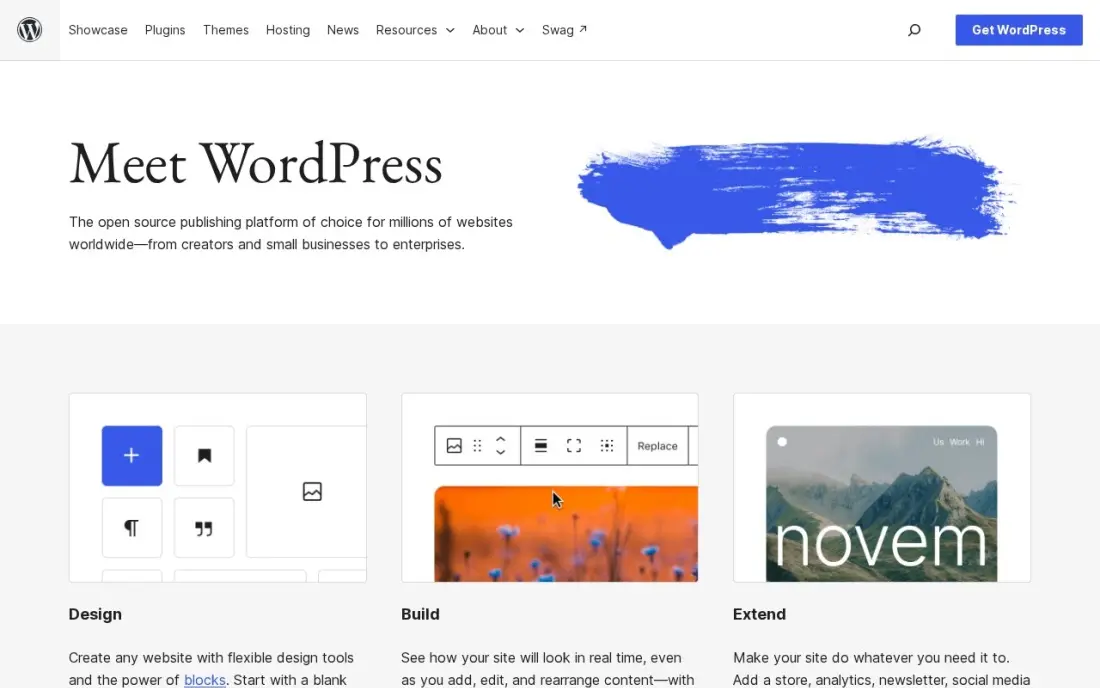
Self-hosted WordPress is the best blog platform to monetize in the widest number of ways. You control every page template, so ads, affiliate disclosures, comparison tables, email sign-ups and a shop can go exactly where they earn most, and you can join any ad network that accepts your traffic, from Google AdSense to managed networks such as Mediavine and Raptive.
The software is free; the costs are hosting, a theme and any premium plugins, and you own the backups, security and updates. That ownership is also the reason it earns most over time: no platform takes a cut of your revenue, and the site, content and email list stay yours if you change hosts.
What we like
- Full control of technical SEO: URLs, redirects, schema, sitemaps and robots rules are all yours to change
- Largest plugin ecosystem of any platform here, including free SEO plugins such as Rank Math and Yoast SEO
- No platform lock-in: move hosts, change themes and keep your content and data
Watch out for
- You arrange hosting, security, backups and updates yourself, or pay someone to do it
- Speed and security depend on your host and plugin choices, so a bad setup can hold rankings back

Ghost
Best for: Writers who want to sell paid memberships from their own site with no revenue cut
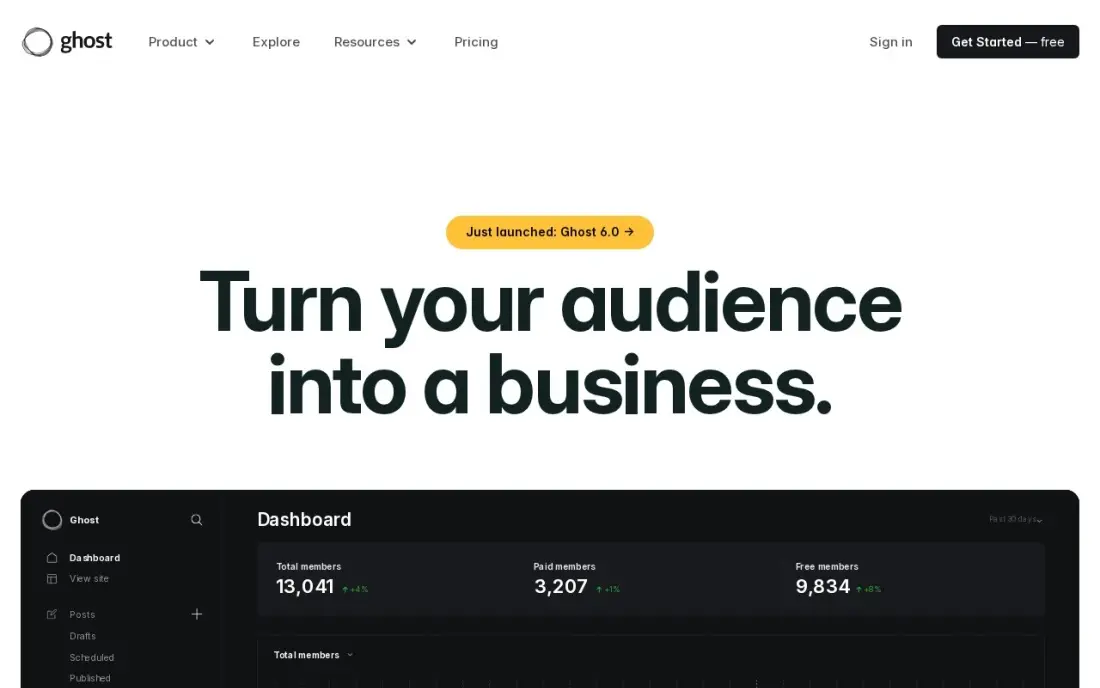
Ghost is built for paid publishing: free and paid member tiers, email newsletters and the website sit in one product, and Ghost takes 0% of subscription revenue on every plan, so readers' payments go to you minus Stripe's card fees. You own the member list and can export it at any time.
Read the plans carefully. Starter, at $18 a month or $15 billed annually for up to 1,000 members, cannot sell paid subscriptions; that needs Publisher, at $35 a month or $29 billed annually, and the price rises with member count. Even so, a writer earning a few thousand dollars a month keeps far more on Ghost than on a percentage platform.
What we like
- Takes 0% of subscription revenue on every plan
- Newsletters, memberships and the site in one product — no plugins needed
- A fast, clean editor built for publishing, not for page building
- Free to self-host if you run your own server
Watch out for
- Starter cannot sell paid subscriptions — that needs Publisher from $35/month billed monthly ($29/month billed annually)
- The price rises with member count, not just with features
- One staff user and official themes only on Starter

beehiiv
Best for: Newsletter publishers who want subscriptions, an ad network and referrals in one tool
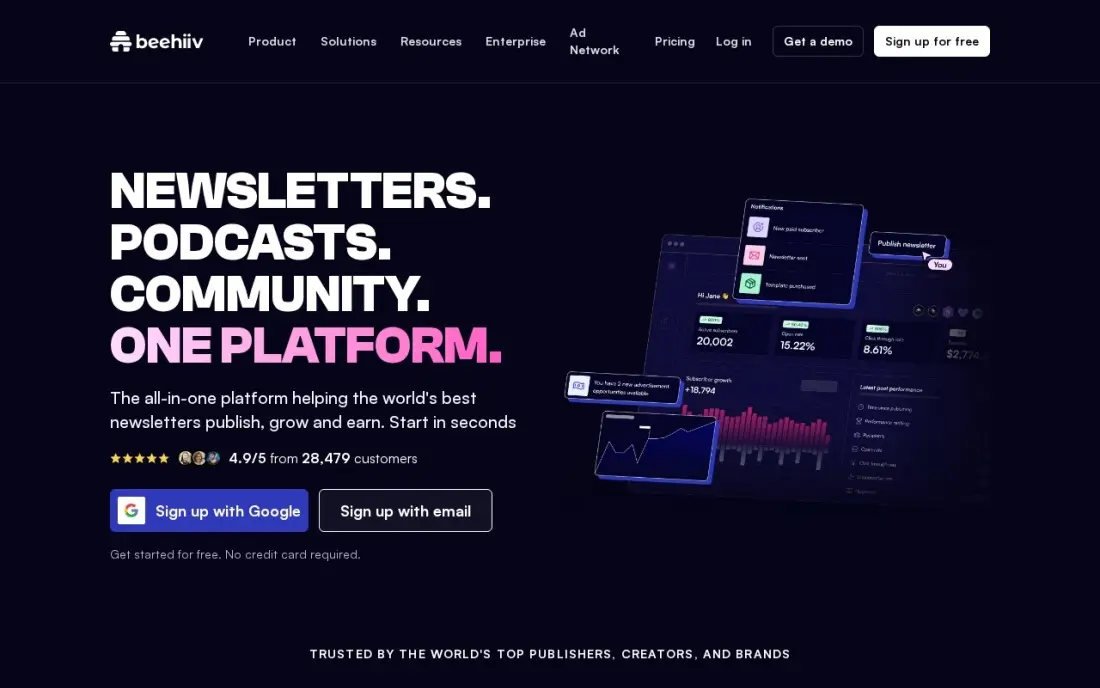
beehiiv gives a newsletter-led blog three ways to earn from the Lite plan up: paid subscriptions with a 0% beehiiv cut, a built-in ad network that places sponsors in your issues, and a referral program that grows the list. Every plan includes a website and unlimited sends, and the free plan covers up to 2,500 subscribers.
The catch is that the free plan blocks paid subscriptions and the ad network, so monetizing starts at Lite: $59 a month billed monthly or $49 billed annually, rising to $139 a month at 10,000 subscribers. Price the list you expect next year. It is the strongest choice when email, not the website, is where readers live.
What we like
- Free plan covers 2,500 subscribers with unlimited sends
- Lite takes 0% of paid subscription revenue
- An ad network and a referral program are built in from Lite
- Priced by subscribers, not by sends
Watch out for
- The paid price climbs with list size — $139/month at 10,000 subscribers on Lite
- The free plan blocks paid subscriptions and the ad network
- No print workflow — it is email-first, not a full newspaper CMS

Substack
Best for: Writers who want paid subscriptions with nothing to pay up front
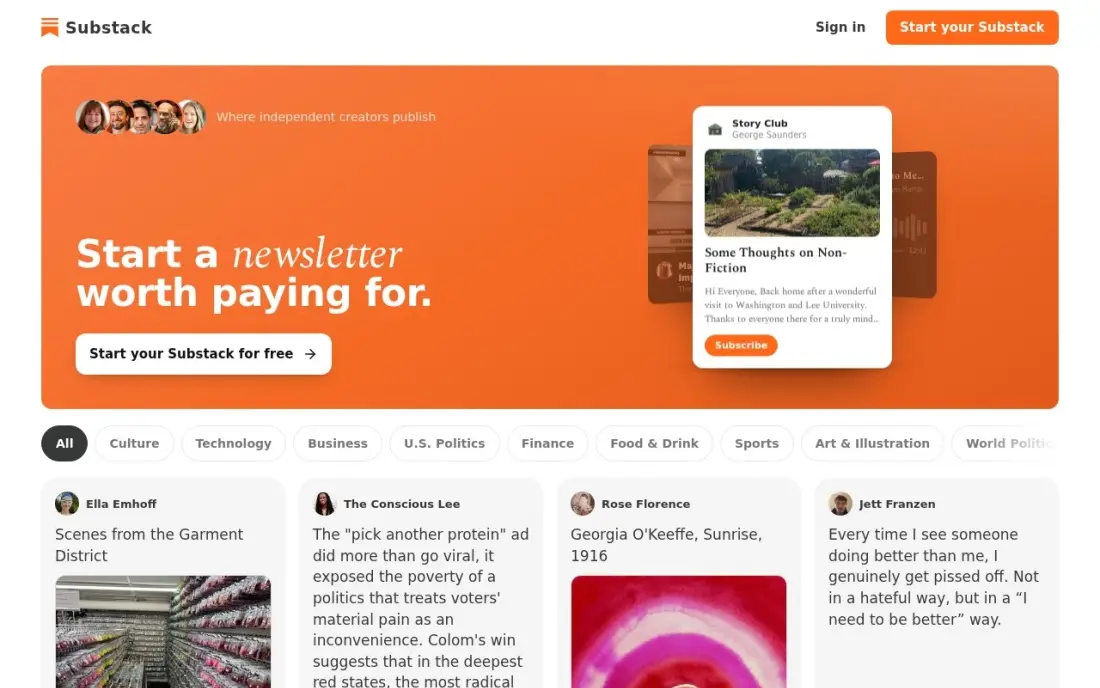
Substack is the easiest way to start charging readers: publishing is free at any list size, paid subscriptions are a switch rather than a project, and Substack's recommendation network sends new readers from other publications. A custom domain costs a one-time $50.
You pay in revenue instead of fees. Substack keeps 10% of paid subscription revenue plus Stripe fees, and no tier lowers the cut as you grow, so a writer earning $50,000 a year hands over $5,000. That is cheap at the start and expensive at scale, which is why many successful writers move to Ghost or beehiiv later.
What we like
- $0 to start, with no subscriber cap and no send limit
- Paid subscriptions are a switch, not a project
- Built-in recommendations bring new readers to the publication
- A custom domain is available for a one-time $50
Watch out for
- The 10% cut never falls — no tier lowers it as you grow
- Your publication lives inside Substack's branding and discovery rules
- It is a newsletter first — there is no real website builder

Kit
Best for: Bloggers who earn by selling courses, ebooks and digital products to their email list
Kit, formerly ConvertKit, monetizes the email list rather than the page. Kit Commerce sells digital products and paid newsletters straight from the platform, tags let you sell to the readers most likely to buy, and the free Newsletter plan covers up to 10,000 subscribers, the largest free tier here. It pairs well with a WordPress or Ghost blog that feeds the list.
Every sale carries a 3.5% plus 30-cent fee on all plans, and automated sales sequences need Creator, at $39 a month for 1,000 subscribers or $390 a year, rising to $89 a month at 5,000. Choose Kit when your income comes from products rather than ads.
What we like
- Tag-based subscribers beat lists for creators who sell to segments of one audience
- Kit Commerce sells digital products and paid newsletters with a 3.5% plus 30-cent fee per sale
- The free Newsletter plan covers up to 10,000 subscribers — the largest free tier here
- Free migration from other tools, with visual automations and unlimited sequences on Creator
Watch out for
- Creator starts at $39 a month for 1,000 subscribers — triple Mailchimp Essentials at the same size
- Every sale carries a 3.5% plus 30-cent fee on all plans, including the free one
- The price rises steeply: $89 a month at 5,000 subscribers

Patreon
Best for: Creators who earn from member tiers, exclusive posts and fan support
Patreon turns a blog's most loyal readers into monthly supporters, with tiers, member-only posts, video, livestreams, chat and a shop in one place. It is free to start, so a writer with a small audience risks nothing, and the email list can be exported along with Discord role access for members.
New creators pay a 10% platform fee plus 2.9% + $0.30 payment processing on every pledge; pages published before August 4, 2025 keep their lower legacy rates. Most fans stay inside Patreon, so use it alongside a blog you own, not instead of one.
What we like
- The default home for paid memberships: tiers, member-only posts, video, livestreams, chat and a shop in one place
- Free to start with no monthly fee, so a creator with no audience yet risks nothing
- Pages published before August 4, 2025 keep legacy rates of 5% (Lite), 8% (Pro) or 12% (Premium) while they stay published
- Exportable email list and Discord role granting keep the audience portable
Watch out for
- New creators pay a 10% platform fee, up from the 5% and 8% legacy rates
- Payment processing of 2.9% + $0.30 sits on top of the platform fee on every pledge
- Most of the audience stays on Patreon, so the creator does not fully own the relationship

Medium
Best for: Writers who want to earn from reading time without building an audience first
Medium is the only platform here that can pay a writer with no audience of their own. Through the Partner Program, earnings come from the time paying members spend reading your stories, and Medium's existing readership means a good post can find readers on its first day. Publishing is free, with no hosting to run.
Joining the Partner Program needs the Member plan, at $5 a month or $50 a year, and the payout formula is Medium's to change. There is no subscriber list to export, so the audience never fully becomes yours. Treat Medium as a way to test topics and earn a little while you build a blog you own.
What we like
- Free to publish with a clean editor and a built-in audience
- Publications group writers under one masthead
- The Partner Program pays from member reading time
- No hosting, security or maintenance work at all
Watch out for
- You do not own the audience — there is no subscriber list to export
- A custom domain and the Partner Program need the $5/month membership
- Earnings depend on Medium's changing payout formula

Blogger
Best for: Hobby bloggers who want free AdSense income with no platform cost
Blogger is the cheapest way to earn from a blog: the platform is free, a custom domain costs only the registrar fee, there are no platform ads on your pages and AdSense connects through the same Google account, so you keep your own ad earnings. Setup takes minutes and there is nothing to maintain.
Its earning options stop there. There are no membership, newsletter or shop features, no plugin library for affiliate tools and only basic SEO settings, and the themes feel dated. Google can change or close the service, so keep backups. It suits a hobby site earning pocket money, not a blog you plan to turn into a business.
What we like
- Completely free, including hosting, a blogspot.com address, HTTPS and themes, with no stated storage limit
- The only free platform here that lets you connect your own domain at no charge and keep your own AdSense money
- Setup takes minutes with a Google account, and there is nothing to update or patch
- No platform ads on your pages
Watch out for
- Themes and design tools feel dated, with no plugin ecosystem and no major update in years
- You build on rented ground: Google can change or close the service, as it has with other products
- Basic SEO controls only, with no built-in newsletter or membership features
The best blog platform for monetization is the one whose earning model matches yours: ads and affiliate links, paid subscriptions, sponsorships, digital products or reader support. We compared eight blog platforms to monetize on how they let you earn, what share they keep and what they cost to run, and every price and fee below comes from the vendor's own pricing page, checked in November 2026.
How to choose the best blog platform for monetization
- Start with your main income stream. Ads need page control, subscriptions need a member system, products need checkout and email. Pick the platform built for the stream you will rely on.
- Compare flat fees with revenue cuts. A 10% cut costs nothing at $0 and thousands at scale, while a flat monthly fee works the other way. Model both at the revenue you expect in two years.
- Own the audience. An exportable email list is the most valuable asset a blog has; avoid platforms that keep readers to themselves.
- Check ad-network eligibility. Managed networks pay more than AdSense but need traffic thresholds and control over ad placement.
- Look at payout terms. Payment processing, payout thresholds and schedules all decide when money reaches you.
- Keep room to add streams. Most successful blogs earn from two or three sources, so pick a platform that does not block the second one.
Every income stream depends on readers finding the blog. Our comparison of ad networks for publishers covers the revenue shares, and our monthly SEO service helps blogs grow the search traffic those networks pay for.
Blog monetization pricing: what you will actually pay
Take a writer earning $2,000 a month from paid subscriptions. On Substack, the 10% cut is $200 a month, or $2,400 a year, plus Stripe fees. On Patreon, a new creator's 10% platform fee is the same $200 a month, plus 2.9% + $0.30 per pledge in processing. On Ghost Publisher, the cost is $35 a month billed monthly, or $348 a year at the $29 annual rate, with 0% taken from subscriptions. beehiiv Lite costs $59 a month billed monthly or $49 billed annually at the entry tier, also with a 0% cut.
For product sales, Kit's 3.5% plus 30-cent fee on a $50 ebook is $2.05 per sale, on top of Creator at $39 a month. For ad-supported blogs, the platform cost is small: WordPress.org needs only hosting, and Blogger is free. The revenue share sits with the ad network instead, where AdSense publishers keep about 68% of content revenue when ads are bought through Google Ads, and Mediavine and Raptive publishers keep 75%.
Know the difference: ad-funded vs reader-funded blogs
An ad-funded blog earns from traffic. Income rises with pageviews, so the work is search optimization, publishing volume and page layout, and the platform must give you full control of templates and ad placement. WordPress.org and Blogger fit this model, and the money comes from networks and affiliate programs rather than from readers directly.
A reader-funded blog earns from a smaller audience that pays. Income rises with loyalty, so the work is a consistent newsletter, member perks and conversion from free to paid. Ghost, beehiiv, Substack and Patreon fit this model. Many blogs do both, using search traffic to grow an email list that later converts to paid.
Quick comparison: tool type by need
| Buyer | Best pick | Why |
|---|---|---|
| Ads and affiliate income | WordPress.org | Full control of ad slots, any network, no revenue cut |
| Paid memberships on your own site | Ghost | 0% of subscription revenue, Publisher from $29/month billed annually |
| Newsletter sponsorships | beehiiv | Ad network, referrals and 0% cut from Lite |
| Paid newsletter, no upfront cost | Substack | Free to start, 10% of paid revenue |
| Digital product sellers | Kit | Free up to 10,000 subscribers, 3.5% + 30c per sale |
| Fan memberships | Patreon | Tiers and perks, 10% fee for new creators |
| Writers without an audience | Medium | Partner Program pays from member reading time |
| Hobby AdSense blogs | Blogger | Completely free, keep your AdSense earnings |
Mistakes to avoid
- Monetizing before you have readers. Ad networks and paywalls need an audience; spend the first months on content and list growth.
- Ignoring the revenue cut at scale. A percentage fee that felt free at launch can cost more than a flat plan within a year.
- Covering pages in ads. Heavy ad layouts slow pages and push readers away, which cuts the traffic the ads depend on.
- Skipping disclosures. Affiliate links and sponsored posts need clear disclosure; hiding them risks reader trust and platform or network rules.
- Keeping the list on someone else's platform. If you cannot export your subscribers, the business belongs to the platform.
How we chose
We checked each vendor's pricing page in November 2026 and recorded starting prices and revenue shares exactly as shown, including annual-billing rates where listed. We compared the eight platforms on monetization methods, platform cuts, payout terms, audience ownership and running cost. Ratings come from G2 pages checked on the dates shown in the sources; platforms without a rating we verified show none. No vendor paid for a place in this list, and none of the links here are affiliate links.
What to do next
Write down how you expect the blog to earn in year two, then price that revenue on your two shortlisted platforms, flat fee against revenue cut. Whichever wins, start collecting email addresses from the first post. Book a free content growth review.
Frequently asked questions
What is the best blog platform for monetization?
WordPress.org is the best blog platform for monetization through ads and affiliate links, since you control every ad slot and keep all the revenue. For paid subscriptions, Ghost and beehiiv take 0% of revenue, against 10% on Substack.
Which blogging platform is best to make money?
It depends on how you plan to earn. Ads and affiliate links favour WordPress.org; paid memberships favour Ghost; newsletter sponsorships favour beehiiv; digital products favour Kit; and Medium pays from member reading time without needing your own audience.
Which blog platforms take a cut of my revenue?
Substack keeps 10% of paid subscription revenue plus Stripe fees, Patreon charges new creators a 10% platform fee plus processing, and Kit charges 3.5% plus 30 cents per sale. Ghost and beehiiv take 0% of subscription revenue.
Can you make money on a free blog platform?
Yes. Blogger lets you run AdSense on a free blog with your own domain, Substack and Patreon are free to start and take a percentage of earnings, and Medium pays Partner Program writers, though joining needs the $5-a-month Member plan.
How much traffic do I need to earn from ads?
Google AdSense has no traffic minimum. Mediavine's Journey program opens at 1,000 premium sessions a month and its main program needs $5,000 in annual ad revenue, while Raptive accepts sites from 25,000 monthly pageviews.
Is Ghost or Substack better for making money?
At small scale, Substack costs nothing up front. Once subscription revenue passes a few hundred dollars a month, Ghost usually costs less, because Publisher is $35 a month or $29 billed annually against Substack's 10% of revenue.
Sources we checked (12)
- WordPress.org — wordpress.org (checked November 2, 2026)
- WordPress.org reviews on G2 (checked November 2, 2026)
- Ghost — ghost.org/pricing (checked November 12, 2026)
- Ghost reviews on G2 (checked November 12, 2026)
- beehiiv — www.beehiiv.com/pricing (checked November 12, 2026)
- Substack — substack.com/pricing (checked November 12, 2026)
- Kit — kit.com/pricing (checked November 6, 2026)
- Kit reviews on G2 (checked November 6, 2026)
- Patreon — www.patreon.com/pricing (checked November 12, 2026)
- Patreon reviews on G2 (checked November 12, 2026)
- Medium — medium.com/plans (checked November 12, 2026)
- Blogger — www.blogger.com (checked November 5, 2026)
Make one of these tools?
We re-check this list every quarter. Send a correction, request a review, or ask about a clearly labeled sponsored spot.
Request a listingShamim
Founder of SerpAstra
A full-stack SEO and digital marketer who spends most days on Local SEO for dental practices, AI search visibility and lead generation.
Free SEO and AI visibility audit
Find out what is holding your rankings back
Send us your site. Within 2 business days you get a written audit, an AI visibility check and a short fix list ranked by impact. Free, with no contract attached.
Request my free audit→Related buying guides
 MarketingBest Ad Networks Software for 2026: 7 Options Compared by Use Case7 best ad networks software options compared by revenue share, traffic minimum and payout speed, with every figure checked November 4, 2026.Read guide →
 Website Builders & Hosting10 Best Website Platforms for Affiliate Marketing in 2026, ComparedCompare the 10 best website platform for affiliate marketing options on price, blogging, SEO and stores, with every price checked November 5, 2026.Read guide →
 Marketing7 Best Platforms for Content Creators in 2026 (Pros, Cons and Pricing)Compare the 7 best platforms for content creators on fees, free plans and features, with every price checked November 12, 2026, against the vendor's own page.Read guide →