
10 Best Investing Apps in 2026, Compared
Compare the 10 best investing apps on commissions, account minimums, monthly fees and robo-advisor costs, with every fee checked on official pages in Nov 2026.
 Shamim Mia, Founder, SerpAstraLast verified November 5, 20269 min read
We compare pricing pages, documentation and public reviews. We never accept payment for rankings.
Key takeaways
- Fidelity and Charles Schwab charge $0 commissions on online US stock, ETF and options trades, with a $0.65 per-contract options fee.
- Robinhood, Public, SoFi Invest and Cash App Investing are free to use; their paid tiers ($5 to $20 a month) are optional extras.
- Wealthfront is the hands-off pick at a 0.25% annual advisory fee with a $500 minimum for automated investing.
- Acorns ($4 a month), Stash ($12 a month) and M1 Finance ($3 a month under $10,000) charge flat fees that weigh heavily on small balances.
On this page
Quick comparison
| Tool | Best for | Starting price | Free plan |
|---|---|---|---|
| Fidelity | Long-term investors who want one full-service broker for stocks, ETFs, funds and retirement | $0 commissions | Yes, $0 to open |
| Charles Schwab | Investors who want a large, established broker with $0 online trades and phone support | $0 commissions | Yes, $0 trades |
| Robinhood | Beginners who want free trading with an optional upgrade for IRA matches and cash yield | Free; Gold $5/mo | Yes (free) |
| Public | Curious investors who want stocks, options, bonds, Treasuries and crypto in one app | Free; Reserve $20/mo | Yes (free) |
| SoFi Invest | Beginners who want self-directed trading and automated portfolios in one free app | Free; Plus $10/mo | Yes (free) |
| Wealthfront | Hands-off investors who want an automated, diversified portfolio for a low annual fee | 0.25%/yr | Stock account free |
| M1 Finance | Patient investors who think in target allocations and want every deposit invested | $3/mo under $10K | No ($3/mo under $10k) |
| Cash App Investing | People who already use Cash App and want simple stock investing next to payments | Free | Yes (free) |
| Acorns | First-time investors who want spare change invested automatically | $4/mo | No |
| Stash | Investors who want a guided plan, coaching and stock rewards for one flat fee | $12/mo; $108/yr | No |
Make one of these tools?
We re-check this list every quarter. Send a correction, request a review, or ask about a clearly labeled sponsored spot.
Request a listingThe best investing apps

Fidelity
Best for: Long-term investors who want one full-service broker for stocks, ETFs, funds and retirement
Fidelity is the broker to grow into rather than out of. Online US stock, ETF and options trades cost $0 in commissions, there are no minimums to open an account, and Fidelity's own mutual funds trade at no cost. That covers a first taxable account, an IRA and, later, a full retirement portfolio without switching apps.
Read the small print on funds and options. Options carry a $0.65 per-contract fee, non-Fidelity no-transaction-fee funds cost $49.95 to redeem if held less than 60 days, and transaction-fee funds cost $49.95 per purchase. For a buy-and-hold investor using ETFs and Fidelity funds, those charges rarely apply.
What we like
- $0 commissions on online US stock, ETF and options trades
- No minimums to open an account
- Fidelity mutual funds trade at $0, and no-transaction-fee funds cost $0 to buy
Watch out for
- Options carry a $0.65 per-contract fee
- Transaction-fee funds from other firms cost $49.95 per purchase
- The range of accounts and tools takes longer to learn than a beginner app

Charles Schwab
Best for: Investors who want a large, established broker with $0 online trades and phone support
Charles Schwab gives you a long-established, full-service broker with the pricing of a free app. Online stock, ETF and options trades carry $0 commissions, and if you would rather place an order with a person, broker-assisted trades cost $25. That combination suits investors who want a self-directed app most days and a human on the phone occasionally.
The $0 standard commission does not cover everything: options carry a $0.65 per-contract fee, and large block trades, restricted stock and transaction-fee mutual funds fall outside it. For investors who buy ETFs and stocks online, those exceptions rarely come up, and Schwab is a sound place to hold a lifetime of savings.
What we like
- $0 commissions on online stock, ETF and options trades
- Broker-assisted trades are available for $25 when you want to place an order by phone
- One broker for stocks, ETFs, options and mutual funds
Watch out for
- Options carry the standard $0.65 per-contract fee
- Transaction-fee mutual funds are excluded from the $0 commission

Robinhood
Best for: Beginners who want free trading with an optional upgrade for IRA matches and cash yield
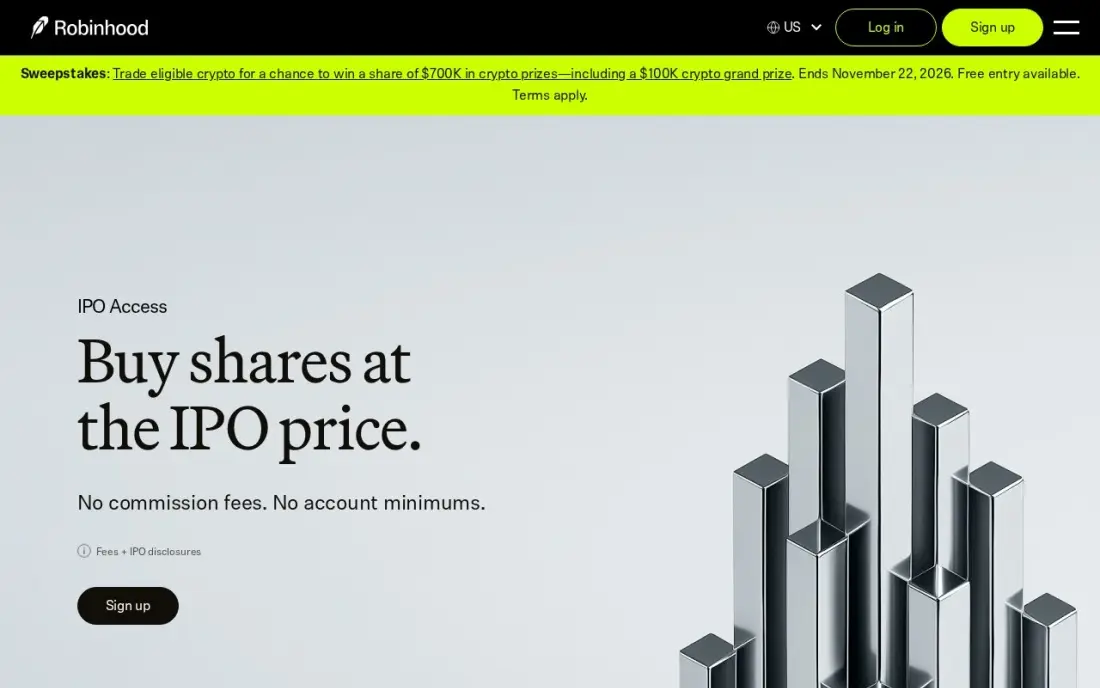
Robinhood's free tier covers stocks, ETFs, options, crypto and retirement accounts, with fractional shares and recurring investments that automate a weekly or monthly buy. The app is the simplest here for placing a first trade.
Gold costs $5 a month or $50 a year and raises the IRA match from 1% to 3%, plus a higher yield on eligible cash, which can pay for itself on a funded IRA. Support is in-app only, past outages have frustrated traders at busy moments, and there is no managed portfolio for hands-off investors.
What we like
- Commission-free stocks, ETFs and options on the free tier, with fractional shares
- Gold at $5/month adds a 3% IRA match (vs 1% free) and 3.60% APY on eligible cash
- Recurring investments automate a weekly or monthly buy without thinking about it
- One of the widest free offerings: stocks, ETFs, options, crypto and retirement accounts
Watch out for
- No spare-change Round-Ups and no managed portfolio option on the free tier
- Gold's margin and extended-hours perks only matter once you trade actively
- Customer support is in-app only, and past outages have frustrated traders at busy moments

Public
Best for: Curious investors who want stocks, options, bonds, Treasuries and crypto in one app
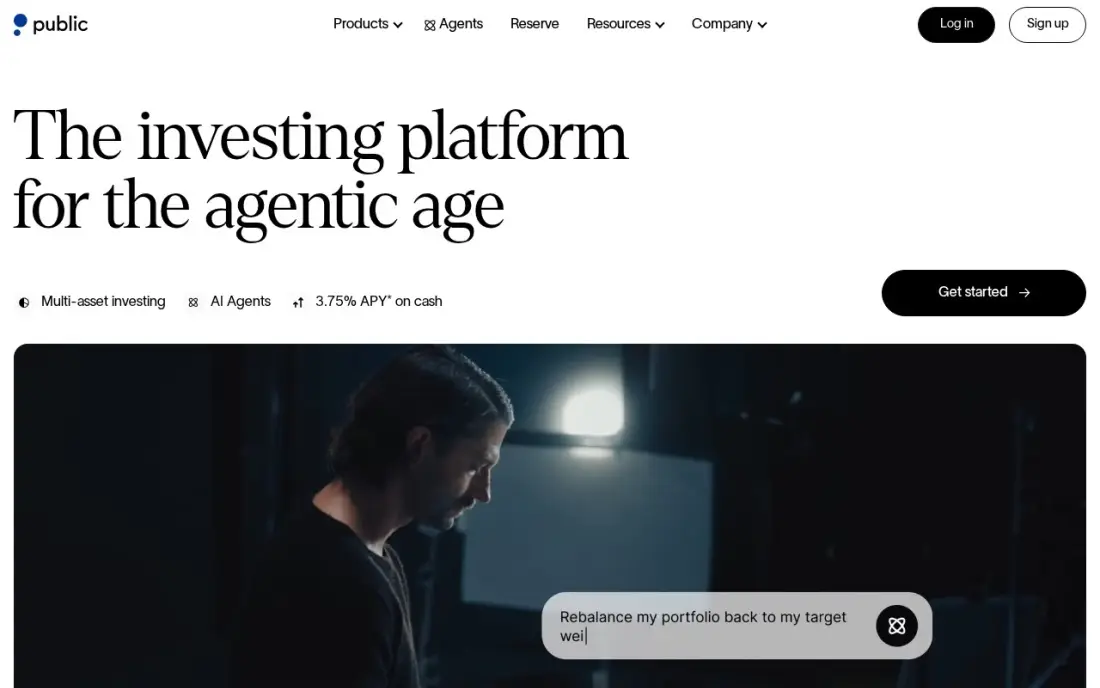
Public is the broadest free app here for self-directed investors. Stocks and ETFs trade commission-free in regular and extended hours, and the same app holds options, bonds, Treasuries and crypto. AI Agents, earnings summaries and research help are built in, Investment Plans automate recurring buys and direct indexing starts at $1,000.
There is no managed portfolio for hands-off beginners, and the most interesting extras, such as options rebates and IRA match funding, sit behind Public Reserve at $20 a month or $200 a year. The social feed and AI tools can also nudge you toward trading more often than a long-term plan needs.
What we like
- Commission-free stocks and ETFs in regular and extended hours, plus options, bonds and crypto
- AI Agents, earnings summaries and research assistance are built into the app
- High-Yield Cash Account pays 3.75% APY and margin starts at a 5.15% base rate
- Investment Plans automate recurring buys, and direct indexing starts at $1,000
Watch out for
- No spare-change Round-Ups and no managed portfolio for hands-off beginners
- The interesting extras — options rebates, IRA match funding — sit behind Reserve at $20/month
- Social feed and AI tools can nudge toward trading more often than a long-term plan needs

SoFi Invest
Best for: Beginners who want self-directed trading and automated portfolios in one free app
SoFi Invest puts two styles of investing in one free app: Active Investing for picking stocks and ETFs commission-free with fractional shares from $5, and Automated Investing for hands-off portfolios. There are no account fees on the investing account, and SoFi's banking, loans and credit products sit alongside it.
Automated portfolios are ETF-only, and the useful extras, including unlimited planner appointments and a 1% recurring-deposit match, sit behind SoFi Plus at $10 a month. There are no spare-change Round-Ups, so set up recurring deposits yourself. For a beginner who may later want a managed portfolio, starting here avoids moving accounts.
What we like
- Commission-free stock and ETF trading with fractional shares, starting from $5
- Active Investing for stock pickers and Automated Investing for hands-off portfolios in one app
- No account fees on the investing account itself, and banking, loans and credit live alongside it
- SoFi Plus at $10/month adds unlimited planner appointments and a 1% recurring-deposit match
Watch out for
- No spare-change Round-Ups; recurring deposits must be set up deliberately
- Automated Investing portfolios are ETF-only, with no individual stock choices inside them
- The useful extras — planner access, 1% invest match — sit behind SoFi Plus at $10/month

Wealthfront
Best for: Hands-off investors who want an automated, diversified portfolio for a low annual fee
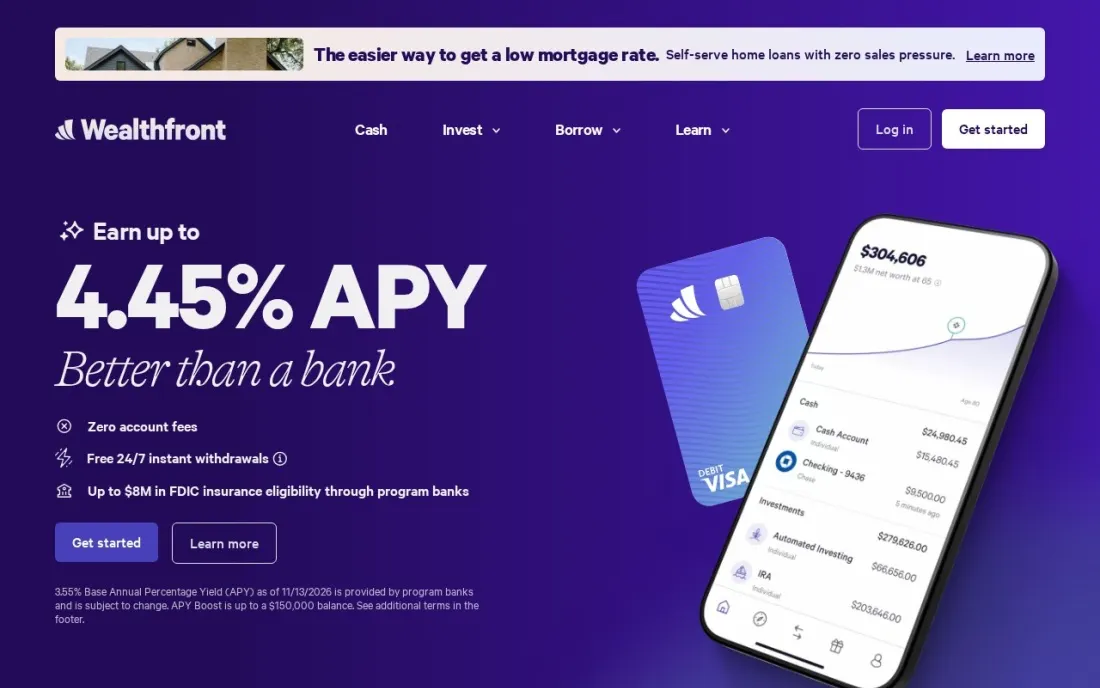
Wealthfront is the robo-advisor pick for investors who do not want to choose stocks at all. It builds and manages a diversified portfolio for a 0.25% annual advisory fee, or $25 a year on every $10,000. Automated investing needs a $500 minimum, and accounts cover individual, joint and trust taxable accounts, IRAs, custodial accounts and 529 college plans.
A separate stock investing account starts at $1 with no management fee and no commissions, though you still pay fund expense ratios. Individual stock investing is limited to individual taxable accounts. These terms come from an independent review rather than Wealthfront's own pricing page, so confirm them at sign-up.
What we like
- Automated investing at a 0.25% annual advisory fee
- Stock investing account has no management fee and no trading commissions, with a $1 minimum
- Taxable, IRA, custodial and 529 accounts in one app
Watch out for
- Automated investing needs a $500 minimum
- Individual stock investing is available only in individual taxable accounts

M1 Finance
Best for: Patient investors who think in target allocations and want every deposit invested

M1 Finance is built around Pies: you set a target allocation once, and every deposit is invested to match it and rebalanced with one tap. Fractional shares from $1 per slice mean nothing sits uninvested, and self-directed brokerage accounts carry zero commissions and zero management fees.
A $3 monthly platform fee applies below $10,000 in assets, or $36 a year on a small account, unless you have an active M1 personal loan. Brokerage accounts need $100 to start and IRAs $500, and smaller accounts trade in one scheduled window a day, so you cannot buy instantly at a price you pick.
What we like
- Pies let you set a target allocation once, then auto-invest and rebalance with one tap
- Zero commissions and zero management fees on self-directed brokerage accounts
- Fractional shares from $1 per slice, so every deposit is fully invested
- High-Yield Cash Account for uninvested cash, plus margin borrowing from $2,000 invested
Watch out for
- A $3 monthly platform fee applies below $10,000 in assets — $36 a year on a small account
- Brokerage accounts need a $100 minimum to start, and IRAs need $500
- One scheduled trade window a day for smaller accounts, so no instant buying at a price you pick

Cash App Investing
Best for: People who already use Cash App and want simple stock investing next to payments
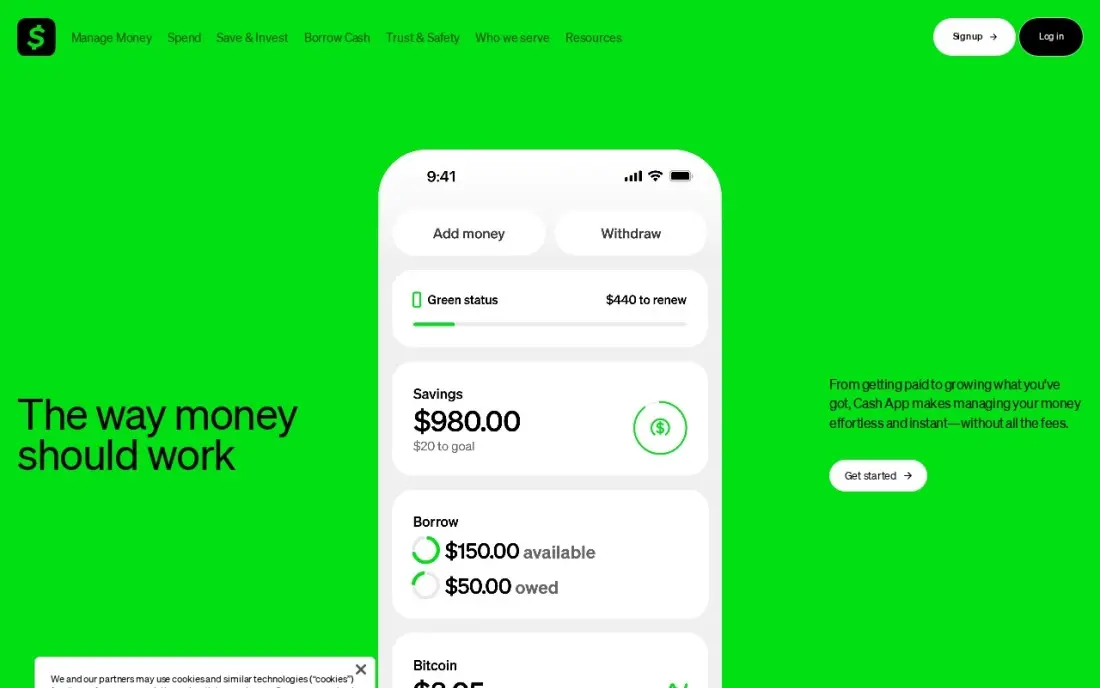
Cash App Investing is free with no commissions, no monthly fee and no account minimum on stocks and ETFs, and you can start with $1 through fractional shares. Round Ups turn card purchases into stock, and investing sits in the same app many people already use for payments and direct deposit.
It is stocks and ETFs only, with no options, bonds, mutual funds or retirement accounts, and no research or portfolio guidance. Fractional shares cannot transfer to another brokerage, so switching later means selling. Use it as a starter account, not your only one.
What we like
- Truly free: no commissions, no monthly fee and no account minimum on stocks and ETFs
- Start with $1 through fractional shares, and Round Ups turn card purchases into stock
- Investing sits inside the app you already use for payments, direct deposit and tax filing
- No commission fees on stock and ETF trades, with only small regulatory fees on sales
Watch out for
- Stocks and ETFs only — no options, bonds, mutual funds or retirement accounts
- No research tools or portfolio guidance; you pick every stock yourself
- Fractional shares cannot transfer to another brokerage, so switching brokers means selling

Acorns
Best for: First-time investors who want spare change invested automatically

Acorns is the gentlest way to start investing. Round-Ups invest your spare change automatically into expert-built diversified portfolios, so you never pick a stock or fund, and Bronze at $4 a month includes a Later retirement account and an Acorns Checking account. Shopping at 450+ partner brands adds bonus investments.
There is no free tier, and the flat fee is heavy on a small balance: $48 a year on a $500 account is nearly 10%. Custom portfolios wait for Gold at $12 a month. Acorns makes sense as a habit-builder; once the balance grows, compare it with a free broker.
What we like
- Round-Ups invest your spare change automatically — customers have invested over $7.3 billion this way
- Expert-built diversified portfolios, so you never pick a stock or fund yourself
- Bronze includes a Later retirement account and an Acorns Checking account
- Earn bonus investments by shopping at 450+ partner brands in the app
Watch out for
- No free tier — Bronze at $4/month is the cheapest way in, and the fee never stops
- No individual stock picking on Bronze; custom portfolios wait for Gold at $12/month
- The $4 monthly fee is a heavy drag on a tiny balance — $48 a year on a $500 account is nearly 10%

Stash
Best for: Investors who want a guided plan, coaching and stock rewards for one flat fee
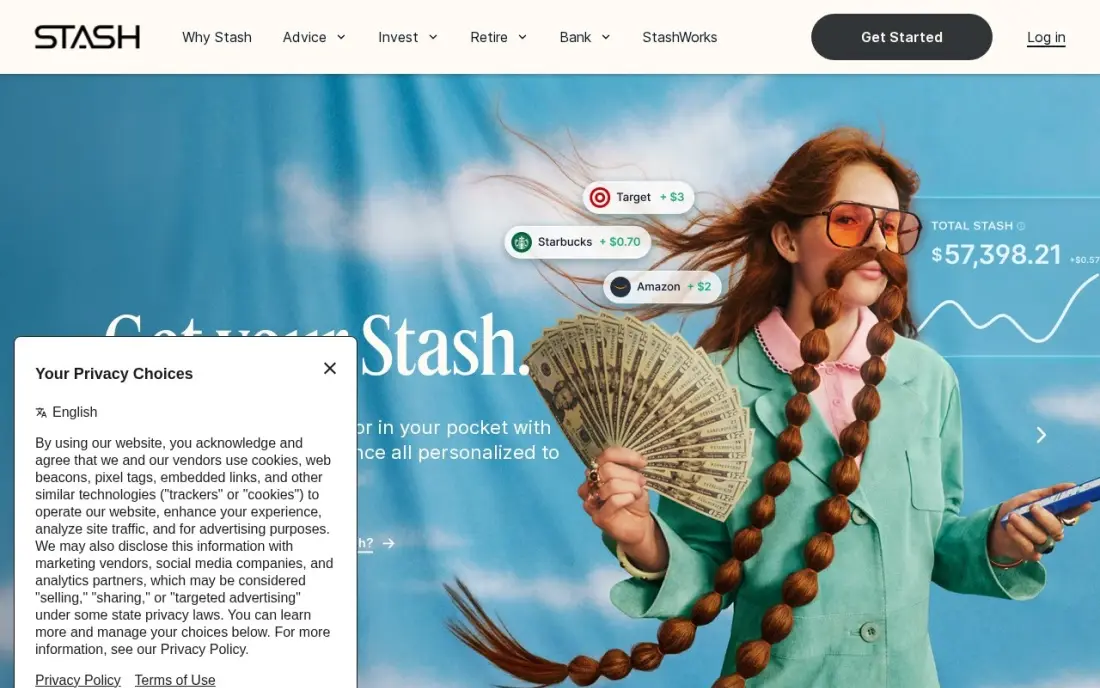
Stash bundles a brokerage account, retirement account, custodial accounts and a personalised plan into one subscription at $12 a month, or $108 a year billed annually. The Stock-Back Card earns stock when you spend, fractional shares start at $5, and a 3% retirement match is worth up to $225 a year.
It is the most expensive subscription here and has no free tier. Smart Portfolios add a 0.25% annual advisory fee on balances of $1,000 or more, and trades execute in four daily windows rather than instantly. It suits investors who value guidance more than low cost.
What we like
- One flat plan: brokerage, retirement and custodial accounts plus a personalized plan
- Stock-Back Card earns stock when you spend, worth up to $120 a year per Stash
- Fractional shares from $5 and 24/7 guidance from a registered investment advisor
- 3% retirement match worth up to $225 a year, plus a $10,000 life insurance policy
Watch out for
- The single $12/month plan is the priciest subscription here, and there is no free tier
- Smart Portfolios add a 0.25% annual advisory fee on balances of $1,000 or more
- Built for long-term investing: trades execute in four daily windows, not instantly
The best investing apps let you buy stocks, ETFs and funds cheaply, keep fees out of your returns and make it easy to invest regularly. We compared ten apps across full-service brokers, free trading apps, a robo-advisor and subscription apps on commissions, minimums, monthly fees and account types, with fees checked on official pages and independent reviews in November 2026. This is general information, not financial advice.
How to choose the best investing apps
- Decide how hands-on you want to be. Brokers such as Fidelity, Schwab, Robinhood and Public let you pick every investment; Wealthfront and Acorns build the portfolio for you.
- Check fees as a share of your balance. A $0 commission broker costs nothing to hold; a $4 or $12 monthly fee or a 0.25% advisory fee does, and flat fees hurt most on small accounts.
- Look at minimums. Fidelity has no minimum to open an account, Wealthfront's automated investing needs $500, and M1 Finance needs $100 for a brokerage account.
- Make sure the accounts you need exist. Cash App Investing has no retirement accounts; Fidelity, Robinhood and Wealthfront offer IRAs.
- Know what costs extra. Options carry $0.65 per contract at Fidelity and Schwab, and transaction-fee mutual funds cost $49.95 per purchase at Fidelity.
- Value support and stability. Robinhood support is in-app only; Schwab offers broker-assisted trades by phone.
- Investing for a child? Pick an app with custodial accounts: Wealthfront offers custodial and 529 accounts in one app, and Stash includes custodial accounts in its $12 monthly plan.
Investing is also a crowded market for advisers and fintech brands competing on Google. If you run a financial business, our SEO audit shows where you lose visibility, and the guide to SEO for finance covers the tools that help.
Investing app pricing: what you will actually pay
Take an investor who puts $5,000 in and adds $200 a month. At Fidelity, Schwab, Robinhood, Public, SoFi Invest or Cash App Investing, buying ETFs costs $0 in commissions and there is no monthly fee, so the yearly cost is the funds' own expense ratios. At Wealthfront, the 0.25% advisory fee on $5,000 is $12.50 a year, rising as the balance grows.
Subscription apps cost more on a balance this size. M1 Finance charges $3 a month below $10,000, or $36 a year. Acorns Bronze costs $4 a month, or $48 a year, and Stash costs $108 a year billed annually or $144 billed monthly. On $5,000, Stash's annual plan equals about 2.2% of the balance in the first year, far above Wealthfront's 0.25%. Optional upgrades follow the same logic: Robinhood Gold at $50 a year pays off only if you use its 3% IRA match or cash yield.
Know the difference: brokerage app vs robo-advisor
A brokerage app gives you an account and a search box. You choose each stock, ETF or fund, decide how much to buy and when, and pay little or nothing to trade. Fidelity, Schwab, Robinhood, Public, SoFi Invest, Cash App Investing and M1 Finance all work this way, though M1's Pies automate the buying once you set an allocation.
A robo-advisor makes those decisions for you. Wealthfront builds a diversified portfolio and manages it, and charges an annual percentage of your balance for the service. Acorns and Stash sit in between, with managed portfolios sold for a flat monthly fee. Choose a broker if you enjoy deciding; choose a robo-advisor if you would rather not think about it.
Quick comparison: tool type by need
| Buyer | Best pick | Why |
|---|---|---|
| Long-term all-rounders | Fidelity | $0 online trades, no minimum to open, $0 Fidelity funds |
| Phone support fans | Charles Schwab | $0 online trades, broker-assisted trades for $25 |
| First trade, simplest app | Robinhood | Free trading, optional Gold $5/month |
| Widest asset range | Public | Stocks, options, bonds, Treasuries and crypto, free |
| Self-directed plus automated | SoFi Invest | Both styles in one free app |
| Hands-off investing | Wealthfront | 0.25% a year, $500 minimum |
| Target allocations | M1 Finance | Pies auto-invest, $3/month under $10,000 |
| Cash App users | Cash App Investing | Free stocks and ETFs from $1 |
| Spare-change investing | Acorns | Round-Ups into managed portfolios, $4/month |
| Guided plan and rewards | Stash | One plan at $12/month or $108/year |
Mistakes to avoid
- Paying a flat fee on a tiny balance. $48 a year on a $500 account is nearly 10%; start on a free broker until the balance grows.
- Trading because the app makes it easy. Frequent trading and options can lose money fast; most long-term investors do better with regular ETF purchases.
- Choosing an app without retirement accounts. If you want an IRA, check it exists before you build habits in the app.
- Ignoring transfer limits. Cash App fractional shares cannot transfer to another broker, so leaving means selling and possibly paying tax.
- Skipping the regulator check. Confirm SEC registration and FINRA and SIPC membership before you deposit money.
Related comparisons: Micro Investing Apps
How we chose
We checked fee pages for Fidelity and Charles Schwab, an independent review for Wealthfront and our database of vendor pricing for the other apps, all in November 2026, and recorded fees exactly as published, including monthly and annual billing. We compared commissions, minimums, monthly and advisory fees, account types and support across ten apps that cover full-service brokers, free trading apps, a robo-advisor and subscription apps. This is general information, not personal financial advice. No vendor paid for a place in this list, and none of the links here are affiliate links.
What to do next
Open one account at a $0 commission broker or a robo-advisor that matches how hands-on you want to be, set up an automatic monthly deposit and review it once a quarter rather than daily. If you run a financial services business and want more clients to find you online, book a free SEO consultation.
Frequently asked questions
What is the best investing app?
Fidelity is the best investing app for most long-term investors, with $0 online stock, ETF and options commissions and no minimum to open an account. Robinhood is the simplest free app for beginners, and Wealthfront is the best hands-off pick at a 0.25% annual fee.
What is the best investing app for beginners?
Robinhood and SoFi Invest are easy free apps with fractional shares, and SoFi adds automated portfolios. Acorns is the most hands-off for absolute beginners, investing spare change automatically for $4 a month.
Which investing apps are free?
Fidelity, Charles Schwab, Robinhood, Public, SoFi Invest and Cash App Investing charge $0 commissions on online stock and ETF trades with no monthly fee. Options at Fidelity and Schwab carry a $0.65 per-contract fee.
Are investing apps with monthly fees worth it?
Only if you use what the fee buys. Acorns at $4 a month costs $48 a year, nearly 10% of a $500 balance, and Stash costs $12 a month. On small balances a free broker usually leaves you with more money.
What is the difference between a brokerage app and a robo-advisor?
A brokerage app such as Fidelity or Robinhood lets you choose each investment yourself, usually for $0 commissions. A robo-advisor such as Wealthfront builds and rebalances a portfolio for you for an annual fee, 0.25% at Wealthfront.
Is my money safe in an investing app?
Check that the broker is registered with the SEC and a member of FINRA and SIPC, which you can verify on FINRA BrokerCheck. SIPC protection covers missing assets if a broker fails, not investment losses when prices fall.
What is the best investing app for kids?
For a child, look for an app that offers custodial accounts. Wealthfront covers custodial accounts and 529 college plans alongside taxable accounts and IRAs, with a $500 minimum for automated investing at 0.25% a year. Stash bundles brokerage, retirement and custodial accounts into one flat plan at $12 a month or $108 a year. Cash App Investing has no retirement accounts, so check the account list first.
Sources we checked (10)
- Fidelity — www.fidelity.com/trading/commissions-margin-rates (checked November 16, 2026)
- Charles Schwab — www.schwab.com/node/14936 (checked November 16, 2026)
- Robinhood — robinhood.com/us/en/support/articles/gold-overview (checked November 5, 2026)
- Public — public.com/disclosures/fee-schedule (checked November 5, 2026)
- SoFi Invest — www.sofi.com/invest (checked November 5, 2026)
- Wealthfront — www.nerdwallet.com/investing/reviews/wealthfront (checked November 16, 2026)
- M1 Finance — www.m1.com (checked November 5, 2026)
- Cash App Investing — cash.app (checked November 5, 2026)
- Acorns — www.acorns.com/pricing (checked November 5, 2026)
- Stash — www.stash.com/pricing (checked November 5, 2026)
Make one of these tools?
We re-check this list every quarter. Send a correction, request a review, or ask about a clearly labeled sponsored spot.
Request a listingShamim
Founder of SerpAstra
A full-stack digital marketer and SEO strategist covering technical and local SEO, AI search visibility, paid ads and lead generation for local businesses, e-commerce brands and SaaS teams.
Free SEO and AI visibility audit
Find out what is holding your rankings back
Send us your site. Within 2 business days you get a written audit, an AI visibility check and a short fix list ranked by impact. Free, with no contract attached.
Request my free audit→Related buying guides
 Personal Finance & InvestingBest Micro Investing Apps (2026): 7 Apps Worth DownloadingCompare the 7 best micro investing apps on price, minimums and automation, with every price checked November 5, 2026 — from free trading to $12 a month.Read guide →
 Real Estate & Property ManagementBest Real Estate Apps for Investors (2026): 10 Apps Worth DownloadingCompare the 10 best real estate apps for investors on price, free plans, deal analysis and rent collection, with every price checked November 8, 2026.Read guide →
 Tax Software12 Best Tax Software Reviews in 2026: Pricing, Features and Pros & ConsCompare the 12 best tax software reviews on price, free filing, state fees and expert help, with every price checked November 4, 2026 before you file.Read guide →