
Best Software Company Websites: 8 Platforms to Build On in 2026
Build the best software company websites on the right platform: we compare 8 options on design control, CMS, developer fit, landing pages and real cost in 2026.
 Shamim Mia, Founder, SerpAstraLast verified November 5, 20268 min read
We compare pricing pages, documentation and public reviews. We never accept payment for rankings.

Key takeaways
- Webflow is a strong base for the best software company websites: visual design control plus a real CMS, with Premium at $25 a month billed annually.
- Framer is the fastest route for an early-stage startup, from $10 a month billed yearly with a free plan to build on.
- HubSpot Content Hub suits B2B software companies already on HubSpot CRM, because every page and post ties back to contacts and deals.
- Developer-led teams that want the marketing site and product docs fed from one content source should look at Contentful, Sanity or Strapi.
On this page
Quick comparison
| Tool | Best for | Starting price | Free plan |
|---|---|---|---|
| Webflow | Software companies that want a design-led marketing site their marketers can run | $39/mo | Yes (Starter) |
| Framer | Early-stage startups that need a modern homepage live in days | $10/mo (annual) | Yes (free plan) |
| HubSpot Content Hub | B2B software companies on HubSpot CRM that want site, blog and pipeline in one system | $20/seat/mo | Yes (free plan) |
| WordPress.com | Software companies with a content-heavy blog that want WordPress without managing servers | $40/mo | Yes (free plan) |
| Contentful | Scaling software companies that publish the same content to the site, app and docs | $300/mo | Yes (free plan) |
| Sanity | Developer-led software companies that want content defined as code | $15/seat/mo | Yes (free plan) |
| Unbounce | Software companies running paid campaigns that need fast, testable landing pages | $29/mo | No (14-day trial) |
| Strapi | Engineering teams that want an open-source headless CMS they control | $35/mo | Yes (free edition) |
Make one of these tools?
We re-check this list every quarter. Send a correction, request a review, or ask about a clearly labeled sponsored spot.
Request a listingThe best website platforms for software companies

Webflow
Best for: Software companies that want a design-led marketing site their marketers can run
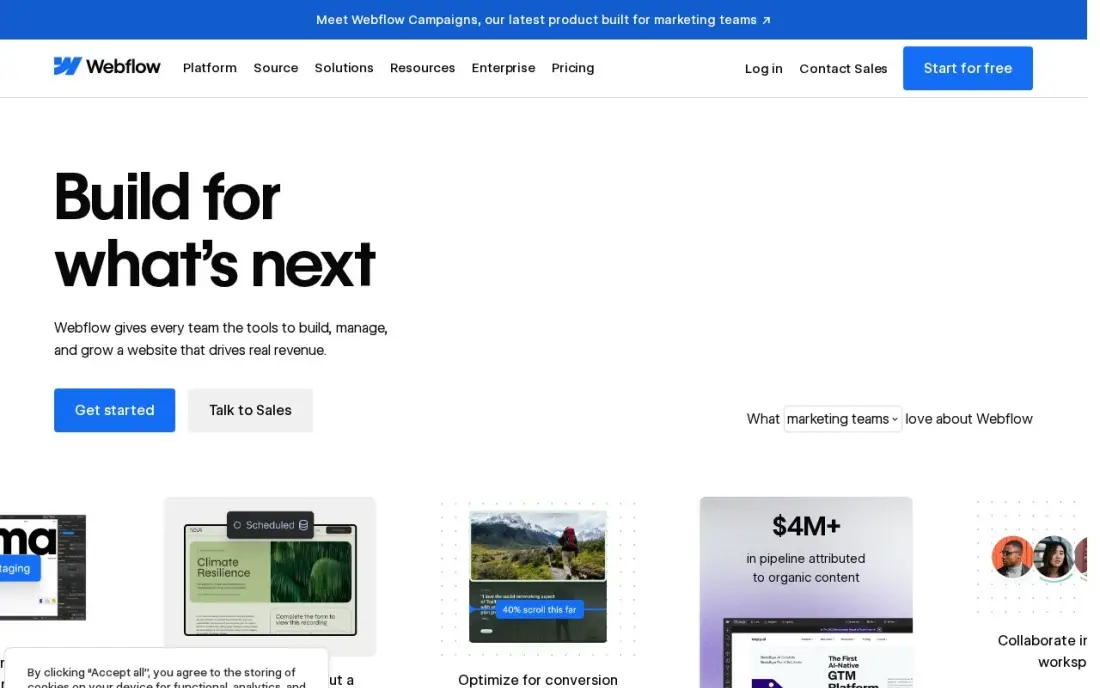
Webflow is a common choice for SaaS marketing sites for a practical reason: designers get real control over layout and interactions, and marketers get a CMS for the blog, case studies, changelog and integration pages without filing a ticket with engineering. Premium costs $25 a month billed annually, or $39 monthly, with 20,000 CMS items, 40 collections and site search, and there are no plugins to update.
The second bill is seats: editing seats cost $15 a month for a limited seat and $39 for a full seat, billed yearly, and Basic at $15 has no CMS. The learning curve is real for non-designers. Choose Webflow when the website is a core growth channel and design quality matters.
What we like
- Visual designer with a real CMS: 20,000 CMS items and 40 collections on Premium
- Premium includes site search, 50 GB bandwidth and code components
- No plugins to update; hosting, security and the CMS come from one vendor
Watch out for
- Basic at $15 a month has no CMS at all, so a blog or content site must pay $25 a month billed annually
- Editing seats are a separate bill: $15 a month for a limited seat and $39 for a full seat, billed yearly

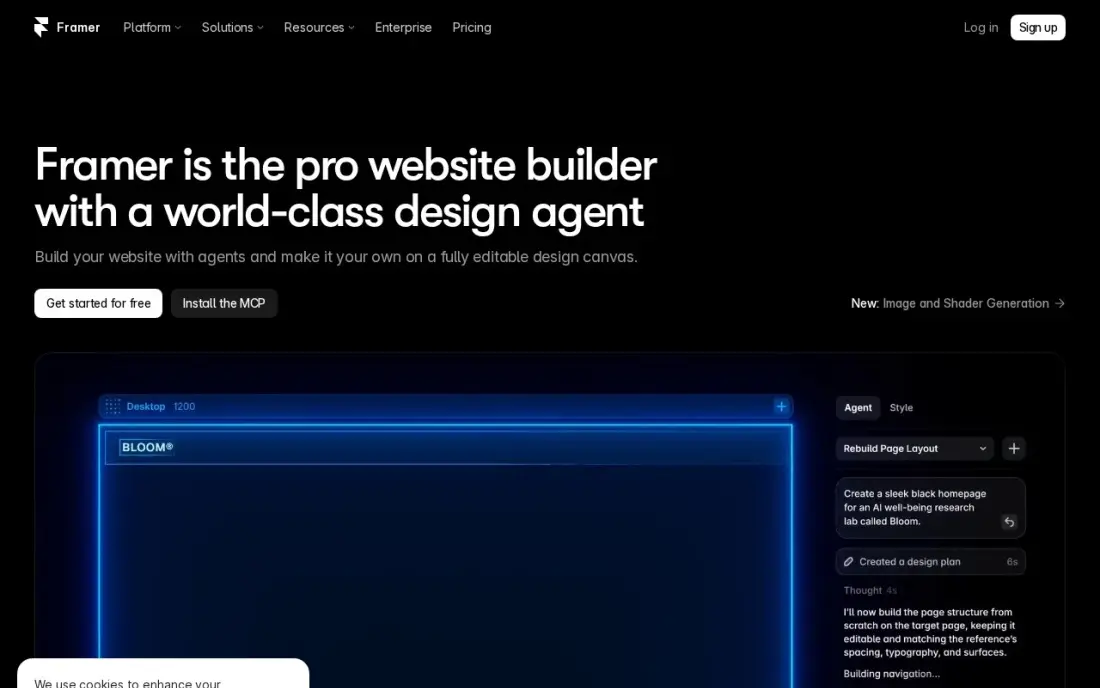
Framer is the quickest way for a young software company to look established. The AI builder turns a prompt into a publishable first draft, templates use the motion and layout styles common on modern SaaS sites, and hosting and SEO controls are included. Basic costs $10 a month billed yearly, and the free plan lets the team build everything on a framer.website address first.
It is built for focused sites. Basic allows 2 CMS collections and 1,000 items, extra editors cost $20 a month each, and there is no plugin marketplace, so a large docs library or content programme will outgrow it. Choose Framer for launch and early growth, and revisit when content volume climbs.
What we like
- AI generation turns a prompt into a publishable modern site
- Modern templates and smooth interactions with no code
- Custom domain and your own branding on Basic
- Fast managed hosting with SEO controls included
Watch out for
- Basic allows only 2 CMS collections and 1,000 items
- Extra editors cost $20/month each, on top of the site plan
- A smaller ecosystem than WordPress — no plugin marketplace

HubSpot Content Hub
Best for: B2B software companies on HubSpot CRM that want site, blog and pipeline in one system
HubSpot Content Hub is the only platform here where the website, blog, CRM and analytics share one database, so every demo request, ebook download and blog visit ties back to a contact and a deal. For a B2B software company that sells through demos, that turns content into a revenue report. A free tier covers basic website and blogging tools, and AI tools are built in.
Starter costs $20 a seat a month, or $7 a seat billed annually for new customers on a limited-time promo. Smart content and A/B testing need Professional at $450 a month billed annually, and per-seat pricing grows with the team. Choose it when HubSpot is already your CRM.
What we like
- The only platform here where the website, blog, CRM and analytics share one database, so every article ties back to a contact and a deal
- A genuinely free tier covers the basic website and blogging tools at $0
- AI tools including Content Remix and Breeze are built in, not bolted on
- Professional at $450 a month billed annually adds smart content, A/B testing and HubDB
Watch out for
- Per-seat pricing grows with every hire, so a five-person team pays $100 a month at list price
- The content features that matter most, like smart content and A/B testing, need Professional at $500 a month
- The $7-a-seat annual figure is a new-customer promo, not the standard rate

WordPress.com
Best for: Software companies with a content-heavy blog that want WordPress without managing servers
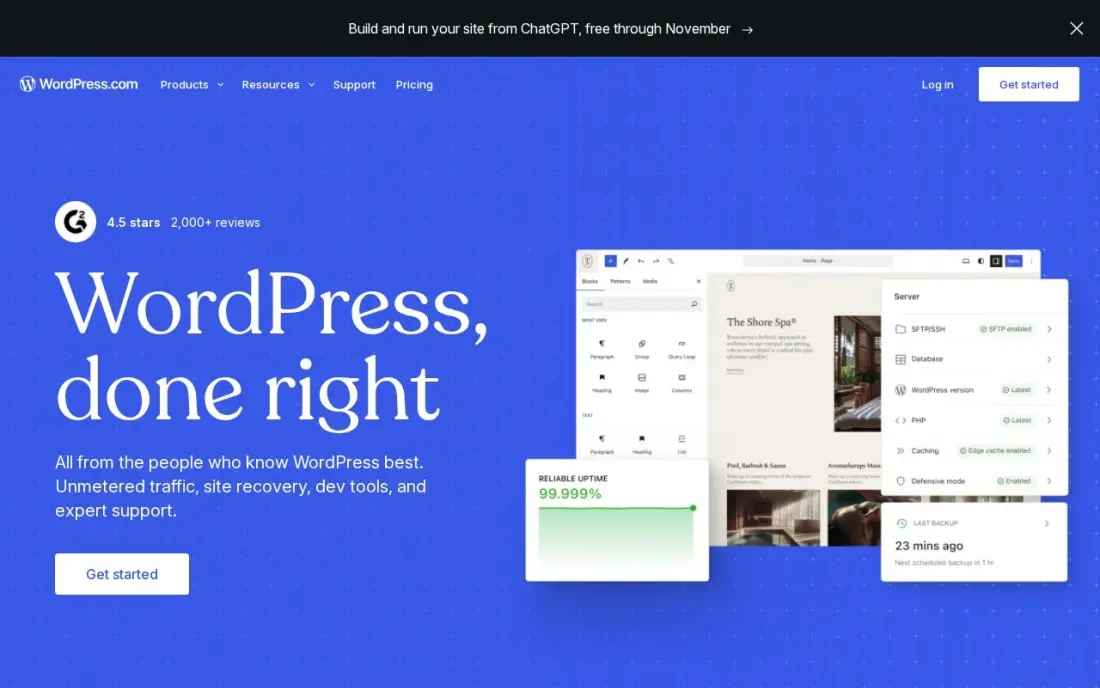
WordPress.com suits a software company whose growth comes from content: a large blog, comparison pages and resource libraries. Hosting, security, updates and a CDN are included, more than 60,000 plugins cover forms, SEO and multilingual sites, and Business adds staging, real-time backups, SFTP, WP-CLI and GitHub deployments for the developers on the team.
Business costs $40 a month billed monthly, or $25 a month billed annually for the first year, renewing at $28, and each site needs its own plan. Personal at $4 a month billed annually can install plugins. Design takes more work than Webflow or Framer to look like a modern SaaS site, so budget for a good theme or a designer.
What we like
- The lowest-friction way to run a manufacturing website: hosting, security, updates and CDN included
- Business adds staging, real-time backups, SFTP, WP-CLI and GitHub deployments for developer teams
- More than 60,000 plugins cover product catalogues, quote forms, dealer locators and multilingual sites
- A free plan exists, and Personal at $4 a month billed annually can now install plugins too
Watch out for
- The $25 a month annual figure is a first-year price; Business renews at $28 a month
- Each site needs its own plan, so a second brand site doubles the bill
- Plugin and theme choice is broad, but deep custom development still needs a developer

Contentful
Best for: Scaling software companies that publish the same content to the site, app and docs
Contentful is the composable choice for software companies that have outgrown a single website. Structured content lives in one place and is delivered by API, so the same feature description can feed the marketing site, in-app messages and help centre without copying. A free plan covers 10 users and 100,000 API calls a month, and Lite costs $300 a month for 20 users with scheduled publishing.
It needs developers to build the front end, content modelling has a learning curve, and reviewers warn that cost climbs with API calls and locales. AI Actions, personalisation and SSO are Enterprise features. Choose Contentful when content serves several products and channels.
What we like
- The most widely adopted composable DXP here, with a free plan and published prices instead of a sales call
- Structured content with a real API-first model: the same entry feeds a website, app, email and IoT screens
- Lite includes scheduled publishing, live collaboration and comments for $300/month
- Marketplace apps and a large integration library connect it to commerce, DAM and analytics tools
Watch out for
- AI Actions and Personalization are Enterprise add-ons, so the entry plan is content-only
- Content modeling has a real learning curve, and reviewers warn pricing climbs fast as usage grows
- No white-label or custom domain on Lite; SSO and governance wait for Enterprise

Sanity
Best for: Developer-led software companies that want content defined as code
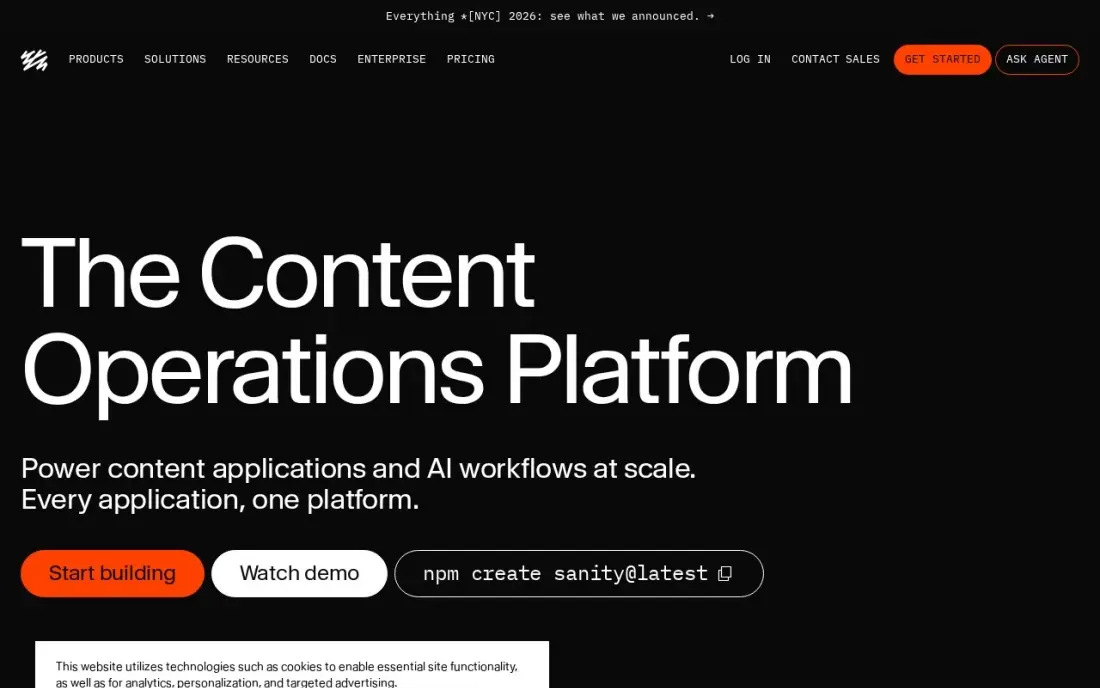
Sanity fits a software company where engineers own the website. Content schemas are defined in code, live in the repo and deploy with the app, while editors get real-time collaborative editing with live previews. It has the highest G2 score in this list at 4.7 out of 5 from 968 reviews, and the free plan covers 20 seats with unlimited content types and locales.
Growth costs $15 a seat a month. The jump to Enterprise is steep, with the Media Library Enterprise-only, and non-technical editors rely on developers for any structural change. Choose Sanity when your developers want the website to work like the rest of your codebase.
What we like
- Highest-rated tool in this list on G2 at 4.7/5 from 968 reviews
- Schema-as-code means content rules live in the repo, go through pull requests and deploy with the app
- Real-time multiplayer editing with live previews and visual editing tools included
- The free plan is the most generous here: 20 seats, unlimited content types and locales
Watch out for
- The gap between Growth at $15 a seat and Enterprise is huge — the Media Library is Enterprise-only
- Schema is code, so non-technical editors depend on developers for every structural change
- Add-on prices are steep, and the API rate limit can bite during bulk operations, per G2 reviewers

Unbounce
Best for: Software companies running paid campaigns that need fast, testable landing pages
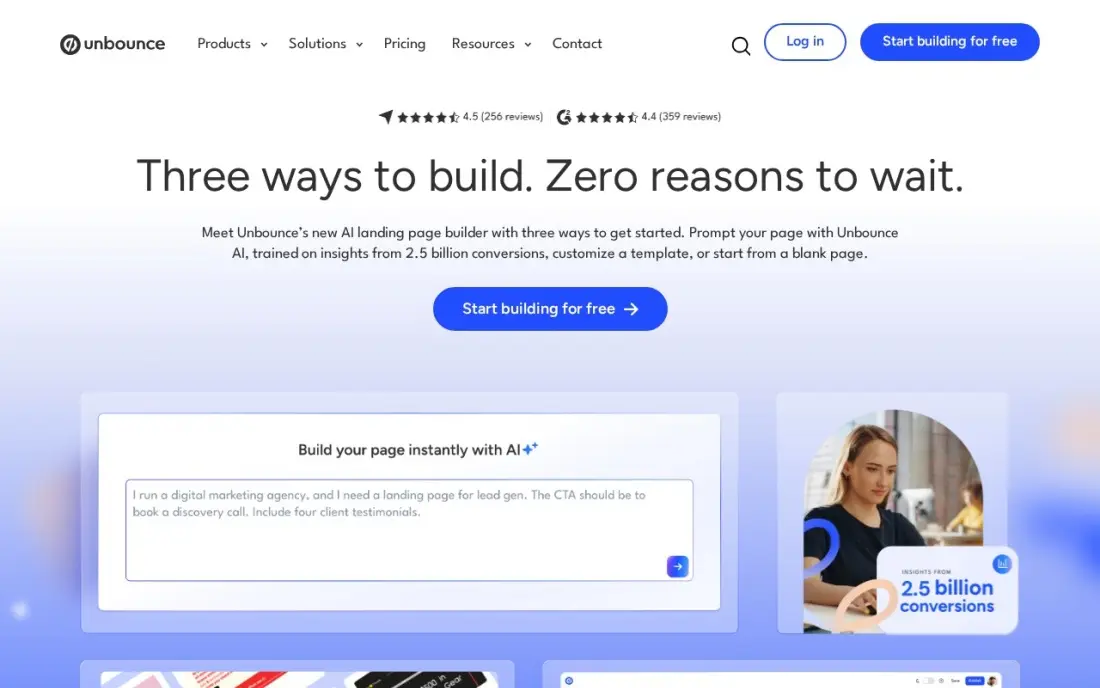
Unbounce does not replace the main website; it sits beside it for paid campaigns. Marketers build landing pages for each ad group without developers, with popups, sticky bars and dynamic text replacement that matches the page to the search term. Every plan includes unlimited conversions and subdomains with free hosting, and Starter costs $29 a month, or $22 billed annually.
Starter covers only 5 pages and 500 visitors a month, so a real campaign needs Build at $99 a month. A/B testing starts at $149 and Smart Traffic at $249, and visitor overages cost $80 per extra 10,000 visits. Add Unbounce when ad spend is large enough that page testing pays back.
What we like
- The strongest page-level conversion tools here: A/B testing, dynamic text replacement and Smart Traffic AI
- Unlimited conversions and unlimited subdomains on every plan, with free hosting included
- Drag-and-drop builder with popups and sticky bars, plus 30,000 AI credits on Build
- Built for paid traffic: every plan is tuned to turn ad clicks into leads
Watch out for
- Starter covers only 5 pages and 500 visitors a month — a real campaign needs Build at $99/month
- A/B testing starts at $149/month and Smart Traffic at $249/month, so the testing features cost extra
- Visitor overages cost $80 per extra 10,000 visits, so a campaign that takes off raises the bill

Strapi
Best for: Engineering teams that want an open-source headless CMS they control
Strapi is the open-source headless CMS: the Community Edition is free to self-host with no seat or content limits, and REST and GraphQL APIs come out of the box, so the marketing site, docs and app can all read from it. Strapi Cloud Starter costs $35 a project a month for hosting, database, storage, CDN and SSL, and it is priced per project rather than per seat.
Self-hosting means your developers run hosting, backups and upgrades, and major versions carry breaking changes. Strapi Cloud dropped its free plan in August 2026. Choose Strapi when you want headless flexibility with no per-seat bill and an engineering team happy to own it.
What we like
- Open-source Community Edition is free to self-host, with no seat or content limits
- Cloud Starter at $35 a project a month covers hosting, database, storage, CDN and SSL
- REST and GraphQL APIs come out of the box, so product content feeds any website or app
- Priced per project, not per seat, so adding editors never raises the Cloud bill
Watch out for
- Strapi Cloud dropped its free plan in August 2026, so managed hosting starts at $35 a month
- The self-hosted Community Edition needs a developer to run hosting, backups and upgrades
- Breaking changes between major versions make upgrades a real project, not a click
The best software company websites explain a complex product in seconds, load fast, rank for buyer searches and let the marketing team ship new pages without waiting on engineering. The platform underneath decides how easy that is. We compared eight platforms software companies build on — visual builders, a CRM-linked CMS, WordPress, headless content platforms and a landing page tool — on design control, CMS depth, developer fit and real cost, with every price taken from the vendor's own page as checked in November 2026.
How to choose a platform for a software company website
- Decide who owns the site. If marketers own it, pick a visual builder; if engineers own it, a headless CMS fits their workflow.
- Map your content types. Blog, case studies, integrations, changelog and docs each need a CMS collection or model.
- Check how leads reach the CRM. Demo and trial forms should land in your CRM with source data attached.
- Count editors. Several platforms price per seat, so a growing marketing team raises the bill.
- Plan for landing pages. Paid campaigns need fast, testable pages that marketers can build themselves.
- Think about docs. Product documentation and the marketing site often work better from one content source.
A software company's site has to be found by buyers in search and in AI assistants. Our AI search optimization service helps SaaS sites get cited in AI answers, and the free llms.txt generator gives AI crawlers a clean map of your key pages.
Software company website platform pricing: what you will actually pay
Take a startup with three people editing the site, on annual billing. Framer Basic costs $10 a month, or $120 a year, plus $20 a month per extra editor. Webflow Premium costs $25 a month billed annually, or $300 a year, plus two limited editing seats at $15 a month each, or $360 a year — $660 in total. HubSpot Content Hub Starter costs $20 a seat a month, or $720 a year for three seats at list price.
The headless options split differently. Sanity Growth costs $15 a seat a month, or $540 a year for three seats, with a free plan for up to 20 seats. Strapi Cloud Starter costs $35 a project a month, or $420 a year, with no seat charges. Contentful Lite costs $300 a month, or $3,600 a year. Developer time to build a headless front end comes on top. Unbounce Starter adds $22 a month billed annually for landing pages.
Know the difference: visual builder vs headless CMS
A visual builder such as Webflow, Framer or WordPress.com combines the content and the design. Marketers create and publish pages directly, which keeps the site moving fast, but content lives in that one website and is harder to reuse elsewhere.
A headless CMS such as Contentful, Sanity or Strapi stores content separately and delivers it by API to any front end your developers build. The same content can power the website, docs, app and emails, and engineers keep full control. The trade-off is that every new page type needs developer work, so marketing moves at engineering's pace.
Quick comparison: tool type by need
| Buyer | Best pick | Why |
|---|---|---|
| Design-led SaaS marketing sites | Webflow | Visual control and CMS, Premium $25/month billed annually |
| Early-stage startups | Framer | AI drafts and modern templates, Basic $10/month billed yearly |
| B2B on HubSpot CRM | HubSpot Content Hub | Site, blog and CRM in one database |
| Content-heavy blogs | WordPress.com | Hosted WordPress with plugins and developer tools |
| Multi-channel content | Contentful | API-first content, free plan, Lite $300/month |
| Developer-owned sites | Sanity | Schema as code, Growth $15/seat/month |
| Paid campaign pages | Unbounce | Landing pages with testing, Starter $22/month billed annually |
| Open-source headless | Strapi | Free self-hosted, Cloud $35/project/month |
Mistakes to avoid
- Letting engineering own every page change. If marketers cannot publish without a ticket, the site falls behind the product.
- Hiding pricing. Buyers look for it first; if you sell by quote, explain how pricing works.
- Writing feature lists instead of outcomes. Say what the product does for the buyer before listing what it has.
- Ignoring comparison and integration pages. They capture high-intent searches from buyers already evaluating tools.
- Rebuilding without redirects. A platform migration without URL mapping can wipe out years of rankings.
How we chose
We checked each platform's pricing page in November 2026 and recorded the starting price, seat rules and plan limits as shown. We ranked platforms for a software company's marketing site, weighting design control, CMS depth, how well it fits the team that will own it, lead capture and total yearly cost. Ratings come from G2 pages checked on the dates shown in the sources; Framer and Unbounce show none because no G2 figure was recorded for them. No vendor paid for a place in this list, and none of the links here are affiliate links.
What to do next
List your page types and who will edit them, then build your homepage and one feature page on the free plan of your top two platforms. If you want the site to rank and appear in AI answers for your category, book a free call.
Frequently asked questions
What platform do the best software company websites use?
Many use Webflow for design-led marketing sites, Framer for early-stage startups, HubSpot Content Hub when the CRM is HubSpot, and headless systems such as Contentful, Sanity or Strapi when developers build the front end. WordPress remains common for content-heavy blogs.
What is the best website builder for a SaaS startup?
Framer is the fastest start, from $10 a month billed yearly with a free plan. Webflow suits startups that want more CMS and design control, with Premium at $25 a month billed annually.
Should a software company use a headless CMS?
Only if developers will build and maintain the front end and content needs to reach several places, such as the site, app and docs. For a marketing site run by marketers, a visual builder like Webflow or Framer is usually faster and cheaper.
What pages should a software company website have?
At minimum: a clear homepage, product or feature pages, pricing, integrations, customer stories, a blog or resources section, docs or help, and a demo or sign-up page. Comparison and alternative pages often bring high-intent search traffic.
How much does a software company website platform cost?
On published prices, Framer Basic costs $10 a month billed yearly, Webflow Premium $25 a month billed annually, HubSpot Content Hub Starter $20 a seat a month, Sanity Growth $15 a seat, Strapi Cloud $35 a project and Contentful Lite $300 a month.
How do software companies get their websites into AI answers?
By publishing clear, well-structured pages that answer buyer questions — what the product does, who it is for, pricing and comparisons — with schema markup and consistent facts across the web. AI assistants cite pages they can read and trust.
Sources we checked (14)
- Webflow — webflow.com/pricing (checked November 10, 2026)
- Webflow reviews on G2 (checked November 10, 2026)
- Framer — www.framer.com/pricing (checked November 5, 2026)
- HubSpot Content Hub — www.hubspot.com/products/content (checked November 12, 2026)
- HubSpot Content Hub reviews on G2 (checked November 12, 2026)
- WordPress.com — wordpress.com/pricing (checked November 12, 2026)
- WordPress.com reviews on G2 (checked November 12, 2026)
- Contentful — www.contentful.com/pricing (checked November 12, 2026)
- Contentful reviews on G2 (checked November 12, 2026)
- Sanity — www.sanity.io/pricing (checked November 12, 2026)
- Sanity reviews on G2 (checked November 12, 2026)
- Unbounce — www.unbounce.com/pricing (checked November 5, 2026)
- Strapi — strapi.io/pricing-cloud (checked November 12, 2026)
- Strapi reviews on G2 (checked November 12, 2026)
Make one of these tools?
We re-check this list every quarter. Send a correction, request a review, or ask about a clearly labeled sponsored spot.
Request a listingShamim
Founder of SerpAstra
A full-stack SEO and digital marketer who spends most days on Local SEO for dental practices, AI search visibility and lead generation.
Free SEO and AI visibility audit
Find out what is holding your rankings back
Send us your site. Within 2 business days you get a written audit, an AI visibility check and a short fix list ranked by impact. Free, with no contract attached.
Request my free audit→Related buying guides
 Marketing10 Best Content Management Tools in 2026 (Free and Paid, Compared)Compare the 10 best content management tools on price, free plans and fit for blogs, teams and enterprises, with prices checked November 10, 2026.Read guide →
 MarketingBest Landing Page Software for 2026: 10 Options Compared by Use CaseCompare the 10 best landing page software tools in 2026 on price, A/B testing, AI builders and free plans, with prices checked November 4, 2026.Read guide →
 Website Builders & Hosting8 Best Enterprise CMS Platforms in 2026, ComparedCompare the 8 best enterprise CMS platforms on governance, multi-site control, headless delivery and real cost, with every price checked on vendor pages.Read guide →