
8 Best Accounting Software for Musicians in 2026, Compared
Compare the 8 best accounting software for musicians on gig invoicing, royalty and 1099 income, gear and mileage deductions, and real cost, checked Nov 2026.
 Shamim Mia, Founder, SerpAstraLast verified November 4, 20268 min read
We compare pricing pages, documentation and public reviews. We never accept payment for rankings.

Key takeaways
- Most working musicians are self-employed, so the job is tracking gig, teaching, streaming and royalty income against gear, travel and studio costs for Schedule C.
- Wave's free Starter plan covers invoices and real books at $0, and QuickBooks Solopreneur adds mileage and quarterly estimates for $20 a month.
- Touring and gigging players who drive a lot get the most from Hurdlr's automatic GPS mileage, from $9.99 a month.
- Bands and music businesses with several members or a manager are better on Xero, which includes unlimited users from $27 a month.
On this page
Quick comparison
| Tool | Best for | Starting price | Free plan |
|---|---|---|---|
 Wave | Gigging musicians and teachers on a tight budget who want free invoices and books | $0 | Yes (free forever) |
 QuickBooks Solopreneur | Self-employed musicians who want income, mileage and quarterly tax estimates in one place | $20/mo | Yes (Free plan) |
 FreshBooks | Music teachers, session players and producers who bill clients for time | $23/mo | No (30-day trial) |
 Hurdlr | Touring and gigging musicians who drive to most shows | $9.99/mo | Yes (free plan) |
 Keeper Tax | Musicians with mixed 1099 income who want deductions found and the return filed | $16.58/mo (annual) | No (14-day trial) |
 Bonsai | Composers and producers who send proposals and contracts before the work starts | $15/user/mo | No (7-day trial) |
 Zoho Books | Music businesses under $50,000 revenue that want a free full ledger | $15/mo (annual) | Yes (free plan) |
 Xero | Bands, studios and music businesses with several people in the books | $27/mo | No (30-day trial) |
Make one of these tools?
We re-check this list every quarter. Send a correction, request a review, or ask about a clearly labeled sponsored spot.
Request a listingThe best accounting software for musicians
Wave
Best for: Gigging musicians and teachers on a tight budget who want free invoices and books
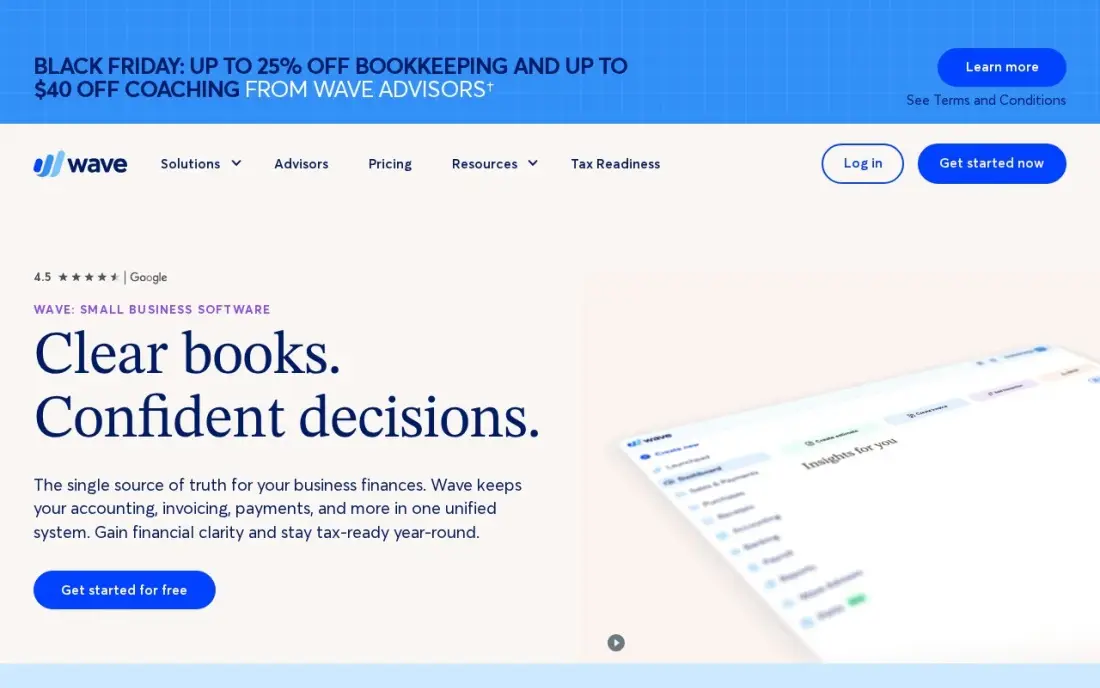
Wave's Starter plan is free forever and covers what most working musicians need: unlimited invoices for gigs and lessons, estimates for weddings and events, bills and double-entry bookkeeping, with no caps. Pro at $19 a month adds automatic bank import and unlimited receipt capture, useful for snapping receipts for strings, gear and rehearsal rooms. It scores 4.3 on G2.
On Starter, bank transactions are imported by hand, and card payments cost 2.9% plus $0.60 each, so a client paying a $500 wedding invoice by card costs you $15.10. There is no mileage tracking, so log gig travel elsewhere. It is the best free starting point.
What we like
- Genuinely free core: unlimited invoices, estimates, bills and bookkeeping records at $0
- Pro at $19/month adds bank auto-import, unlimited receipts and multi-user access
- No invoice or bill caps on either plan, unlike the capped entry plans elsewhere
Watch out for
- Automatic bank import, unlimited receipt capture and extra users need Pro at $19/month
- No inventory tracking and no built-in payroll on the core plans
- Card payments cost 2.9% plus $0.60 per transaction on the free Starter plan
QuickBooks Solopreneur
Best for: Self-employed musicians who want income, mileage and quarterly tax estimates in one place
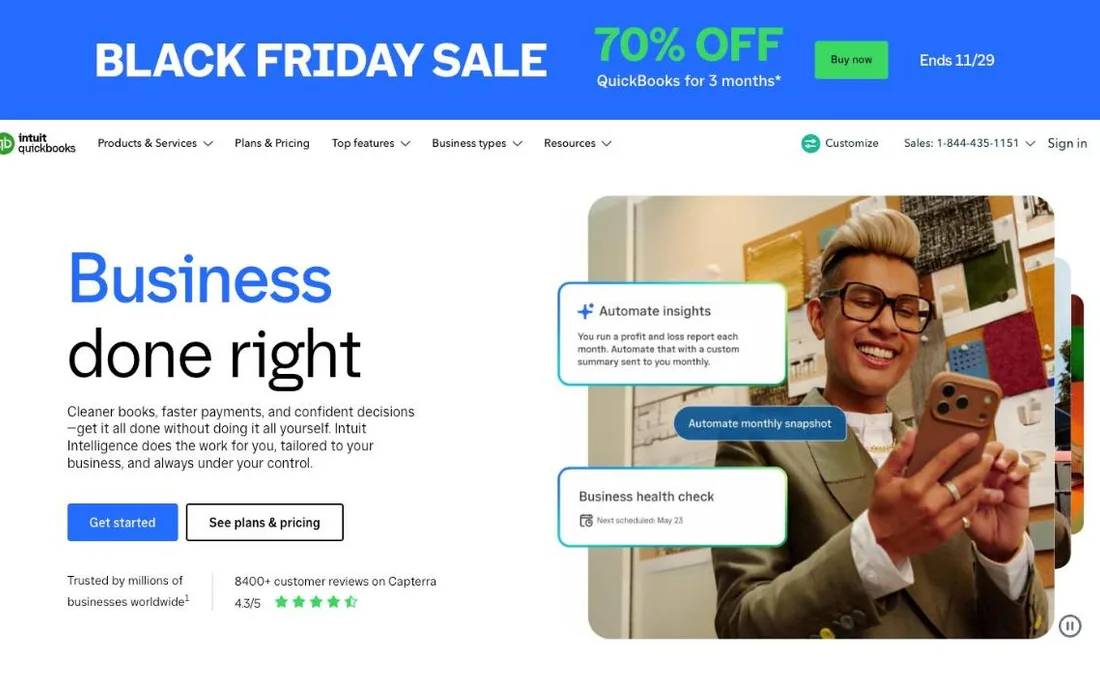
QuickBooks Solopreneur is built for one-person Schedule C businesses, which fits most freelance players, session musicians and music teachers. It tracks income and expenses, logs mileage to gigs and rehearsals, sends invoices and estimates quarterly taxes, so you set aside the right amount from each payday. It costs $20 a month, or $215 a year billed annually.
It is not full double-entry accounting, so a band run as an LLC with several members, or a label or studio, will outgrow it. Filing costs extra through a TurboTax bundle, and Intuit shows a $10 Lite tier on one page while the main pricing page lists $20, so confirm at checkout.
What we like
- Built for one-person Schedule C businesses: income, expenses, mileage and invoicing
- Quarterly estimated-tax tracking is built in, with a TurboTax bundle available
- Replaced QuickBooks Self-Employed as Intuit's product for solo operators
Watch out for
- Filing costs extra — Solopreneur tracks taxes but does not file the return
- Not full double-entry accounting, so a growing team outgrows it
- A $10-a-month Lite tier appears on the Solopreneur page while the main pricing page lists $20, so confirm at checkout
FreshBooks
Best for: Music teachers, session players and producers who bill clients for time

FreshBooks suits musicians who bill like freelancers: lesson packages, studio hours, mixing and arranging work. Invoices, estimates, recurring billing and payment reminders are the core, and time tracking turns logged studio hours into invoice lines. Lite costs $23 a month billed monthly, with 10% off on annual billing and a 30-day free trial.
Lite covers only five billable clients, so a teacher with a dozen students needs Plus at $43 a month, which also adds double-entry reports and bank reconciliation. Each extra team member costs $11 a month, and there is no inventory tracking for merch. It is invoicing-first, not tax-first.
What we like
- The easiest invoicing in this list: clean invoices, estimates, recurring billing and payment reminders
- Time tracking and expense tracking built in, so billable hours flow straight onto invoices
- Client records, project notes and late-payment reminders cover the basics of a small CRM
- Plus adds double-entry reports, bank reconciliation and free accountant access for $43/month
Watch out for
- Lite covers only 5 billable clients — a sixth client forces Plus at $43/month
- Every extra team member costs $11/month on top of the plan price
- No inventory tracking, and bank reconciliation and double-entry reports start on Plus, not Lite
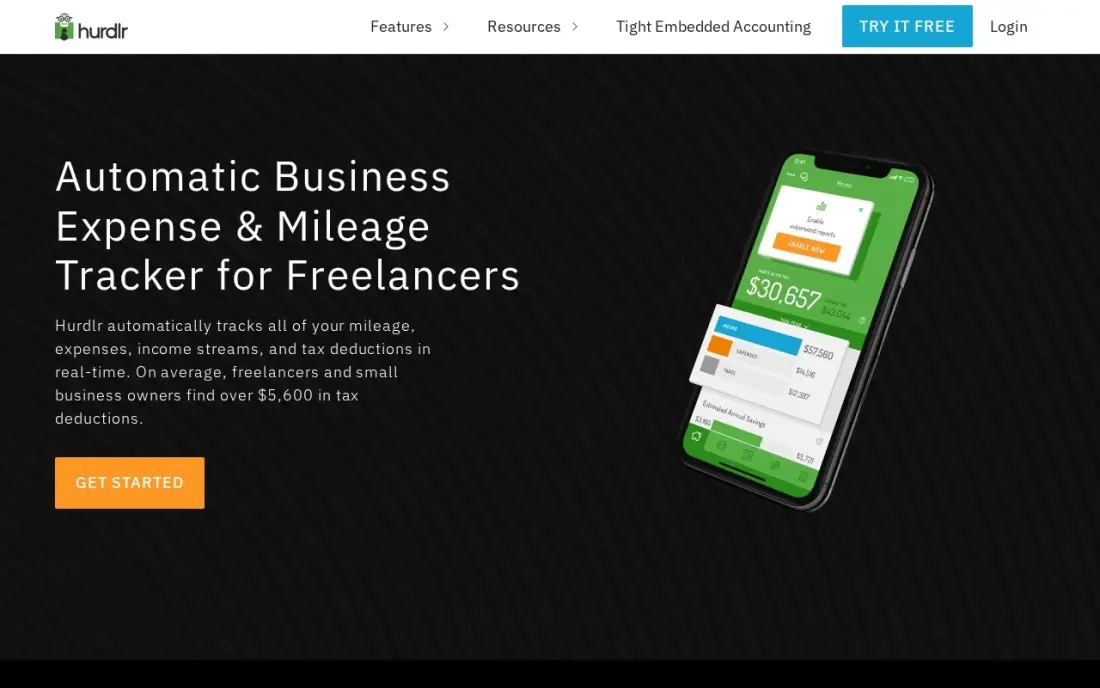
Hurdlr's automatic GPS mileage tracking matters more to a gigging musician than almost any other feature, because driving to shows, rehearsals and lessons is often the biggest deduction. It also calculates state and self-employment tax in real time as gig money lands. Premium costs $9.99 a month, or $99.99 a year, and a free plan covers manual mileage and expenses.
Invoicing and the general ledger are on Pro at $200 a year, not Premium, and tax filing is only on Pro. The free plan caps automatic features. It holds 4.3 on G2 from 23 reviews. Pair Premium with Wave if you need free invoices.
What we like
- Automatic GPS mileage tracking, the deduction that matters most to a driving agent
- Real-time state and self-employment tax calculations as income lands
- Cheapest paid plan here at $9.99 a month, with a usable free plan
Watch out for
- The free plan caps automatic features, so real automation needs Premium
- No invoicing or general ledger on Premium — those need Pro at $200 a year
- Tax filing is only on Pro, so Premium users still file elsewhere
Keeper Tax
Best for: Musicians with mixed 1099 income who want deductions found and the return filed

Keeper Tax scans bank and card transactions all year and flags deductions a musician easily misses, such as strings, software subscriptions, plug-ins and streaming promotion, then files federal and state returns from the same app. Standard costs $199 a year, about $16.58 a month billed yearly, with filing included, and quarterly estimated-tax tracking is built in.
It is a tax tool, not a ledger: there are no invoices for gigs and no balance sheet. There is no GPS mileage tracking, and AI-suggested deductions still need a human check. Bookkeeping Only costs $20 a month. It suits a player whose biggest worry is tax season.
What we like
- AI scans your bank and card transactions all year and flags deductions you would miss
- Standard at $199 a year includes federal and state filing — no separate filing fee at tax time
- Quarterly estimated-tax tracking built in, which 1099 workers need and DIY tools skip
- A real tax pro reviews the return before it is filed on Premium and Business tiers
Watch out for
- No free plan — Bookkeeping Only is $20 a month and filing starts at $199 a year
- No GPS mileage tracking, which rival freelancer apps include
- AI-suggested deductions still need a human check, and W-2-only filers get little value
Bonsai
Best for: Composers and producers who send proposals and contracts before the work starts
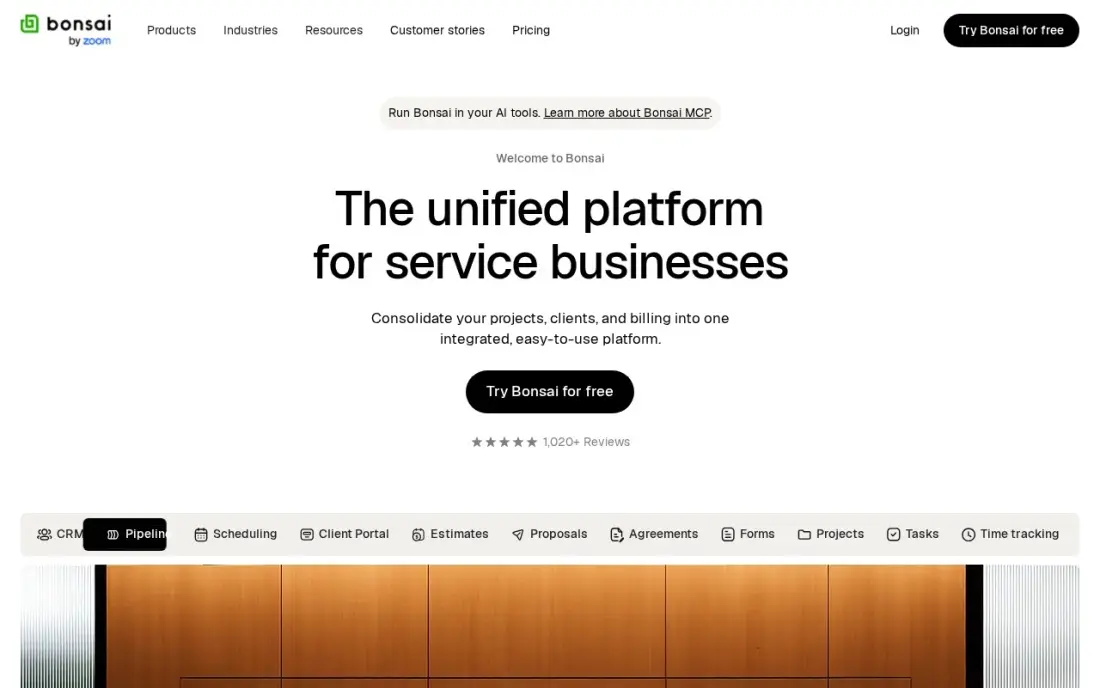
Bonsai bundles proposals, contracts, invoicing and time tracking for freelancers, which suits composers, producers and session players who agree terms before a project. Unlimited clients and projects come on every plan, and income and expense tracking keeps the books beside the client work. Basic costs $15 a user a month billed monthly, or $9 billed annually. It holds 4.3 on G2.
Invoicing, proposals and payments start on Essentials at $25 a user a month, not on Basic, and pricing is per user, so a duo doubles the bill. There is no mileage tracking or tax filing. Choose it when contracts and client paperwork matter as much as the books.
What we like
- Proposals, contracts, invoicing and time tracking in one place, built for freelancers
- Unlimited clients and projects on every plan, including Basic at $15/user/month
- Client portal, scheduling and expense tracking arrive on Essentials at $25/user/month
- Income and expense tracking keeps the books next to the client work, not in a second app
Watch out for
- Invoicing, proposals and payments start on Essentials at $25/user/month, not on Basic at $15
- Per-user pricing — a second seat doubles the bill for a two-person practice
- No mileage tracking and no tax filing, so the tax side still needs another tool
Zoho Books
Best for: Music businesses under $50,000 revenue that want a free full ledger
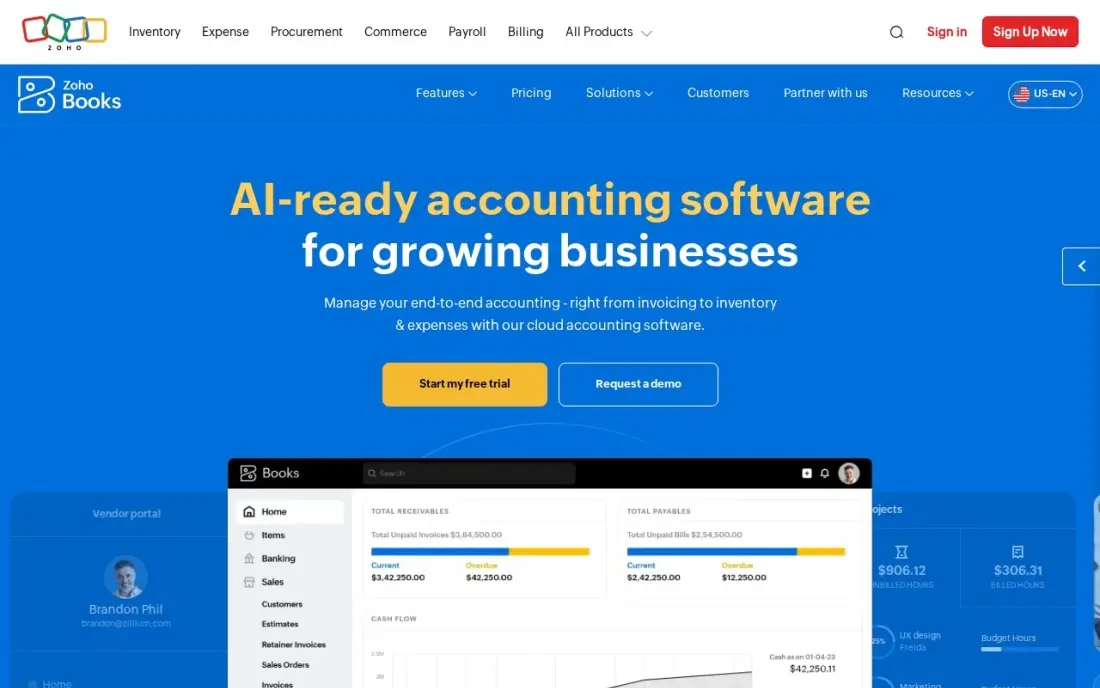
Zoho Books is free while annual revenue stays under $50,000, with full double-entry accounting, invoicing, a client portal and bank reconciliation, which covers many small studios, teaching practices and indie artists. Standard costs $15 a month billed annually, or $20 monthly, for three users and adds bank feeds.
There is no payroll module, so a studio paying staff needs a separate provider, and fewer accountants recommend it than QuickBooks or Xero. Multi-currency, useful for overseas royalties, waits for Professional at $50 a month. Choose it when a real ledger at no cost matters more than tax helpers.
What we like
- A real free plan: full double-entry accounting, invoicing and bank reconciliation at $0 while revenue stays under $50,000 a year
- Cheapest paid step up here — Standard is $20/month for 3 users and 5,000 invoices a year
- Deep Zoho ecosystem: CRM, Inventory, Expense and Payroll connect without third-party tools
- Client portal and payment reminders included, so clients can pay from the invoice itself
Watch out for
- Free plan stops at 1,000 invoices a year and only while annual revenue stays under $50,000
- Multi-currency and inventory wait for Professional at $50/month, and there is no payroll module on any plan
- Accountants recommend it less often than QuickBooks Online or Xero, so finding outside help takes more effort
Xero
Best for: Bands, studios and music businesses with several people in the books

Xero includes unlimited users on every plan, so band members, a manager and an outside accountant can each log in at no extra cost, which suits a band run as a business or a studio with staff. It is full double-entry accounting with bank feeds, sales tax and 1099 handling. Early costs $27 a month with a 30-day free trial, and it holds 4.4 on G2.
Early caps you at 20 invoices and 5 bills a month, so a busy band paying sound engineers and venues lands on Growing at $59. Automatic bank reconciliation costs $5 extra on Early, and there is no annual billing. Xero does not file returns.
What we like
- Unlimited users on every plan with no per-user fee, so an accountant costs nothing extra
- Full double-entry accounting with bank feeds, sales tax and 1099 handling
- Early at $27 a month undercuts QuickBooks Simple Start at $38 for the same job
Watch out for
- Early caps the agent at 20 invoices and 5 bills a month, so most agents land on Growing at $59
- No tax filing — Xero keeps the books and the return is filed elsewhere
- Automatic bank reconciliation costs $5 a month extra on Early
The best accounting software for musicians records money from gigs, lessons, sessions, streaming and royalties, keeps receipts for gear and travel, and shows how much to set aside for tax, so April is a report rather than a shoebox. We compared eight tools — three full ledgers, two self-employed tax trackers, one Schedule C tracker and two freelancer billing tools — on invoicing, mileage, tax estimates, users and real cost. Every price below comes from the vendor's own pricing page as checked in November 2026.
How to choose the best accounting software for musicians
- Map your income streams. Gigs, lessons, session fees, merch, streaming and royalties arrive from different payers; your tool must record them all.
- Track mileage automatically. Driving to gigs, rehearsals and students' homes is often the largest deduction.
- Keep gear receipts. Instruments, amps and software are significant purchases; store the receipt with the transaction.
- Estimate taxes as you go. No one withholds tax from a gig fee; quarterly estimates avoid a painful April.
- Decide if you need invoices. Teachers and session players invoice often; touring players may mostly get paid at the venue.
- Plan for the band. Several members or a manager means a tool with multiple users.
Organised books show which gigs, students and releases pay best. Getting found by more of them is a marketing job; our guide to content marketing for local businesses covers how teachers and performers win local search, and our local SEO service does that work for you.
Accounting software for musicians pricing: what you will actually pay
Take a freelance guitarist who teaches, plays weddings and drives to most work. Wave Starter for invoices costs $0, and Hurdlr Premium for GPS mileage and tax estimates adds $99.99 a year billed annually. QuickBooks Solopreneur does both jobs in one app for $215 a year billed annually. Keeper Tax Standard, with filing included, is $199 a year.
A music teacher with 15 students who invoices monthly outgrows FreshBooks Lite's five-client limit and pays $43 a month on Plus, or $516 a year. A four-piece band run as a business on Xero Growing pays $59 a month, or $708 a year, with all four members and the manager included. Zoho Books stays free under $50,000 of revenue, then Standard is $15 a month billed annually.
Know the difference: Schedule C trackers vs full accounting software
Schedule C trackers such as QuickBooks Solopreneur, Hurdlr and Keeper Tax are built around the self-employed tax return. They categorise income and expenses into Schedule C lines, log mileage and estimate quarterly taxes. They are quick to set up and fit a solo musician, but they do not keep a balance sheet.
Full accounting software such as Wave, Zoho Books and Xero keeps double-entry books with accounts for assets, liabilities and equity as well as income and expenses. That matters for a band set up as an LLC, a studio with equipment loans or a label paying artists. Many musicians start with a tracker and move to a ledger when the music becomes a company.
Quick comparison: tool type by need
| Buyer | Best pick | Why |
|---|---|---|
| Musicians on a tight budget | Wave | Free invoices and books, Pro $19/month |
| Self-employed players | QuickBooks Solopreneur | Income, mileage and estimates, $20/month |
| Teachers and session players | FreshBooks | Invoicing and time tracking, Lite $23/month |
| Gigging drivers | Hurdlr | GPS mileage and live tax estimates, $9.99/month |
| Tax-season worriers | Keeper Tax | Deductions and filing, $199/year |
| Composers and producers | Bonsai | Proposals, contracts and invoices, from $9/user/month annual |
| Small studios under $50,000 | Zoho Books | Free full ledger, Standard $15/month annual |
| Bands and music businesses | Xero | Unlimited users on every plan from $27/month |
Mistakes to avoid
- Mixing gig money with personal spending. A separate account for music income makes every report easier.
- Forgetting cash gigs. Cash paid at the venue is income; record it the same night.
- Not logging mileage. Reconstructing a year of gig travel from memory rarely holds up.
- Skipping quarterly estimates. A good year of gigs can leave a large tax bill with penalties.
- Splitting band money informally. If the band shares income, record each member's share and how it was paid.
How we chose
We checked each vendor's pricing page in November 2026 and recorded starting prices exactly as shown, with annual and monthly billing noted. We ranked tools for self-employed musicians, teachers and small music businesses, weighing invoicing, mileage, tax estimates, receipt capture, users and yearly cost. Ratings come from G2 pages checked on the dates shown in the sources; tools without a checked rating show none. This guide is general information, not tax advice; confirm deductions with a tax professional. No vendor paid for a place in this list, and none of the links here are affiliate links.
What to do next
Open a separate account for music income, connect it to your chosen tool and enter last month's gigs, lessons and receipts so you can see your real hourly earnings. When you want more students and bookings finding you online, book a free local SEO call with SerpAstra.
Frequently asked questions
What is the best accounting software for musicians?
For most self-employed musicians, QuickBooks Solopreneur at $20 a month is the best fit because it tracks income, expenses and mileage and estimates quarterly taxes. Wave is the best free option, and Hurdlr is best for musicians who drive to most gigs.
Do musicians need accounting software?
If you earn from gigs, teaching, sessions, streaming or royalties as a self-employed musician, you report that income and your deductible costs on Schedule C. Software keeps income, receipts and mileage in one place so the return and quarterly estimates are accurate.
What can musicians deduct?
Common business expenses include instruments and gear, strings and repairs, software and plug-ins, rehearsal and studio rent, travel to gigs, promotion and professional fees. Rules on equipment and travel are specific, so confirm with a tax professional.
How should musicians track royalty and streaming income?
Record each payment from distributors, publishers and collection societies as income in your books when received, keep their statements, and match them to any 1099 forms you receive at year end. A full ledger such as Wave, Zoho Books or Xero handles this cleanly.
Is there free accounting software for musicians?
Yes. Wave's Starter plan is free forever with unlimited invoices, and Zoho Books is free while revenue is under $50,000 a year. Hurdlr has a free plan for manual mileage and expense tracking.
What accounting software works for a band?
A band run as a business with several members is better on a full ledger with multiple users. Xero includes unlimited users from $27 a month, so every member and the manager can see the books.
Sources we checked (12)
- Wave — www.waveapps.com/pricing (checked November 10, 2026)
- Wave reviews on G2 (checked November 10, 2026)
- QuickBooks Solopreneur — quickbooks.intuit.com/pricing (checked November 10, 2026)
- FreshBooks — www.freshbooks.com/pricing (checked November 12, 2026)
- Hurdlr — www.hurdlr.com (checked November 10, 2026)
- Hurdlr reviews on G2 (checked November 10, 2026)
- Keeper Tax — www.keepertax.com/pricing (checked November 4, 2026)
- Bonsai — hellobonsai.com/pricing (checked November 7, 2026)
- Bonsai reviews on G2 (checked November 7, 2026)
- Zoho Books — www.zoho.com/us/books/pricing (checked November 8, 2026)
- Xero — www.xero.com/us/pricing-plans (checked November 10, 2026)
- Xero reviews on G2 (checked November 10, 2026)
Make one of these tools?
We re-check this list every quarter. Send a correction, request a review, or ask about a clearly labeled sponsored spot.
Request a listingShamim
Founder of SerpAstra
A full-stack digital marketer and SEO strategist covering technical and local SEO, AI search visibility, paid ads and lead generation for local businesses, e-commerce brands and SaaS teams.
Free SEO and AI visibility audit
Find out what is holding your rankings back
Send us your site. Within 2 business days you get a written audit, an AI visibility check and a short fix list ranked by impact. Free, with no contract attached.
Request my free audit→Related buying guides
 Accounting & Finance8 Best Accounting Software for 1099 Contractors in 2026, ComparedCompare the 8 best accounting software for 1099 contractors on price, mileage, tax estimates and 1099 filing, with every price checked November 7, 2026.Read guide →
 Accounting & Finance9 Best Invoicing Software for Freelancers in 2026, ComparedCompare the 9 best invoicing software for freelancers on free plans, client caps, payment fees and time-to-invoice, with every price checked on vendor pages.Read guide →
 Accounting & Finance12 Best Simple Accounting Software for Small Business in 2026, ComparedCompare the 12 best simple accounting software for small business tools on price, free plans and simplicity, with every price checked November 4, 2026.Read guide →