
7 Best AI Pricing Tools in 2026, Compared
Compare the 7 best AI pricing tools for ecommerce on competitor tracking, repricing, AI price optimization and real monthly cost, checked on vendor pages.
 Shamim Mia, Founder, SerpAstraLast verified November 5, 20269 min read
We compare pricing pages, documentation and public reviews. We never accept payment for rankings.
Key takeaways
- Prisync is the clearest entry point, with published plans from $99 a month for 100 products and a dynamic pricing engine on higher tiers.
- Repricer.com is the pick for Amazon and eBay sellers: Core costs $99 a month for up to 3,000 SKUs, and AI price optimization starts on Scale at $299.
- Price2Spy has the lowest published starting price at $78.95 a month billed monthly, but repricing and automatic matching are paid add-ons.
- Competera, Omnia Retail, Intelligence Node and Wiser are enterprise platforms with no published prices, so budget for a sales process and a written quote.
On this page
Quick comparison
| Tool | Best for | Starting price | Free plan |
|---|---|---|---|
| Prisync | Online stores that want competitor tracking and rule-based dynamic pricing at a published price | $99/mo | No (14-day trial) |
| Price2Spy | Small and mid-size retailers that want price monitoring now and repricing as an option later | $78.95/mo | No (30-day trial) |
| Repricer.com | Amazon and eBay sellers that want automatic repricing with AI optimization on larger catalogs | $99/mo | 14-day trial |
| Competera | Large retailers with a pricing team that want AI price recommendations built on demand elasticity | Custom quote | No (demo) |
| Omnia Retail | European retailers and brands that want AI dynamic pricing with every price change explained | Custom quote | Demo only |
| Intelligence Node | Global retailers and brands that want AI product matching and digital shelf data with pricing | Custom quote | No (demo) |
| Wiser Solutions | Retailers and brands that want pricing, promotion and assortment intelligence in one platform | Custom quote | No (demo) |
Make one of these tools?
We re-check this list every quarter. Send a correction, request a review, or ask about a clearly labeled sponsored spot.
Request a listingThe best AI pricing tools

Prisync
Best for: Online stores that want competitor tracking and rule-based dynamic pricing at a published price
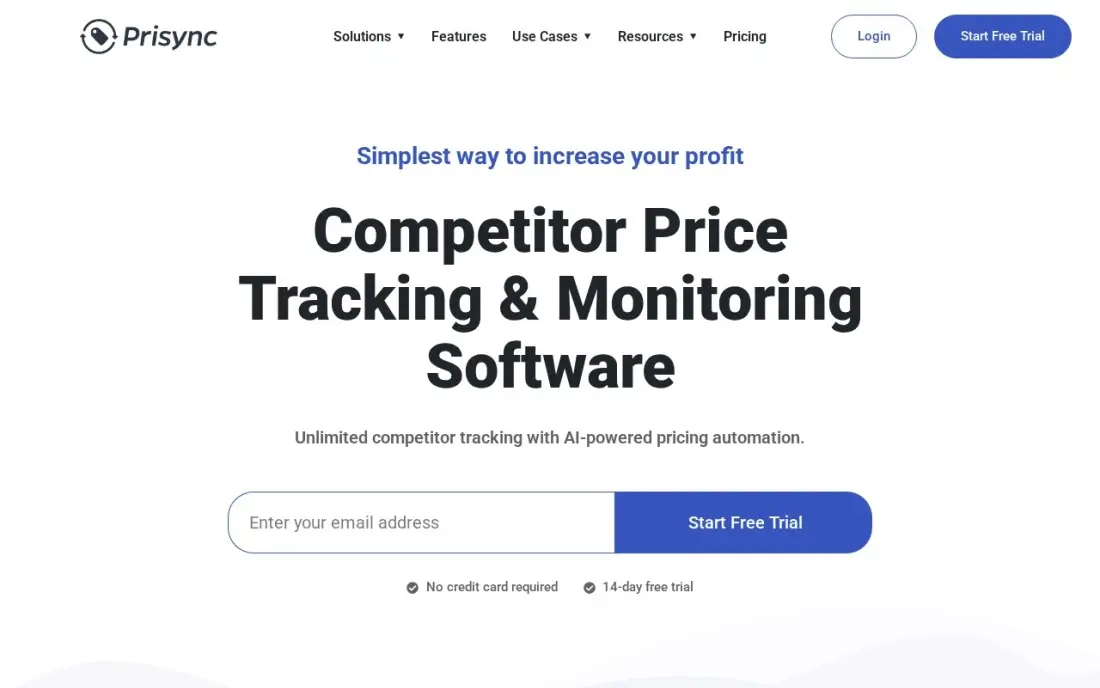
Prisync is the most transparent pricing tool in this list. Plans cost $99 a month for up to 100 products, $199 for 1,000 and $399 for 5,000, each with unlimited competitors and prices refreshed three times a day. You add competitor URLs for each product, and Prisync shows where you sit in the market, flags stock changes and, on higher tiers, suggests or applies new prices from rules you set.
It is rules-driven rather than a black-box model, which suits a store that wants to understand every change. The limits are tiering and add-ons: the full dynamic pricing engine and MAP monitoring sit on higher plans, and API access costs 20% extra. A 14-day free trial lets you test it on your real catalog.
What we like
- Published plans make budgeting simple: $99 for 100 products, $199 for 1,000, $399 for 5,000
- Prices refresh three times a day with unlimited competitors on every plan
- Stock monitoring and price-position comparison included from the entry plan
- Rated 4.7/5 on G2 from 170 reviews, with support reviewers praise most
Watch out for
- MAP monitoring waits for the Platinum plan at $399/month — the $99 entry plan does not include it
- API access costs 20% extra on every plan
- URL-based plans need you to add competitor links by hand
Price2Spy
Best for: Small and mid-size retailers that want price monitoring now and repricing as an option later
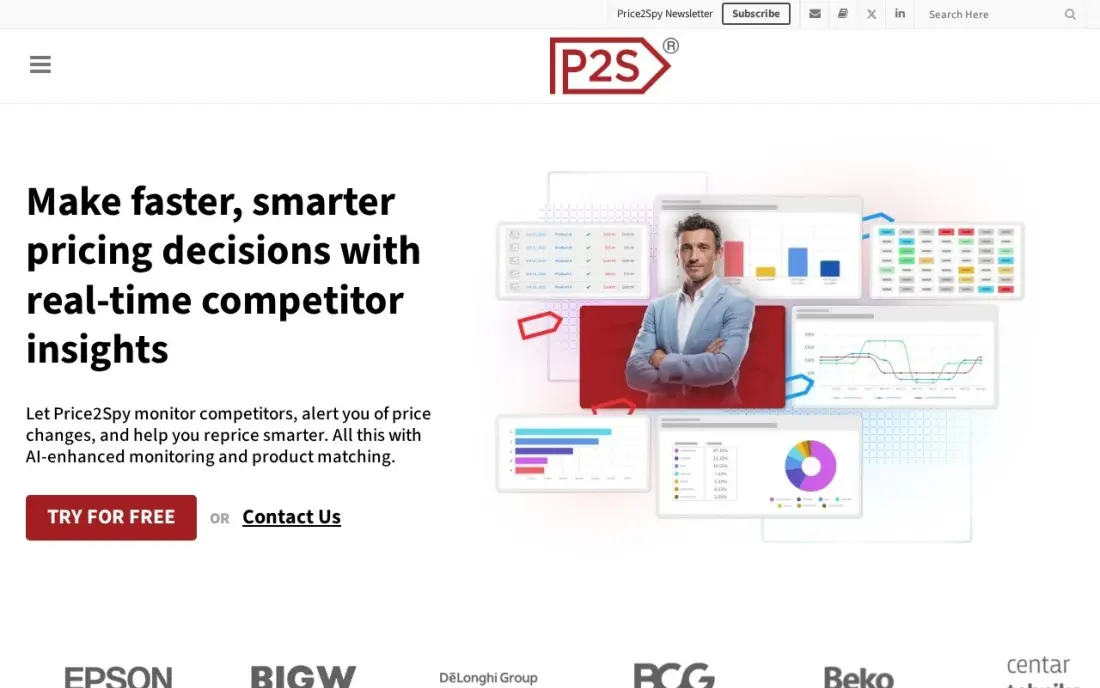
Price2Spy has the lowest published starting price among the tools here: the base plan costs $78.95 a month billed monthly and scales with the number of product URLs you track. It checks competitor prices up to eight times a day, alerts you to price and stock changes, and tracks marketplace sellers so you can see who is undercutting you.
The automation is modular. Automatch, which pairs your products with competitor listings, and the repricing module both cost extra, so a setup that actually changes prices for you can cost roughly double the base fee. Setup can take a week to a month. A 30-day free trial is long enough to see whether the alerts alone change your decisions.
What we like
- Instant price and stock alerts with like-for-like product matching across 40+ countries
- Price checks up to eight times a day on higher plans
- Marketplace seller tracking shows exactly who is undercutting your price
- Rated 4.8/5 on G2 from 110 reviews, the highest score in this list
Watch out for
- Automatch and repricing are paid add-ons, so the $78.95 base price is not the full cost for most buyers
- Setup and onboarding can take a week to a month
- No free plan — only the 30-day trial

Repricer.com
Best for: Amazon and eBay sellers that want automatic repricing with AI optimization on larger catalogs
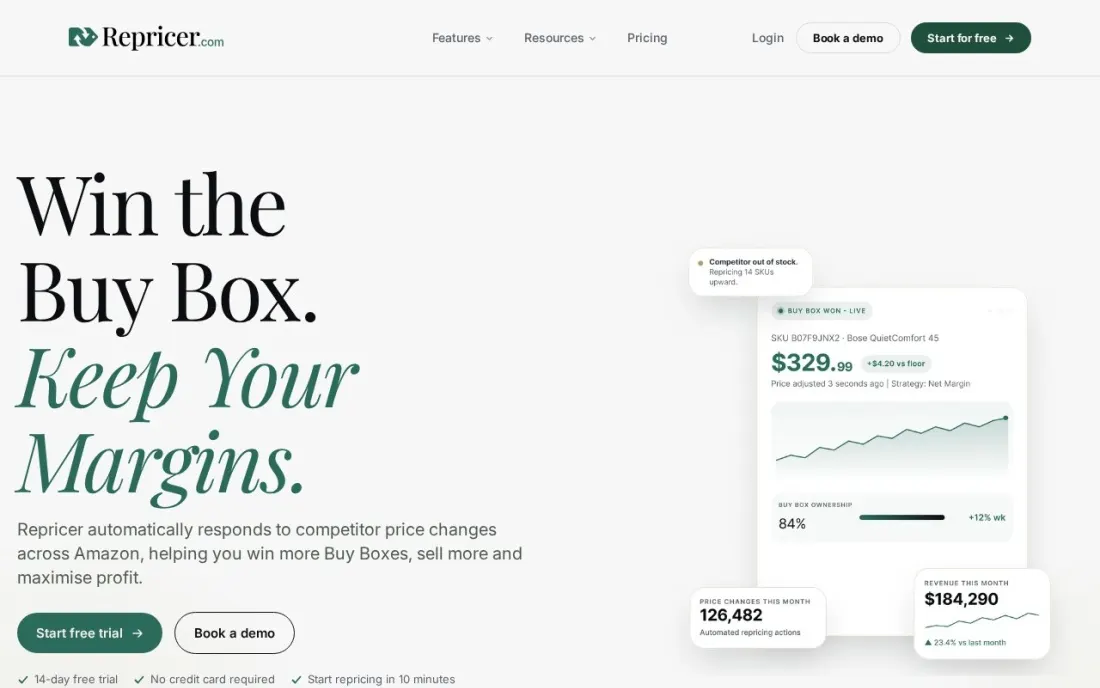
Repricer.com is built for marketplace sellers who compete for the Buy Box. It reprices Amazon and eBay listings automatically against competing offers, and every plan includes both marketplaces. Core costs $99 a month for up to 3,000 SKUs across three marketplaces, and Scale at $299 a month raises the limit to 50,000 SKUs and adds AI price optimization, which adjusts prices toward sales and margin targets rather than simply matching the lowest offer.
Premium at $499 a month covers 250,000 SKUs and adds a multichannel price replicator that pushes prices to Shopify, Walmart and Magento. Cross-ASIN repricing with AI-detected variants costs EUR 149 a month extra. The 14-day free trial needs no credit card.
What we like
- Amazon and eBay repricing is included on every plan, from Core at $99 a month
- Scale at $299 a month adds AI price optimization and covers up to 50,000 SKUs
- 14-day free trial with no credit card, and you set up the account before choosing a plan
Watch out for
- AI price optimization is not on the $99 Core plan
- Syncing prices to Shopify, Walmart and other channels needs Premium at $499 a month
- Cross-ASIN repricing is a paid add-on at EUR 149 a month per account

Competera
Best for: Large retailers with a pricing team that want AI price recommendations built on demand elasticity
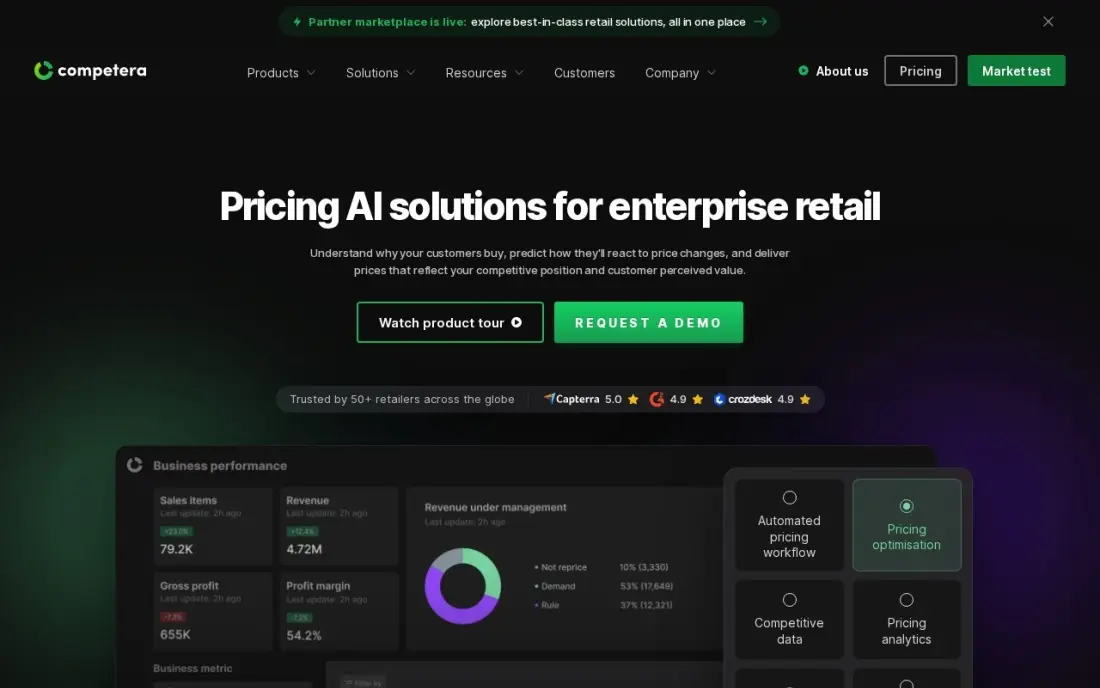
Competera is an AI price optimization platform rather than a monitoring tool with rules on top. It combines competitor price data with models that weigh more than 20 pricing drivers, including demand elasticity, to recommend prices that hit a revenue or margin goal across a large assortment. That makes it a fit for retailers with thousands of products where manual rules break down.
It is built for enterprise buyers. Competera publishes no pricing, works through a demo and sales process, and expects a dedicated pricing team to review its recommendations. A small store will find the scope and the contract heavier than the problem. Choose it when pricing is a strategic function, not a weekly task.
What we like
- AI price recommendations built on 20+ pricing drivers, not just competitor matching
- Combines competitor price data with demand elasticity models across a large assortment
- Recommends prices that hit a revenue or margin goal across thousands of products
- Proven with large grocery, electronics and apparel retailers
Watch out for
- No published pricing — Competera sells by custom quote
- Built for enterprises with dedicated pricing teams, so it is overkill for a small brand
- Optimization scope needs careful scoping on a demo, and a pricing team must review its recommendations

Omnia Retail
Best for: European retailers and brands that want AI dynamic pricing with every price change explained

Omnia Retail, based in Amsterdam, sells AI dynamic pricing for brands and retailers. You build strategies in a Pricing Strategy Tree, safety rules check every price before it goes live, and a Show Me Why view explains what triggered each change and its expected effect. An AI assistant, Omnia Agent, watches the data and flags margin risks and competitor moves.
Competitor monitoring is built in for Amazon, Google, eBay and European marketplaces such as idealo, Kaufland and bol., and plugins connect Shopify, Shopware, Plentymarkets and JTL. Omnia publishes no prices on its product page, so plan for a demo and a quote. It suits a mid-size or larger European store that wants automation it can audit.
What we like
- AI dynamic pricing with a Pricing Strategy Tree and safety rules that filter every price change
- A Show Me Why view explains which rules and data triggered each price
- Built-in competitor monitoring for Amazon, Google, eBay, idealo, Kaufland and bol.
Watch out for
- No published prices; you need a call or demo to get a quote
- Marketplace coverage leans toward European channels

Intelligence Node
Best for: Global retailers and brands that want AI product matching and digital shelf data with pricing
Intelligence Node pairs competitor price intelligence with digital shelf analytics, so a pricing team sees not only what rivals charge but whether its products are in stock and well presented on each retailer. Its AI matching links your catalog to competitor listings across very large assortments and many countries, which is where manual matching becomes impossible.
Like the other enterprise platforms here, it publishes no pricing and sells through a demo. Its vendor claims about dataset size are worth testing on your own catalog during that demo. Buy it when pricing decisions span several markets and you also want shelf and content data in the same contract.
What we like
- Pairs competitor price monitoring with digital shelf analytics — pricing, availability and content quality
- AI matching handles massive catalogs across global markets
- Built for pricing teams whose decisions span several markets and retailers
- Claims the world's largest pricing dataset, feeding over $600 billion in retail revenue
Watch out for
- No published pricing — Intelligence Node sells by custom quote
- Enterprise pricing and onboarding suit large catalogs, not small brands
- Vendor claims about dataset size are worth testing on your own catalog during the demo

Wiser Solutions
Best for: Retailers and brands that want pricing, promotion and assortment intelligence in one platform
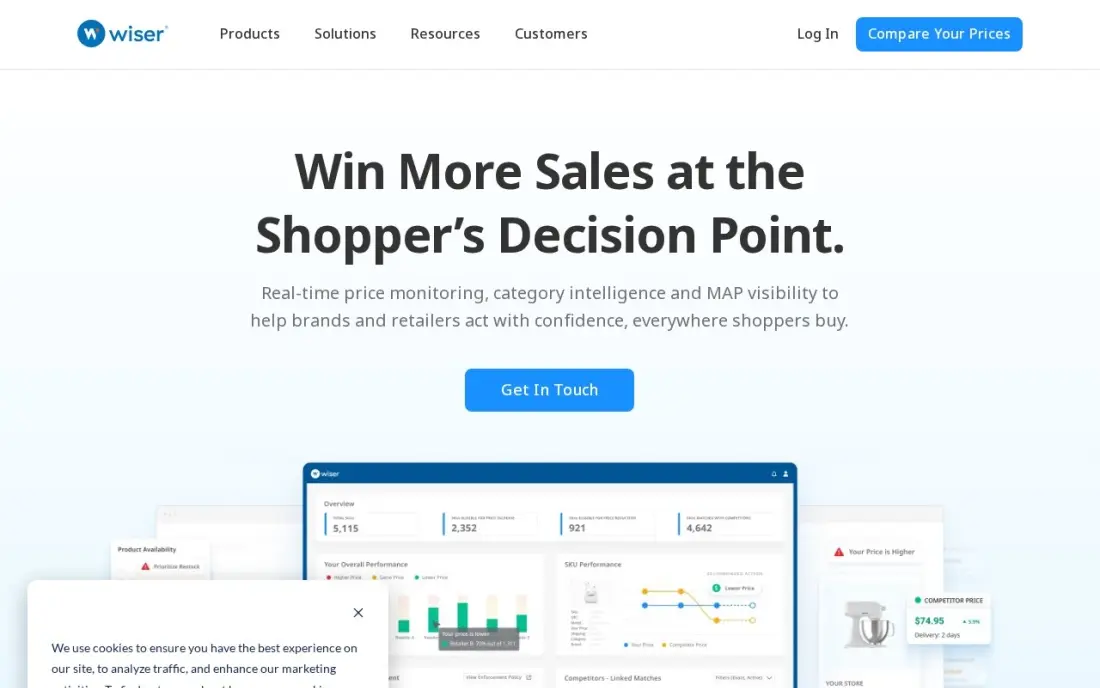
Wiser Solutions is a commerce intelligence platform where pricing is one module among several. It updates competitor prices as often as every 15 minutes, uses AI-driven matching to keep your catalog aligned with retailer listings, and adds promotion, assortment and review tracking, so you can see why a competitor's price moved, not only that it did.
Wiser publishes no pricing; the quote depends on catalog size and channels. G2 reviewers rate it 4.3 out of 5 from 63 reviews, praising support while noting the interface could be easier to navigate. It is the right fit when pricing decisions need promotion and assortment context; for repricing alone, a focused tool costs less.
What we like
- Promotion, assortment and review tracking show why a competitor's price moved, not only that it did
- Price updates as often as every 15 minutes across large catalogs
- Automated product discovery and AI-driven matching reduce manual setup
- Used by large brands and retailers, so the data quality is proven at scale
Watch out for
- No published pricing — Wiser sells by custom quote
- Reviewers note the interface could be easier to navigate
- In-store data relies partly on crowdsourced collection, so coverage varies by category
The best AI pricing tools watch competitor prices for you, then suggest or set your own prices to protect margin and win sales. We compared seven tools across three kinds of pricing software — price monitoring with rules, marketplace repricers and enterprise AI price optimization platforms — and every price below comes from the vendor's own pricing page as checked in November 2026. Several of the enterprise tools publish no prices, and we say so rather than guessing.
How to choose the best AI pricing tools
- Know where you sell. Amazon and eBay sellers need a repricer that competes for the Buy Box; a store on its own website needs competitor monitoring across retailer sites.
- Check how products are matched. Pricing is only as good as the match between your product and the competitor's; ask whether matching is automatic, manual or a paid add-on.
- Separate rules from optimization. Rules follow competitors; AI optimization uses demand and margin data. Decide which you need before paying for the second.
- Set floor prices from day one. Any tool that changes prices needs a minimum price per product so it never sells below cost.
- Ask how often prices refresh. Three checks a day suits most stores; fast-moving marketplaces need near real-time updates.
- Price the catalog size you will have next year. Most plans are tiered by products or SKUs, so growth can move you up a tier quickly.
Pricing wins the sale once a shopper finds you; search decides whether they find you. If product pages are not ranking, our SEO audit shows what is holding them back, and the free title tag checker helps you write product titles that earn the click.
AI pricing tools pricing: what you will actually pay
Take a store with 800 products that wants to track competitors and adjust prices. On published prices, Prisync covers 1,000 products for $199 a month, or $2,388 a year. Price2Spy starts at $78.95 a month billed monthly, but Automatch and repricing are paid add-ons, so budget for roughly double the base fee once both are switched on, and confirm the exact figure during the 30-day trial.
A marketplace seller with 2,500 Amazon SKUs fits Repricer.com Core at $99 a month, or $1,188 a year, for rule-based repricing. Moving to Scale at $299 a month, or $3,588 a year, adds AI price optimization and room for 50,000 SKUs.
Competera, Omnia Retail, Intelligence Node and Wiser Solutions publish no prices. They quote by catalog size, markets and modules, so ask for the full first-year cost, including onboarding, in writing before you compare them with the published-price tools.
Know the difference: competitor monitoring vs AI price optimization
Competitor monitoring tells you what everyone else charges. Prisync and Price2Spy collect competitor prices several times a day, show where you sit in the market and alert you to changes, and their repricing features then apply rules you write, such as matching the lowest price above a floor. You stay in control of the logic, and every change is easy to explain.
AI price optimization goes further. Competera and Omnia Retail use market and sales data to recommend the price that best meets a goal, and Repricer.com adds AI price optimization on its Scale plan. The result can be a price above a competitor's when your product sells anyway. That is more powerful and harder to audit, which is why the better tools explain each recommendation and let you set guardrails.
Quick comparison: tool type by need
| Buyer | Best pick | Why |
|---|---|---|
| Online stores, clear pricing | Prisync | Published plans from $99/month, dynamic pricing on higher tiers |
| Monitoring on a budget | Price2Spy | Base plan $78.95/month, repricing as an add-on |
| Amazon and eBay sellers | Repricer.com | Core $99/month, AI optimization from $299/month |
| Large retailers | Competera | AI recommendations from 20+ pricing drivers, custom quote |
| European retailers | Omnia Retail | Explainable AI dynamic pricing, custom quote |
| Global catalogs | Intelligence Node | AI matching plus digital shelf data, custom quote |
| Pricing plus promotions | Wiser Solutions | Price, promotion and assortment data, custom quote |
Mistakes to avoid
- Racing to the bottom. A tool that always undercuts the lowest offer will find it; set floors and margin targets so it cannot.
- Trusting bad matches. One wrong product match can drag a price down for weeks; audit matches on your top sellers before turning on automation.
- Ignoring MAP agreements. Brands you resell may set minimum advertised prices, and automatic repricing can break them.
- Buying enterprise software for a small catalog. Quote-only platforms carry long sales cycles and onboarding; a few hundred products rarely need them.
- Letting it run unwatched. Review price changes weekly for the first month and keep a log of what changed and why.
Related comparisons: Pricing Software · AI Accounting Software · AI Design Apps Free to Use · AI Mobile Apps
How we chose
We checked each vendor's own pricing or product page in November 2026 and recorded starting prices exactly as shown, including which features sit on which plan. Where a vendor publishes no price, we list it as a custom quote rather than repeating third-party estimates. We grouped the tools by how they price — rules, marketplace repricing or AI optimization — and ranked them by fit for an online store or marketplace seller managing hundreds to thousands of products. Ratings come from G2 pages checked on the dates shown in the sources; tools without a verified rating show none. No vendor paid for a place in this list, and none of the links here are affiliate links.
What to do next
Pick your 50 best-selling products and run them through a free trial of the tool that fits where you sell, with a floor price on each. After two weeks, compare margin and sales with the two weeks before. If the products are priced right but traffic is thin, that is a visibility problem. Book a free SEO review.
Frequently asked questions
What are the best AI pricing tools?
Prisync is the best published-price option for online stores, from $99 a month for 100 products. Repricer.com is best for Amazon and eBay sellers, with AI price optimization from $299 a month, and Competera is the strongest AI optimization platform for large retailers, priced by quote.
How much do AI pricing tools cost?
Published prices in this list start at $78.95 a month for Price2Spy's base plan billed monthly, $99 a month for Prisync Professional and $99 a month for Repricer.com Core. Competera, Omnia Retail, Intelligence Node and Wiser Solutions publish no prices and quote per catalog.
Is there a free AI pricing tool?
None of the tools here has a free plan. Repricer.com and Prisync offer 14-day free trials, and Price2Spy offers a 30-day free trial. The enterprise platforms offer demos rather than trials.
What is the difference between repricing and price optimization?
Repricing reacts to competitors by following rules, such as staying a cent below the lowest offer. Price optimization uses demand and margin data to set the price that best meets a goal, which may be higher than the competition when demand allows.
Do small online stores need AI pricing software?
Only when the catalog or competition is too large to watch by hand. A store with a few dozen products can track rivals manually; once you have hundreds of products or sell on Amazon against many sellers, a tool such as Prisync or Repricer.com pays for itself faster.
Can AI pricing tools lower my margins?
Yes, if you set them up badly. Always set a minimum price per product based on cost and margin, and review the first weeks of changes before letting the tool run unattended.
Sources we checked (10)
- Prisync — prisync.com/pricing (checked November 5, 2026)
- Prisync reviews on G2 (checked November 5, 2026)
- Price2Spy — www.price2spy.com/pricing (checked November 5, 2026)
- Price2Spy reviews on G2 (checked November 5, 2026)
- Repricer.com — www.repricer.com/pricing (checked November 16, 2026)
- Competera — competera.net (checked November 5, 2026)
- Omnia Retail — www.omniaretail.com/product (checked November 16, 2026)
- Intelligence Node — intelligencenode.com (checked November 5, 2026)
- Wiser Solutions — wiser.com (checked November 5, 2026)
- Wiser Solutions reviews on G2 (checked November 5, 2026)
Make one of these tools?
We re-check this list every quarter. Send a correction, request a review, or ask about a clearly labeled sponsored spot.
Request a listingShamim
Founder of SerpAstra
A full-stack digital marketer and SEO strategist covering technical and local SEO, AI search visibility, paid ads and lead generation for local businesses, e-commerce brands and SaaS teams.
Free SEO and AI visibility audit
Find out what is holding your rankings back
Send us your site. Within 2 business days you get a written audit, an AI visibility check and a short fix list ranked by impact. Free, with no contract attached.
Request my free audit→Related buying guides
 Ecommerce12 Best Minimum Advertised Price Software in 2026, ComparedCompare the 12 best minimum advertised price software tools in detail on price, enforcement and evidence, with every price checked November 5, 2026.Read guide →
 Ecommerce8 Best AI Tools for Ecommerce in 2026, ComparedCompare the 8 best AI tools for ecommerce across support, chat, analytics, SMS, reviews, design and copy, with what each AI feature really costs per month.Read guide →
 Ecommerce10 Best Amazon PPC Automation Software in 2026, Compared10 best amazon ppc automation software options compared on price, automation style and spend fit, with the real monthly cost worked out for you.Read guide →