
8 Best Apps to Learn French in 2026, Compared
Compare the 8 best apps to learn French on grammar, speaking practice, free plans and real yearly cost, from Duolingo and Babbel to Pimsleur and LingQ.
 Shamim Mia, Founder, SerpAstraLast verified November 4, 20268 min read
We compare pricing pages, documentation and public reviews. We never accept payment for rankings.
Key takeaways
- Duolingo is the best free way to start French, with the full course on the free plan; Super costs $12.99 a month or $83.99 a year.
- Babbel is the best pick for adults who want French grammar explained, at $107.40 for 12 months or $17.95 month to month.
- Pimsleur is the strongest app for French speaking and listening, with 30-minute audio lessons from $14.95 a month.
- No single app gets you to fluency: pair a course app with an input tool such as LingQ, and add a tutor or conversation partner once you can hold a simple exchange.
On this page
Quick comparison
| Tool | Best for | Starting price | Free plan |
|---|---|---|---|
 Duolingo | Beginners who want to start French free and build a daily habit before paying | $12.99/mo | Yes (free plan) |
 Babbel | Adults who want French grammar explained in short structured lessons | $17.95/mo | No (first lesson free) |
 Busuu | Learners who want native French speakers to correct their writing and speaking | $12.49/mo | Yes (free plan) |
 Pimsleur | Commuters who want to speak and understand spoken French from the first lesson | $14.95/mo | No (7-day trial) |
 Rosetta Stone | Visual learners who want French immersion with no English translations | $19.99/mo | No (7-day trial) |
 LingQ | Intermediate French learners who want to learn from real articles, podcasts and videos | $14.99/mo | Yes (free plan) |
 Memrise | Learners who want everyday French phrases from native-speaker videos and AI chat | $24.99/mo | Yes (free plan) |
 Drops | Busy learners who want five minutes of illustrated French vocabulary a day | $12.99/mo | Yes (free plan) |
Make one of these tools?
We re-check this list every quarter. Send a correction, request a review, or ask about a clearly labeled sponsored spot.
Request a listingThe best apps to learn French
Duolingo
Best for: Beginners who want to start French free and build a daily habit before paying
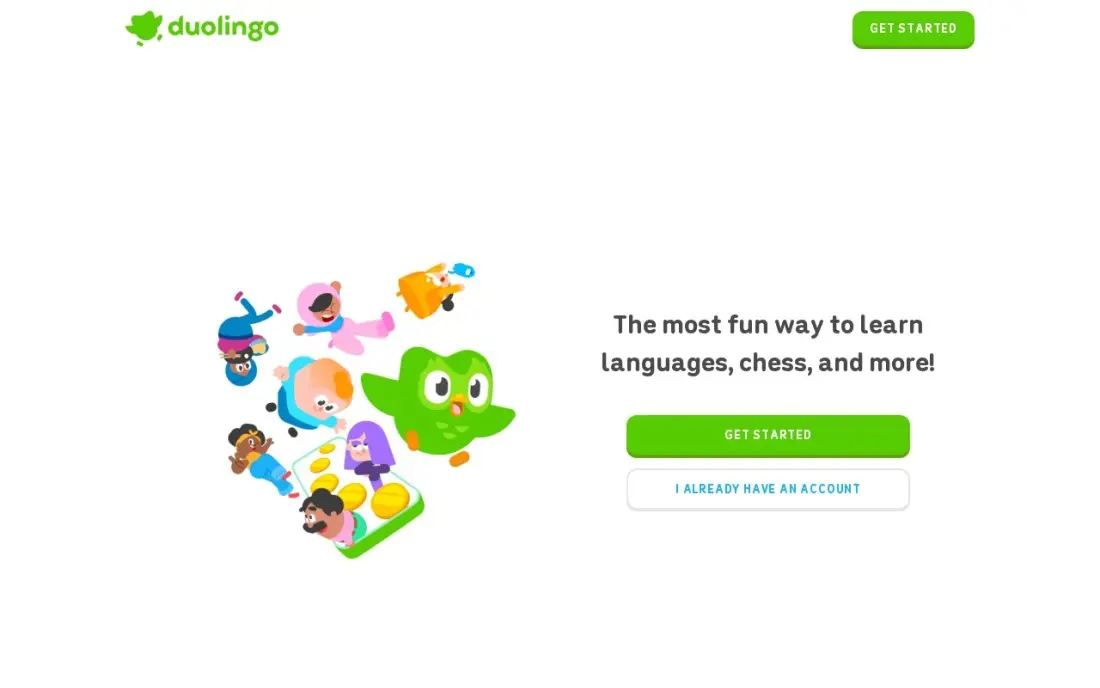
Duolingo's French course is the easiest free start: short lessons drill vocabulary, listening and sentence building, and streaks and leagues push you to come back every day. The free plan covers the whole course, so a beginner can work through the basics of greetings, articles and the present tense for months without paying anything.
The free plan's energy system stops practice after too many mistakes, and ads interrupt lessons. Super costs $12.99 a month or $83.99 a year and removes both limits, though Duolingo tests prices by account. Its weak spot for French is speaking: lessons follow set patterns, so you will need real conversation practice once you finish the early units.
What we like
- Free plan covers the full course, so you can learn for months without paying
- Streaks, leagues and short game-like lessons make daily practice easy to keep
- Super removes ads and the energy limit, with unlimited practice and review sessions
Watch out for
- Free plan has ads and an energy limit that stops practice after too many mistakes
- Lessons follow set patterns, so app scores can run ahead of real conversation skill
- Super prices vary by account and test group, from $9.99 to $12.99 a month on the app store
Babbel
Best for: Adults who want French grammar explained in short structured lessons
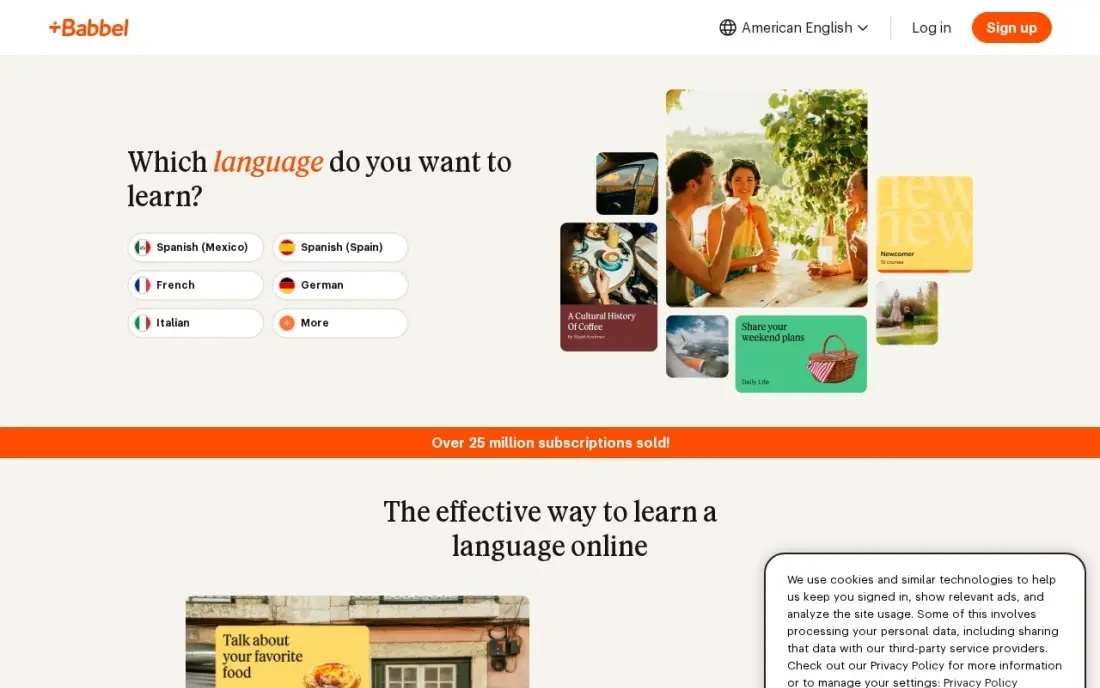
Babbel suits learners who want to understand French rather than memorise phrases. Each 10 to 15 minute lesson pairs a short dialogue with grammar notes, which helps with the parts of French that trip up English speakers: gendered nouns, agreement of adjectives and the many verb endings that sound alike. Review sessions bring vocabulary back on a spaced schedule, and Babbel Speak adds AI conversation practice.
There is no free plan beyond the first lesson of each course. A single month costs $17.95, while the 12-month plan is $107.40 upfront, shown as $8.95 a month. For a commuter who wants a clear, adult-paced path through French grammar, it is the most structured option here.
What we like
- Short 10–15 minute lessons pair dialogues with grammar notes, so you learn why a sentence works
- Review sessions bring words back on a spaced-repetition schedule
- Babbel Speak adds AI conversation practice to rehearse real dialogues
Watch out for
- No free plan — only the first lesson of each course is free
- The $8.95 monthly figure is the 12-month plan paid upfront ($107.40); month-to-month costs $17.95
Busuu
Best for: Learners who want native French speakers to correct their writing and speaking
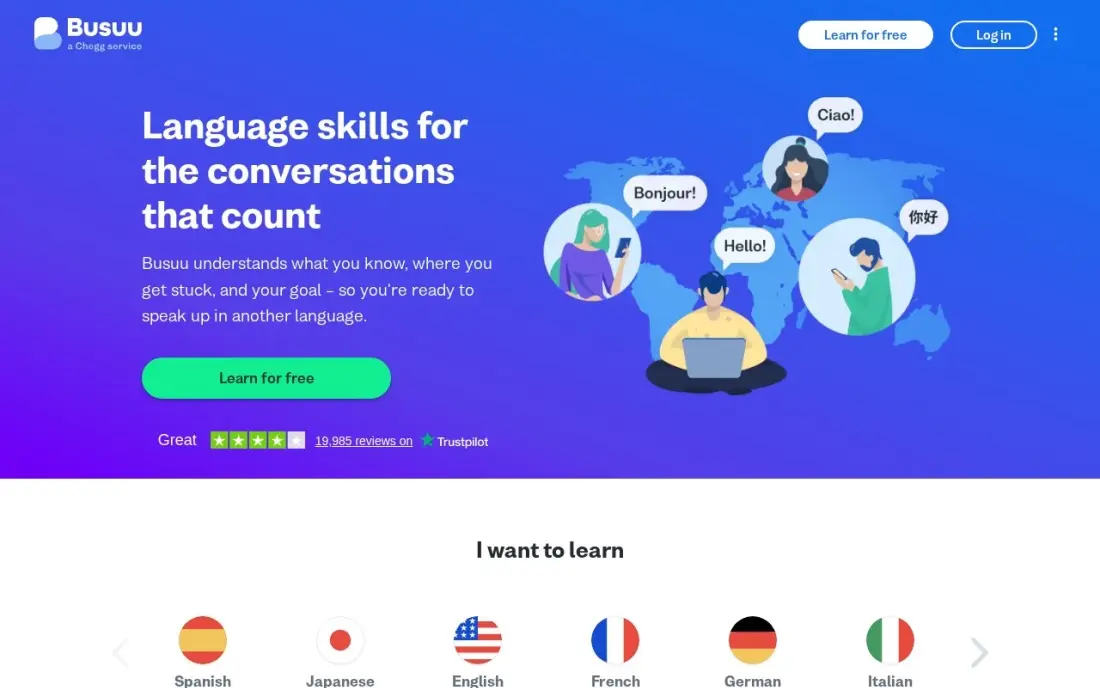
Busuu's standout for French is feedback from people: you submit short written and spoken exercises, and native French speakers in the community correct them. That catches the mistakes an app cannot, such as an awkward phrase that is grammatically right but nobody would say. Premium adds grammar review, offline mode and CEFR certificates for completed levels.
The free plan has basic lessons with ads. Premium costs $12.49 a month or $72.99 a year, about $6.08 a month, and AI Conversations need Premium Plus at $14.90 a month. Busuu tests different prices on different visitors, so check the figure at checkout before you commit.
What we like
- Native speakers correct your written and spoken exercises
- CEFR certificates for completed levels, plus offline mode and grammar review on Premium
- Annual Premium at $72.99 a year works out to about $6.08 a month
Watch out for
- Grammar lessons, offline mode and certificates sit behind the Premium paywall
- AI Conversations need Premium Plus at $14.90 a month
- Busuu tests different prices on different visitors, so the figure you see may differ
Pimsleur
Best for: Commuters who want to speak and understand spoken French from the first lesson

Pimsleur is the app for French pronunciation and listening. Each 30-minute audio lesson has you hear a phrase, recall it and say it out loud, which trains the ear for nasal vowels, silent endings and the way French words run together. Because it is hands-free, it fits a commute or a walk better than any screen-based app here.
Audio-Only costs $14.95 a month for one language; Premium at $19.95 a month adds Voice Coach and flashcards, and All Access at $20.95 a month covers every language. There is no free plan, only a 7-day free trial that needs payment details. Pair it with a reading app, because audio alone leaves spelling behind.
What we like
- 30-minute audio lessons prompt you to listen, recall and answer out loud from day one
- Hands-free format works on a commute, a workout or household chores
- All Access at $20.95 a month adds every language for $1 more than single-language Premium
Watch out for
- Audio-Only at $14.95 has no practice tools — Voice Coach and flashcards need Premium at $19.95
- No free plan, only a 7-day free trial, and Pimsleur takes payment details first
Rosetta Stone
Best for: Visual learners who want French immersion with no English translations
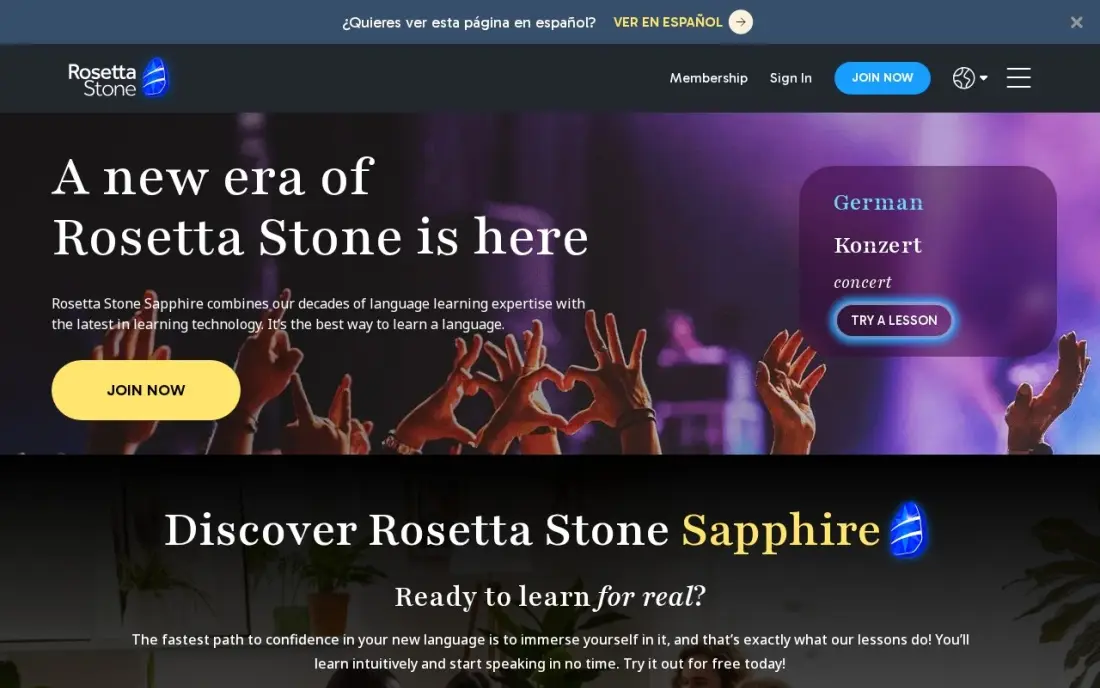
Rosetta Stone teaches French by immersion: lessons use pictures, sounds and words in French from the first minute, with no English translation. TruAccent speech recognition scores your pronunciation on every spoken phrase, which is useful for French sounds such as the uvular r. One subscription covers all 25 languages, so adding a second language costs nothing extra.
The method has a cost for learners who want to know why a sentence works, because there are no grammar explanations in English. Sapphire costs $19.99 a month billed monthly or $159 a year billed annually, with a 7-day free trial and tutoring at extra cost. It suits learners who prefer to absorb patterns rather than study rules.
What we like
- Lessons stay in the target language from the first minute — pictures, sounds and words, no translation
- TruAccent speech recognition scores your pronunciation on every spoken phrase
- One subscription covers all 25 languages, so a second language costs nothing extra
Watch out for
- No grammar explanations in English, so learners who want to know why will feel lost
- No free plan, only a 7-day free trial, and tutoring sessions cost extra
LingQ
Best for: Intermediate French learners who want to learn from real articles, podcasts and videos
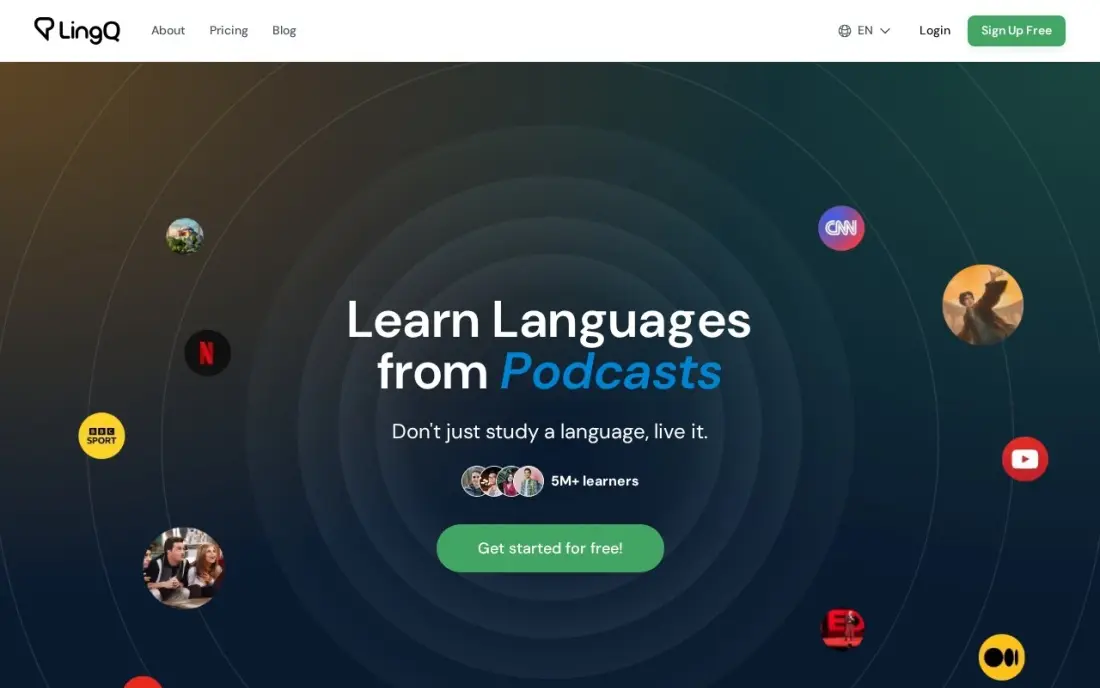
LingQ is for the stage after the beginner apps, when you can follow simple French and want real content. You import an article, a podcast transcript or a video, and every unknown word is one tap from a definition, then saved for spaced review. Reading Le Monde or listening to a French podcast this way builds the vocabulary that course apps never reach.
The free plan caps saved words at 20, which runs out in a single lesson, so it is really a paid tool. Premium costs $14.99 a month or $119.99 a year, and AI features sit on Premium Plus at $29.99 a month. Trustpilot reviewers report bugs and slow support, so test it on the free plan first.
What we like
- Import any article, book or video and study it as a lesson, with every unknown word one tap away
- One subscription covers all 50-plus languages
- Spaced-repetition review is built around the words you actually looked up
Watch out for
- The free plan caps at 20 saved words, which runs out in a single lesson
- AI features and tutoring points sit on Premium Plus at $29.99 a month, not Premium
Memrise
Best for: Learners who want everyday French phrases from native-speaker videos and AI chat
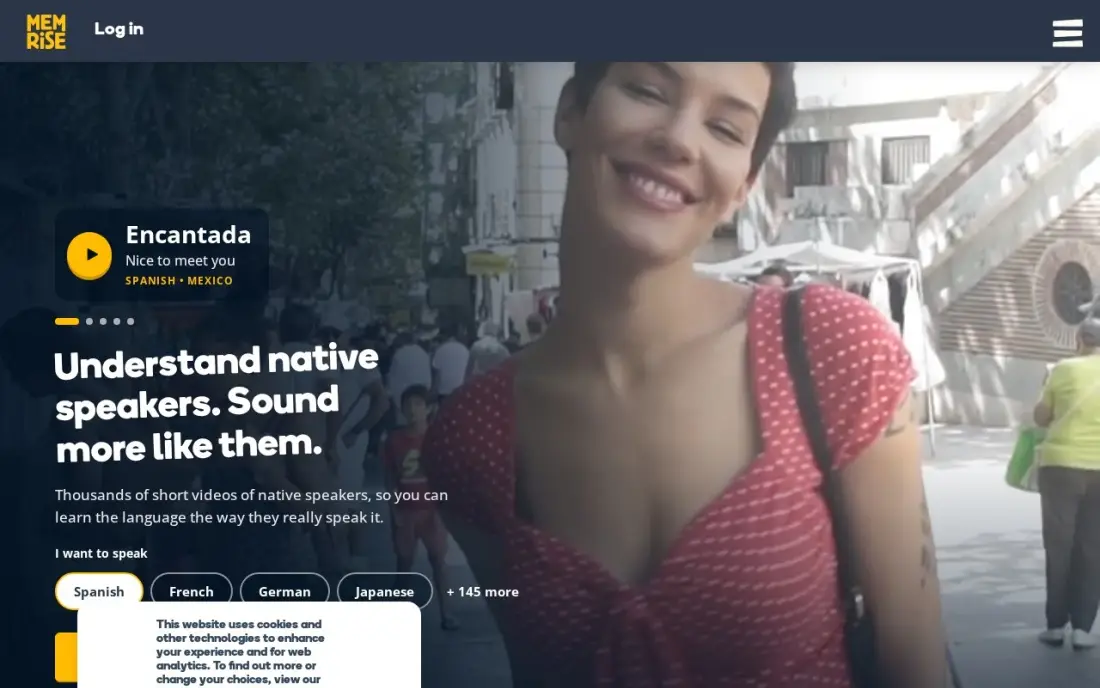
Memrise builds French vocabulary around practical situations and short clips of native speakers, so you hear how a phrase is actually said in a café or a shop, not just how it is written. On Pro, AI Buddies give unlimited speaking practice with grammar help, which is a low-pressure way to rehearse before talking to a real person.
The price structure rewards commitment: Pro costs $24.99 a month billed monthly but $61.99 a year billed annually, about $5.17 a month. There is no systematic grammar teaching, so pair Memrise with Babbel or a textbook for French verb tenses. The free plan offers limited lessons and videos to judge the style.
What we like
- Native-speaker videos show how words sound in real context, not just in drills
- AI Buddies give unlimited speaking practice with grammar help on Pro
- Annual plan at $61.99 a year is about $5.17 a month
Watch out for
- Paying month to month costs $24.99, nearly five times the annual rate
- No systematic grammar teaching, so it works best paired with another resource
Drops
Best for: Busy learners who want five minutes of illustrated French vocabulary a day
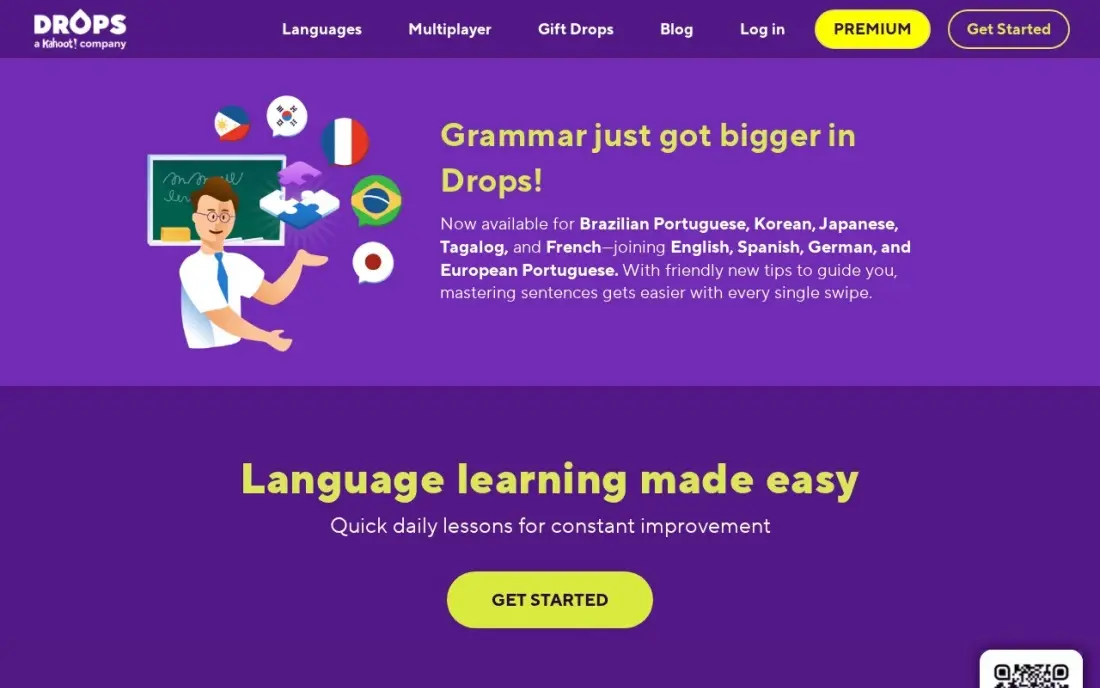
Drops teaches French vocabulary in five-minute bursts, with every word paired with an illustration and audio, so you build a word bank without translation drills. The free plan gives five minutes a day forever, which is enough to add a handful of words daily alongside a main course app.
It is vocabulary only: there is no grammar, no sentence building and no conversation practice, so it cannot be your only French app. Premium costs $12.99 a month or $69.99 a year, and a one-time lifetime plan costs $159.99. Trustpilot reviewers raise billing and auto-renewal complaints, so set a reminder before any trial ends.
What we like
- Every word is taught with an illustration, so vocabulary sticks without translation drills
- Five-minute sessions fit any day, and the free plan never expires
- The annual plan costs $69.99 a year, about $5.83 a month
- A one-time lifetime plan at $159.99 ends the subscription entirely
Watch out for
- Vocabulary only — no grammar, no sentences, no conversation practice
- The free plan stops after five minutes a day, so serious study needs Premium
- Trustpilot scores 2.8 out of 5 from only 16 reviews, with complaints about billing and auto-renewal
The best app to learn French depends on what you need most: a free daily habit, grammar that makes sense, or the confidence to speak out loud. We compared eight apps that teach French — course apps, an audio method, an immersion program and two vocabulary and reading tools — on how they handle grammar, pronunciation, free access and yearly cost. Every price below was checked on the vendor's own pages in November 2026.
How to choose the app to learn French
- Start with your goal. Travel French needs listening and phrases; exams and work need grammar and writing. Pimsleur leans to the first, Babbel and Busuu to the second.
- Look for grammar explanations. French genders, agreements and verb tenses are easier with rules explained; Rosetta Stone deliberately avoids them, Babbel puts them in every lesson.
- Make sure you speak. French pronunciation does not come from tapping tiles. Pick at least one app that makes you say phrases aloud.
- Test the free tier before the annual plan. Duolingo, Busuu, Memrise, Drops and LingQ all have free plans; Babbel, Pimsleur and Rosetta Stone offer only a first lesson or a 7-day trial.
- Compare annual and monthly prices. Memrise costs $24.99 month to month but $61.99 a year; buying monthly by default can cost several times more.
- Plan for the intermediate stage. Course apps run out of road; a reading and listening tool such as LingQ keeps progress going.
For a wider view of language tools, including tutoring marketplaces and multi-language platforms, see our guide to the best language learning platforms, and the best free language apps if you want to keep your budget at zero.
French app pricing: what you will actually pay
Take a learner who studies French every day for a year. On annual billing, Memrise Pro costs $61.99, Drops $69.99, Busuu Premium $72.99, Duolingo Super $83.99, Babbel $107.40, LingQ Premium $119.99 and Rosetta Stone $159. Paying month to month changes the picture: twelve months of Babbel at $17.95 is $215.40, Memrise at $24.99 is $299.88 and Rosetta Stone at $19.99 is $239.88.
Pimsleur is priced monthly, so a year of Audio-Only at $14.95 costs $179.40 and Premium at $19.95 costs $239.40. A realistic combination — Duolingo free for daily drills plus Babbel's 12-month plan for grammar — costs $107.40 for the year. Adding LingQ Premium for reading in the second half of the year adds $14.99 a month.
Know the difference: course apps vs immersion and input tools
Course apps such as Duolingo, Babbel and Busuu take you through French in a fixed order, from greetings to the past tense, with exercises that check each step. They are the right start because they control the difficulty and tell you what to learn next, and Babbel and Busuu explain grammar along the way.
Immersion and input tools work differently. Rosetta Stone teaches through pictures and French-only lessons, Pimsleur through spoken drills, and LingQ through real French content you choose. They build the listening and intuition that course apps miss, but they are harder as a first step. The usual path is a course app for the first few months, then a shift towards input and conversation.
Quick comparison: tool type by need
| Buyer | Best pick | Why |
|---|---|---|
| Free daily habit | Duolingo | Full French course free; Super $83.99/year |
| Grammar explained | Babbel | Short lessons with grammar notes, $107.40 for 12 months |
| Feedback from natives | Busuu | Community corrections and CEFR certificates, $72.99/year |
| Speaking and listening | Pimsleur | 30-minute audio lessons from $14.95/month |
| Immersion learners | Rosetta Stone | French-only lessons with TruAccent, $159/year |
| Intermediate reading | LingQ | Learn from imported French articles and podcasts |
| Everyday phrases | Memrise | Native-speaker videos and AI Buddies, $61.99/year |
| Vocabulary in spare minutes | Drops | Five illustrated minutes a day free |
Mistakes to avoid
- Never speaking out loud. French spelling and sound differ so much that silent study leaves you unable to pronounce what you read.
- Skipping gender. Learn each noun with its article (le or la) from day one; fixing it later is much harder.
- Stacking subscriptions. Three paid apps doing the same job costs more and helps less than one course plus real conversation.
- Chasing streaks over progress. A 300-day streak of easy review is not the same as learning new material; check you are moving through the course.
- Letting trials auto-renew. Pimsleur, Rosetta Stone and Drops trials roll into paid plans; set a reminder the day you start.
How we chose
We checked each app's own pricing and product pages in November 2026 and recorded prices exactly as listed, with annual and monthly billing stated separately. We compared how each app teaches French grammar, pronunciation, listening and vocabulary, what the free tier includes and what a year costs. Where ratings appear, they come from the review pages listed in the sources on the dates shown. No vendor paid for a place in this list, and none of the links here are affiliate links.
What to do next
Start Duolingo's free French course today and add one app that makes you speak, such as Pimsleur's 7-day trial, then decide after two weeks which one you actually open. If you publish courses or apps for language learners and want them found in search, book a free SEO review.
Frequently asked questions
What is the best app to learn French?
Duolingo is the best free app to start French, Babbel is the best for adults who want grammar explained, and Pimsleur is the best for speaking and listening. Many learners combine one course app with LingQ for reading and listening practice once they reach an intermediate level.
Can I learn French for free with an app?
You can get a solid start for free. Duolingo's free plan covers its full French course with ads and an energy limit, Busuu and Memrise have free plans with basic lessons, and Drops gives five free minutes a day. Reaching conversation level usually needs paid practice or a tutor.
How much do French learning apps cost?
Billed annually, Memrise Pro costs $61.99 a year, Drops $69.99, Busuu Premium $72.99, Duolingo Super $83.99, Babbel $107.40, LingQ Premium $119.99 and Rosetta Stone $159. Pimsleur is monthly at $14.95 for Audio-Only and $19.95 for Premium.
Which app is best for French pronunciation?
Pimsleur, because every lesson makes you listen and repeat out loud, and Rosetta Stone, whose TruAccent speech recognition scores each phrase. Memrise's native-speaker videos also help you hear how words sound in real speech.
How long does it take to learn French with an app?
Apps get most learners to a basic level in a few months of daily practice, but conversational French takes much longer and needs speaking practice with people. Expect to add a tutor, a language exchange or immersive listening once the beginner units are done.
Should I learn French with Duolingo or Babbel?
Choose Duolingo if you want a free, game-like daily habit and do not mind learning grammar by pattern. Choose Babbel if you want grammar explained and are happy to pay $107.40 for a year or $17.95 a month.
Sources we checked (10)
- Duolingo — www.duolingo.com/super (checked November 4, 2026)
- Babbel — www.babbel.com/pricing (checked November 4, 2026)
- Busuu — www.busuu.com (checked November 4, 2026)
- Pimsleur — www.pimsleur.com (checked November 4, 2026)
- Rosetta Stone — www.rosettastone.com/buy (checked November 4, 2026)
- LingQ — www.lingq.com/pricing (checked November 4, 2026)
- LingQ reviews on Trustpilot (checked November 4, 2026)
- Memrise — www.memrise.com (checked November 4, 2026)
- Drops — languagedrops.com (checked November 4, 2026)
- Drops reviews on Trustpilot (checked November 4, 2026)
Make one of these tools?
We re-check this list every quarter. Send a correction, request a review, or ask about a clearly labeled sponsored spot.
Request a listingShamim
Founder of SerpAstra
A full-stack digital marketer and SEO strategist covering technical and local SEO, AI search visibility, paid ads and lead generation for local businesses, e-commerce brands and SaaS teams.
Free SEO and AI visibility audit
Find out what is holding your rankings back
Send us your site. Within 2 business days you get a written audit, an AI visibility check and a short fix list ranked by impact. Free, with no contract attached.
Request my free audit→Related buying guides
 Education & E-Learning8 Best Language Learning Platforms in 2026, ComparedCompare the 8 best language learning platforms, from apps like Duolingo and Babbel to tutor sites like italki and Preply, on method, free plans and real cost.Read guide →
 Education & E-Learning7 Best Free Language Apps in 2026, ComparedCompare the 7 best free language apps on what the free plan really covers, its daily limits, and what the paid upgrade costs if you decide to stay with it.Read guide →
 Education & E-Learning12 Best Spanish Learning Apps for 2026, Tested on Features and PriceCompare the 12 best spanish learning app picks for 2026 on price, free plans and speaking practice, with every price checked November 4, 2026.Read guide →