7 Best Apps to Learn Russian for Free in 2026
Compare the 7 best apps to learn Russian for free: what each free plan covers, from Cyrillic to cases, and what the paid upgrade costs if you need more.
 Shamim Mia, Founder, SerpAstraLast verified November 4, 20267 min read
We compare pricing pages, documentation and public reviews. We never accept payment for rankings.
Key takeaways
- Duolingo is the best free app to learn Russian, because its free plan includes the whole course, with ads and an energy limit.
- Anki is the best free tool for Russian vocabulary and noun endings: free on desktop, Android and the web, with $24.99 the only charge, for the iPhone app.
- Busuu, Memrise and Drops all have usable free plans, but each holds back its best features — grammar, AI practice or unlimited time — for paid plans.
- If you outgrow the free tiers, Busuu Premium at $72.99 a year and Babbel at $107.40 for 12 months are the best-value paid upgrades for Russian grammar.
On this page
Quick comparison
| Tool | Best for | Starting price | Free plan |
|---|---|---|---|
 Duolingo | Beginners who want a complete free Russian course with a daily habit built in | $12.99/mo | Yes (free plan) |
 Anki | Self-driven learners who want unlimited free flashcards for Russian words and endings | Free | Yes (free) |
 Busuu | Learners who want free Russian lessons plus corrections from native speakers | $12.49/mo | Yes (free plan) |
 Memrise | Learners who want free clips of native Russian speakers for listening practice | $24.99/mo | Yes (free plan) |
 Drops | Busy learners who want five free minutes of illustrated Russian vocabulary a day | $12.99/mo | Yes (free plan) |
 LingQ | Intermediate learners ready to read real Russian articles, with a small free allowance | $14.99/mo | Yes (free plan) |
 Babbel | Learners who outgrow free apps and want Russian grammar explained at a low annual price | $17.95/mo | No (first lesson free) |
Make one of these tools?
We re-check this list every quarter. Send a correction, request a review, or ask about a clearly labeled sponsored spot.
Request a listingThe best free apps to learn Russian
Duolingo
Best for: Beginners who want a complete free Russian course with a daily habit built in
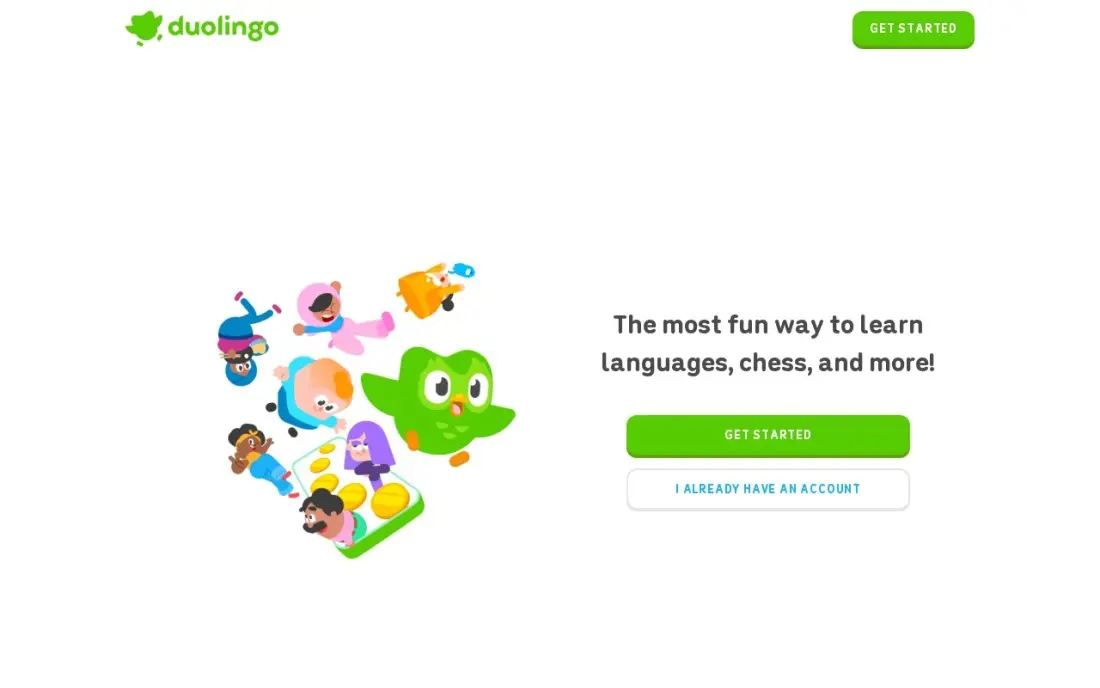
Duolingo gives the most Russian for free. Its free plan includes the whole course, with vocabulary, listening and sentence building in short lessons written in Cyrillic with audio, with streaks and leagues to keep you practising daily. A complete beginner can learn to read Russian words and build simple sentences without paying.
The free plan has ads and an energy limit that pauses practice after too many mistakes. Super costs $12.99 a month or $83.99 a year and removes both, though prices vary by account. Russian's six cases are taught mostly by pattern, so add a grammar reference once endings start changing.
What we like
- Free plan covers the full course, so you can learn for months without paying
- Streaks, leagues and short game-like lessons make daily practice easy to keep
- Super removes ads and the energy limit, with unlimited practice and review sessions
Watch out for
- Free plan has ads and an energy limit that stops practice after too many mistakes
- Lessons follow set patterns, so app scores can run ahead of real conversation skill
- Super prices vary by account and test group, from $9.99 to $12.99 a month on the app store
Anki
Best for: Self-driven learners who want unlimited free flashcards for Russian words and endings
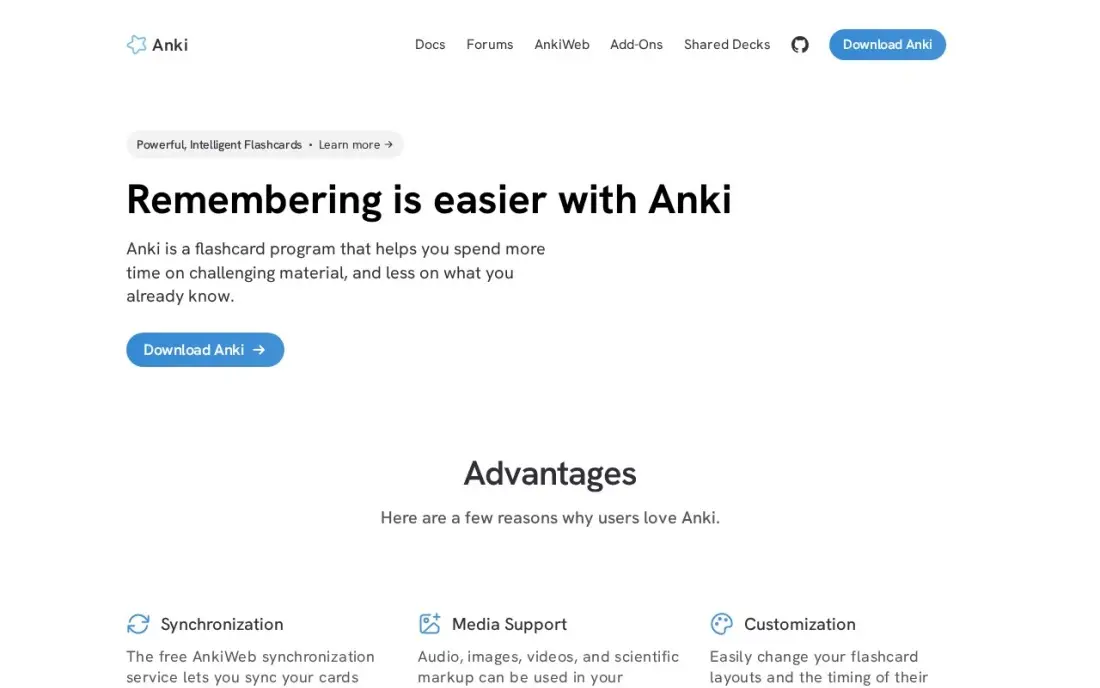
Anki is free and open source on Windows, Mac, Linux, Android and the web, with no limits on cards or decks and free AnkiWeb sync between devices. For Russian it is the best free way to drill vocabulary, word stress and noun endings, because its scheduler brings back each card just before you would forget it, and the shared-deck library includes ready-made language decks.
There is no course: you build or download decks yourself, and the settings take time to learn. AnkiMobile for iPhone and iPad costs $24.99 once, the only paid piece. Use it alongside Duolingo, adding the words and case endings you meet there.
What we like
- Free and open source on Windows, Mac, Linux, Android and the web, with no card or deck limits
- FSRS scheduling adapts intervals to your memory, and the shared-deck library covers medicine, law and languages
- Add-ons extend it with image occlusion, extra stats and bulk import
- Free AnkiWeb sync keeps desktop, Android and the web in step
Watch out for
- The interface looks dated and the settings take a weekend to learn
- You build or find your own decks; there is no ready-made course or content
- AnkiMobile for iPhone and iPad costs $24.99 once, the only paid piece
Busuu
Best for: Learners who want free Russian lessons plus corrections from native speakers
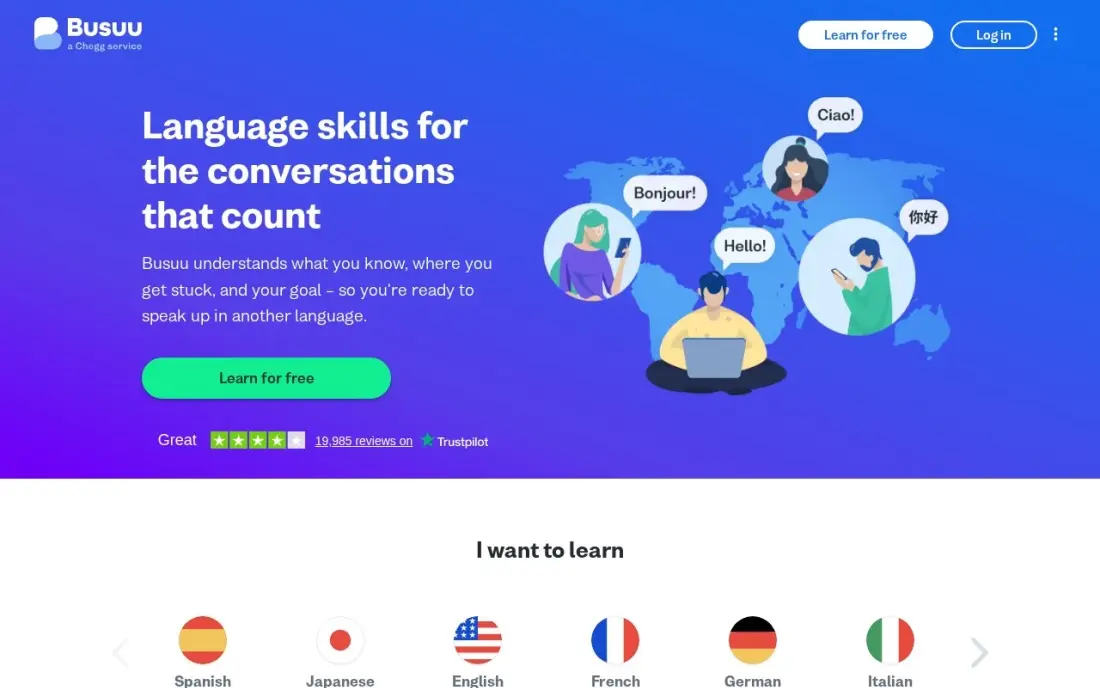
Busuu's free plan gives basic Russian lessons with ads, and its community lets native Russian speakers correct the short exercises you submit, which is valuable for a language where endings change with every case. It is a good second free app beside Duolingo for writing practice.
The structured grammar lessons, offline mode and CEFR certificates sit behind Premium, at $12.49 a month or $72.99 a year, about $6.08 a month; AI Conversations need Premium Plus at $14.90 a month. Busuu tests prices by visitor, so check yours at checkout. If you pay for one Russian app, this is good value.
What we like
- Native speakers correct your written and spoken exercises
- CEFR certificates for completed levels, plus offline mode and grammar review on Premium
- Annual Premium at $72.99 a year works out to about $6.08 a month
Watch out for
- Grammar lessons, offline mode and certificates sit behind the Premium paywall
- AI Conversations need Premium Plus at $14.90 a month
- Busuu tests different prices on different visitors, so the figure you see may differ
Memrise
Best for: Learners who want free clips of native Russian speakers for listening practice
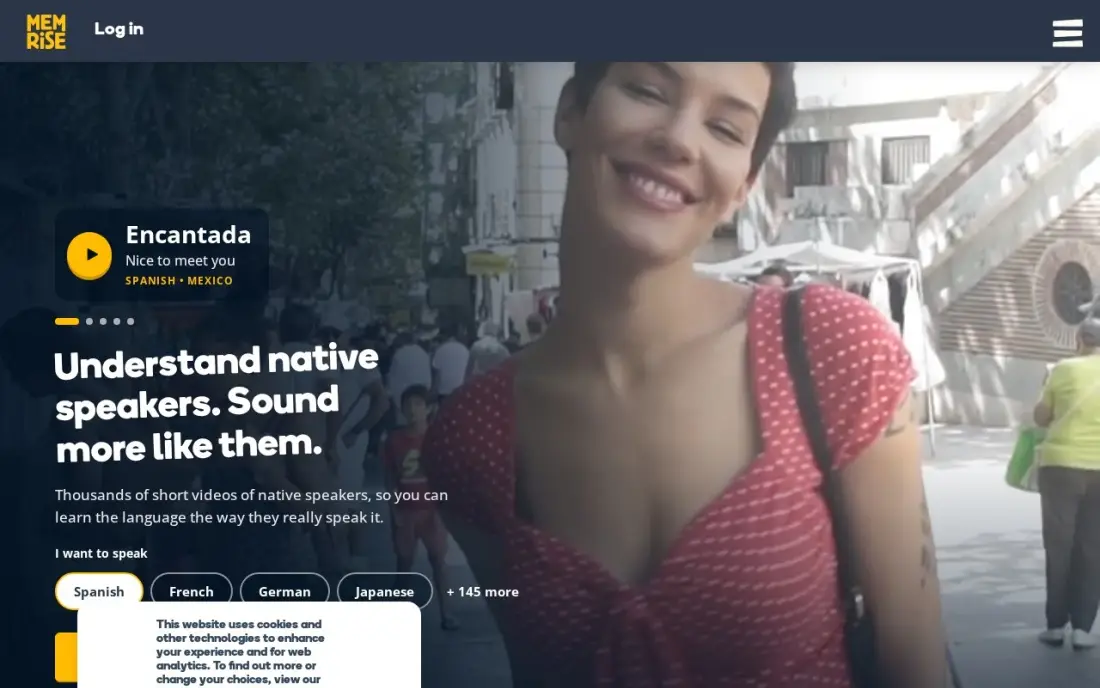
Memrise's free plan includes limited vocabulary lessons and native-speaker videos, which show how Russian phrases actually sound, with real stress and speed, rather than slow studio audio. That makes it a useful free listening supplement for learners who can read Cyrillic but struggle to follow speech.
The free tier is narrow, and the AI Buddies speaking practice is on Pro, which costs $24.99 a month billed monthly or $61.99 a year billed annually, about $5.17 a month. Memrise does not teach grammar systematically, so it will not explain Russian cases or verb aspect.
What we like
- Native-speaker videos show how words sound in real context, not just in drills
- AI Buddies give unlimited speaking practice with grammar help on Pro
- Annual plan at $61.99 a year is about $5.17 a month
Watch out for
- Paying month to month costs $24.99, nearly five times the annual rate
- No systematic grammar teaching, so it works best paired with another resource
Drops
Best for: Busy learners who want five free minutes of illustrated Russian vocabulary a day
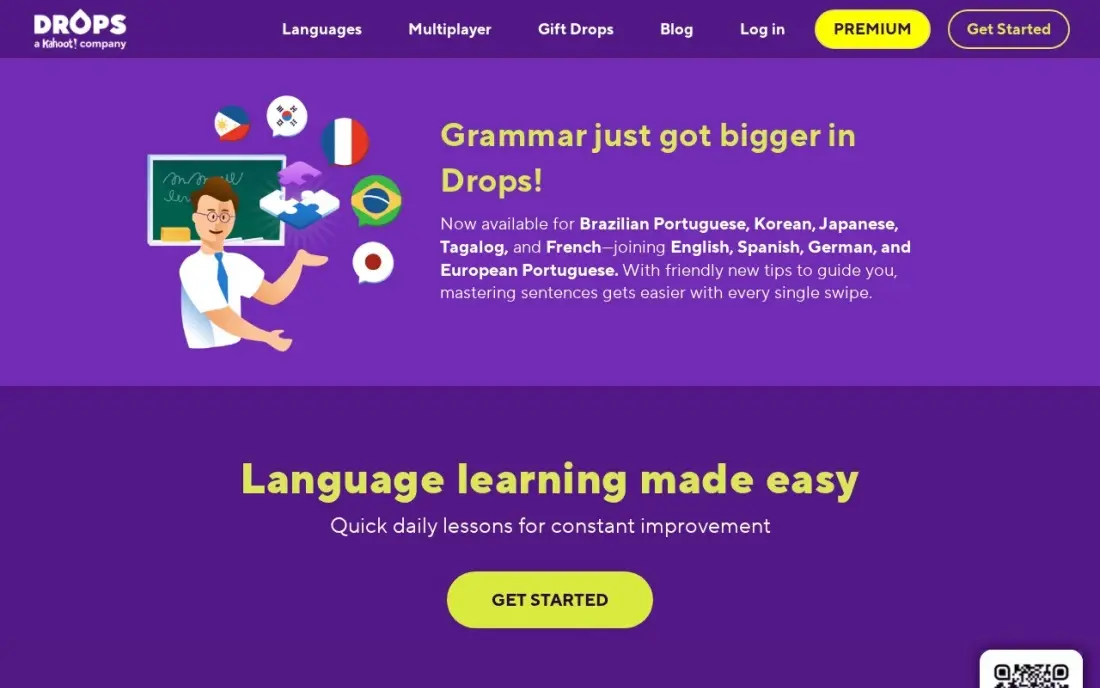
Drops' free plan gives five minutes of Russian vocabulary a day, forever. Every word appears with an illustration and audio, so you link Cyrillic words to images rather than English, which also builds reading speed in the alphabet. Five minutes daily is enough to add a steady stream of words.
It teaches vocabulary only, without grammar or sentences, so it cannot carry you through Russian cases. Premium removes the time limit for $12.99 a month or $69.99 a year, and a lifetime plan costs $159.99 once. Trustpilot reviewers complain about billing and auto-renewal, so watch any trial dates.
What we like
- Every word is taught with an illustration, so vocabulary sticks without translation drills
- Five-minute sessions fit any day, and the free plan never expires
- The annual plan costs $69.99 a year, about $5.83 a month
- A one-time lifetime plan at $159.99 ends the subscription entirely
Watch out for
- Vocabulary only — no grammar, no sentences, no conversation practice
- The free plan stops after five minutes a day, so serious study needs Premium
- Trustpilot scores 2.8 out of 5 from only 16 reviews, with complaints about billing and auto-renewal
LingQ
Best for: Intermediate learners ready to read real Russian articles, with a small free allowance
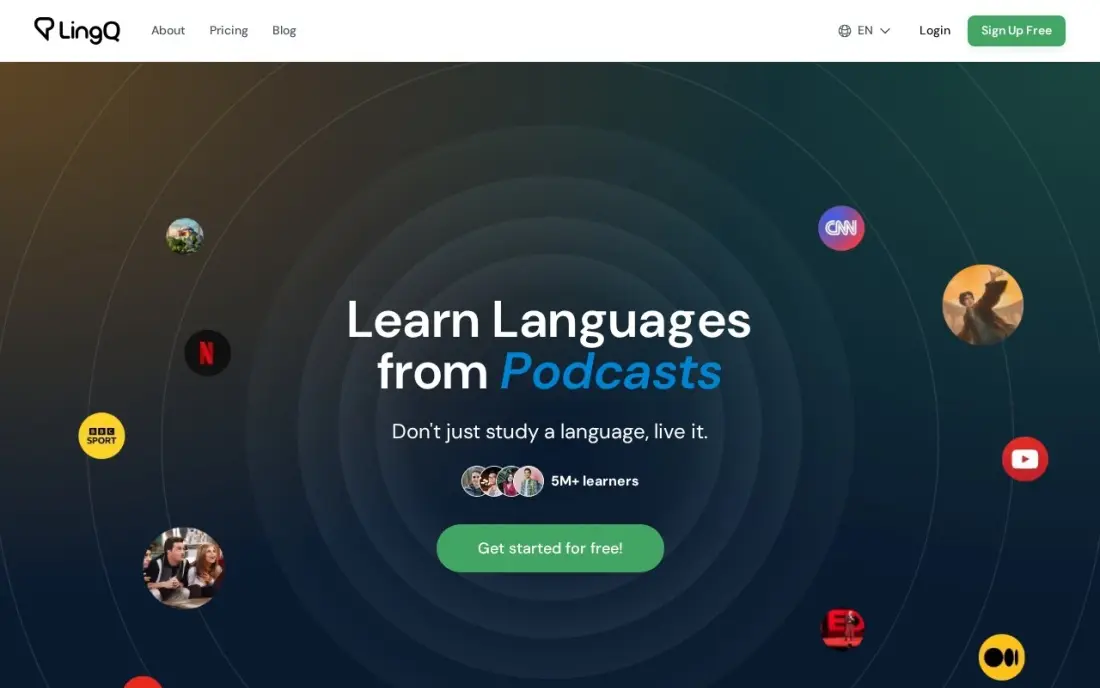
LingQ is for the point where you can read Cyrillic and want real Russian content. You import an article, a story or a video transcript, and every unknown word is one tap from a definition, then saved for spaced review. Seeing case endings in real sentences is how many learners finally absorb them.
The free plan is very limited: 20 saved words and five imported lessons. That is enough to test the method but not to study with it. Premium costs $14.99 a month or $119.99 a year, and AI features need Premium Plus at $29.99 a month. Trustpilot reviewers report bugs and slow support.
What we like
- Import any article, book or video and study it as a lesson, with every unknown word one tap away
- One subscription covers all 50-plus languages
- Spaced-repetition review is built around the words you actually looked up
Watch out for
- The free plan caps at 20 saved words, which runs out in a single lesson
- AI features and tutoring points sit on Premium Plus at $29.99 a month, not Premium
Babbel
Best for: Learners who outgrow free apps and want Russian grammar explained at a low annual price
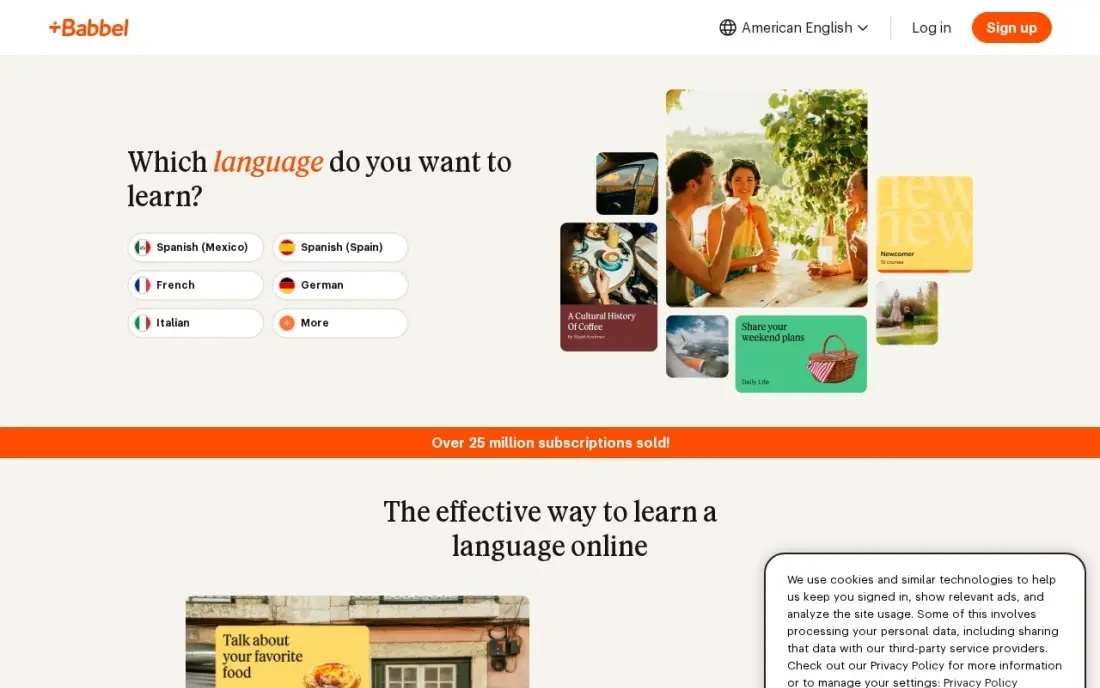
Babbel is not free, but it is the upgrade to consider when free apps stop explaining enough. Its Russian lessons run 10 to 15 minutes and pair dialogues with grammar notes, which helps with the six cases, verb aspect and the motion verbs that confuse English speakers. Babbel Speak adds AI conversation practice.
The first lesson of each course is free, so you can try the format at no cost. After that, one month costs $17.95 and the 12-month plan costs $107.40 upfront, shown as $8.95 a month. Use the free apps first, then switch if grammar is what is holding you back.
What we like
- Short 10–15 minute lessons pair dialogues with grammar notes, so you learn why a sentence works
- Review sessions bring words back on a spaced-repetition schedule
- Babbel Speak adds AI conversation practice to rehearse real dialogues
Watch out for
- No free plan — only the first lesson of each course is free
- The $8.95 monthly figure is the 12-month plan paid upfront ($107.40); month-to-month costs $17.95
The best app to learn Russian for free should get you reading Cyrillic, building sentences and starting on the case system without asking for a card. We compared seven apps by what their free plans actually include for Russian — a full course, flashcards, native-speaker clips, daily vocabulary and real-content reading — and what the upgrade costs if you need more. Every detail below was checked on the vendor's own pages in November 2026.
How to choose the free app to learn Russian
- Check the free plan's real limits. Duolingo's free plan covers the whole course; Drops stops at five minutes a day and LingQ at 20 saved words.
- Learn Cyrillic first. Spend the first weeks on the alphabet with audio; reading speed comes quickly and unlocks everything else.
- Plan for the cases. Russian nouns change ending in six cases. Free apps teach them by pattern; you may need a grammar explanation or a flashcard deck for endings.
- Mark word stress. Russian stress moves and changes vowel sounds; apps with audio and stressed-vowel marks save confusion.
- Combine two free tools. A course app plus a flashcard tool such as Anki covers more ground than either alone.
- Upgrade only when stuck. Pay when the free tier is the bottleneck, and pay annually: monthly plans cost far more over a year.
For more free options across languages, see our guide to the best free language apps, and the best language learning platforms for paid tutoring and multi-language services.
Russian app pricing: what you will actually pay
A learner who sticks to free plans pays $0: Duolingo's full Russian course, Anki on desktop, Android and the web, Busuu's basic lessons, Memrise's limited lessons and Drops' five minutes a day are all free. The only one-off cost is AnkiMobile for iPhone and iPad at $24.99 if you want Anki on an iPhone.
If you decide to pay for one app for a year on annual billing, Memrise Pro costs $61.99, Drops $69.99, Busuu Premium $72.99, Duolingo Super $83.99, Babbel $107.40 and LingQ Premium $119.99. Monthly billing costs more: Babbel at $17.95 a month comes to $215.40 over a year, and Memrise at $24.99 a month comes to $299.88. A strong low-cost setup is Duolingo free plus Anki free, adding Busuu Premium at $72.99 a year only when you want corrections and grammar.
Know the difference: free course apps vs free practice tools
A free course app such as Duolingo decides what you learn next, from first words to past-tense verbs, and checks each step with exercises. That structure is what a beginner needs, and Duolingo is the only app here that gives its whole Russian course away. Busuu's free tier also follows a course, but with fewer lessons unlocked.
Free practice tools such as Anki, Drops and Memrise do not decide the path; they help you remember what you meet elsewhere. Anki drills whatever you put in it, Drops builds vocabulary five minutes at a time, and Memrise adds native-speaker listening. The best free setup uses one course app as the spine and one practice tool to make the words and endings stick.
Quick comparison: tool type by need
| Buyer | Best pick | Why |
|---|---|---|
| Complete free course | Duolingo | Whole Russian course free, with ads and an energy limit |
| Free flashcards | Anki | Unlimited decks free; iPhone app $24.99 once |
| Free corrections | Busuu | Basic lessons free with native-speaker feedback |
| Free listening clips | Memrise | Limited free lessons with native-speaker videos |
| Five minutes a day | Drops | Illustrated Russian vocabulary free daily |
| Reading real Russian | LingQ | Small free allowance, Premium $119.99/year |
| Paid grammar upgrade | Babbel | Free first lesson, then $107.40 for 12 months |
Mistakes to avoid
- Relying on transliteration. Reading Russian in Latin letters slows you down; switch to Cyrillic within the first weeks.
- Ignoring stress. Learning words without their stress leads to mispronunciation that is hard to unlearn.
- Memorising cases as tables only. Practise endings in real sentences, through Duolingo exercises or Anki cards with full phrases.
- Paying for overlapping apps. Two paid vocabulary apps teach the same words; spend on grammar or conversation instead.
- Forgetting trial renewals. Paid trials convert automatically; set a reminder the day you start one.
How we chose
We checked each app's own pricing and product pages in November 2026 and recorded what each free plan includes and what the paid plans cost, with annual and monthly billing stated separately. We ranked the apps by how far a learner can get in Russian without paying, then by the value of the upgrade. Where ratings appear, they come from the review pages listed in the sources on the dates shown. No vendor paid for a place in this list, and none of the links here are affiliate links.
What to do next
Start Duolingo's free Russian course today and finish the Cyrillic units this week, then add Anki for the words you keep forgetting. If you run a language course or tutoring business and want learners to find it, book a free SEO review.
Frequently asked questions
What is the best app to learn Russian for free?
Duolingo is the best free app to learn Russian, because its free plan includes the whole course, with ads and an energy limit. Anki is the best free companion for drilling vocabulary and case endings.
Can you really learn Russian for free?
You can reach a basic reading and conversational level free with Duolingo, Anki and the free tiers of Busuu, Memrise and Drops. Fluent speaking usually needs practice with people, which can also be free through language exchanges.
Which free app helps with the Cyrillic alphabet?
Any app that shows Russian in Cyrillic with audio builds reading speed. Duolingo's free course and Drops' free five minutes a day both pair Cyrillic words with sound, and Drops adds an illustration for every word.
What do the paid Russian apps cost?
Billed annually, Memrise Pro costs $61.99 a year, Drops $69.99, Busuu Premium $72.99, Duolingo Super $83.99, Babbel $107.40 and LingQ Premium $119.99. Anki is free except AnkiMobile for iPhone, which costs $24.99 once.
Which app explains Russian grammar best?
Babbel and Busuu Premium explain Russian grammar most clearly, with notes on cases and verbs inside the lessons. Both are paid; Babbel's first lesson is free and Busuu's free plan includes basic lessons.
How long does it take to learn Russian with free apps?
Reading Cyrillic takes most learners a few weeks. Basic conversation takes many months of daily practice, and the case system takes longer. Free apps can carry you through the basics; speaking with people speeds up the rest.
Sources we checked (10)
- Duolingo — www.duolingo.com/super (checked November 4, 2026)
- Anki — apps.ankiweb.net (checked November 4, 2026)
- Anki reviews on G2 (checked November 4, 2026)
- Busuu — www.busuu.com (checked November 4, 2026)
- Memrise — www.memrise.com (checked November 4, 2026)
- Drops — languagedrops.com (checked November 4, 2026)
- Drops reviews on Trustpilot (checked November 4, 2026)
- LingQ — www.lingq.com/pricing (checked November 4, 2026)
- LingQ reviews on Trustpilot (checked November 4, 2026)
- Babbel — www.babbel.com/pricing (checked November 4, 2026)
Make one of these tools?
We re-check this list every quarter. Send a correction, request a review, or ask about a clearly labeled sponsored spot.
Request a listingShamim
Founder of SerpAstra
A full-stack digital marketer and SEO strategist covering technical and local SEO, AI search visibility, paid ads and lead generation for local businesses, e-commerce brands and SaaS teams.
Free SEO and AI visibility audit
Find out what is holding your rankings back
Send us your site. Within 2 business days you get a written audit, an AI visibility check and a short fix list ranked by impact. Free, with no contract attached.
Request my free audit→Related buying guides
 Education & E-Learning7 Best Free Language Apps in 2026, ComparedCompare the 7 best free language apps on what the free plan really covers, its daily limits, and what the paid upgrade costs if you decide to stay with it.Read guide →
 Education & E-Learning8 Best Language Learning Platforms in 2026, ComparedCompare the 8 best language learning platforms, from apps like Duolingo and Babbel to tutor sites like italki and Preply, on method, free plans and real cost.Read guide →
 Education & E-Learning8 Best Apps to Learn German in 2026, ComparedCompare the 8 best apps to learn German on cases and grammar, speaking practice, free plans and yearly cost, from Babbel and Duolingo to Busuu and Pimsleur.Read guide →