6 Best AR Software Tools in 2026, Compared
Compare the 6 best AR software tools for WebAR, social lenses and AR apps, from free open-source engines to commercial plans, with real prices (Nov 2026).
 Shamim Mia, Founder, SerpAstraLast verified November 21, 20267 min read
We compare pricing pages, documentation and public reviews. We never accept payment for rankings.
Key takeaways
- 8th Wall is now open source and free for everyone, making it the strongest no-cost choice for WebAR you can host anywhere.
- Lens Studio and TikTok's Effect House are the tools for AR filters on Snapchat and TikTok; Lens Studio is free and needs no coding to start.
- ZapWorks is the easiest paid WebAR platform for brands, but commercial use starts at $315 a month on Pro, or $2,640 a year.
- Unity and Vuforia Engine suit native AR apps; Unity Personal is free for games and entertainment, and Unity Pro costs $210 a month.
On this page
Quick comparison
| Tool | Best for | Starting price | Free plan |
|---|---|---|---|
| 8th Wall | Developers and agencies building WebAR they can host anywhere at no cost | Free | Yes, open source |
| ZapWorks | Brands and agencies that want a hosted WebAR platform with no-code and pro tools | $12.99/mo | 14-day trial |
| Lens Studio | Creators and brands making AR lenses for Snapchat, Spectacles and their own apps | Free | Yes, free |
| Effect House | Creators who want to build AR effects and filters for TikTok | No price listed | Download |
| Unity | Developers building native AR and VR apps and games, including for Apple Vision Pro | Free; Pro $210/mo | Yes, Personal |
| Vuforia Engine | Industrial and enterprise AR apps that track real objects and spaces | Free; paid by quote | Yes, Basic |
Make one of these tools?
We re-check this list every quarter. Send a correction, request a review, or ask about a clearly labeled sponsored spot.
Request a listingThe best augmented reality software

8th Wall
Best for: Developers and agencies building WebAR they can host anywhere at no cost
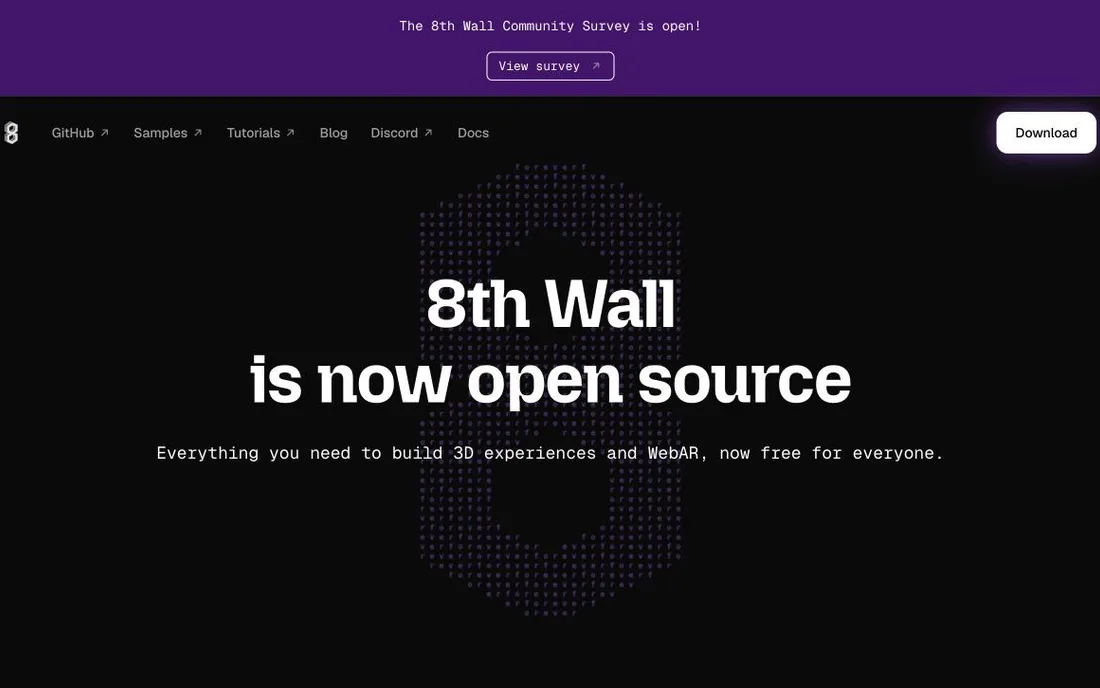
8th Wall was the best-known commercial WebAR platform and is now open source and free under Niantic Spatial. The XR engine covers image targets, face effects, sky effects, world effects and absolute scale, and 8th Wall Desktop adds a visual editor for building 3D and AR projects on Mac or Windows. There is no login, and you bring your own source control and hosting.
World effects and absolute scale are available through the engine binary rather than the open code, and native export is listed as coming soon, so projects export to the web today. Ready-made sample projects and a migration guide help teams moving from the old hosted platform.
What we like
- Free for everyone, including commercial projects, with no account needed
- Image targets, face effects, sky effects and world effects in the XR engine
- 8th Wall Desktop visual editor for Mac and Windows; host builds anywhere
Watch out for
- World effects and absolute scale ship in the engine binary, not the open source
- Native app export is not yet available

ZapWorks
Best for: Brands and agencies that want a hosted WebAR platform with no-code and pro tools
ZapWorks bundles several AR tools under one subscription: Designer for no-code AR, Studio and Mattercraft for richer 3D work, and Universal AR SDKs for developers using other engines. Projects are hosted for you, and the Developer plan costs $12.99 a month or $64.99 a year, but only for non-commercial work with a ZapWorks screen shown first.
Commercial projects need Pro at $315 a month or $2,640 a year, which removes that screen and includes 12,000 views a year, three team members and 1,000 AI credits a month. Extra views cost $30 per thousand, and companies with more than $10 million in revenue or funding must use Enterprise.
What we like
- Designer, Studio, Mattercraft and Universal AR SDKs on every plan
- Unlimited projects, with hosting included
- Pro removes the ZapWorks screen and allows commercial projects
Watch out for
- Commercial use jumps from $12.99 to $315 a month
- Pro includes 12,000 views a year; more cost $30 per thousand

Lens Studio
Best for: Creators and brands making AR lenses for Snapchat, Spectacles and their own apps
Lens Studio is Snap's free desktop app for building AR lenses, available for macOS and Windows. You can start visually with no code, write logic in TypeScript, or use its AI tools to generate effects, all in one app. Finished lenses publish to Snapchat, to Snap's Spectacles AR glasses, or into your own apps.
For a brand, a lens is a low-cost way into AR because Snapchat's camera is already on users' phones. Simple face and world effects come together quickly from templates; anything game-like or heavily interactive takes 3D assets and scripting, so budget design time rather than software cost.
What we like
- Free on macOS and Windows
- Build visually, code in TypeScript or create with AI in one app
- Publish to Snapchat, Snap's Spectacles glasses or your own apps
Watch out for
- Lenses mainly reach Snapchat and Snap's ecosystem
- Advanced lenses still need 3D and scripting skills

Effect House
Best for: Creators who want to build AR effects and filters for TikTok
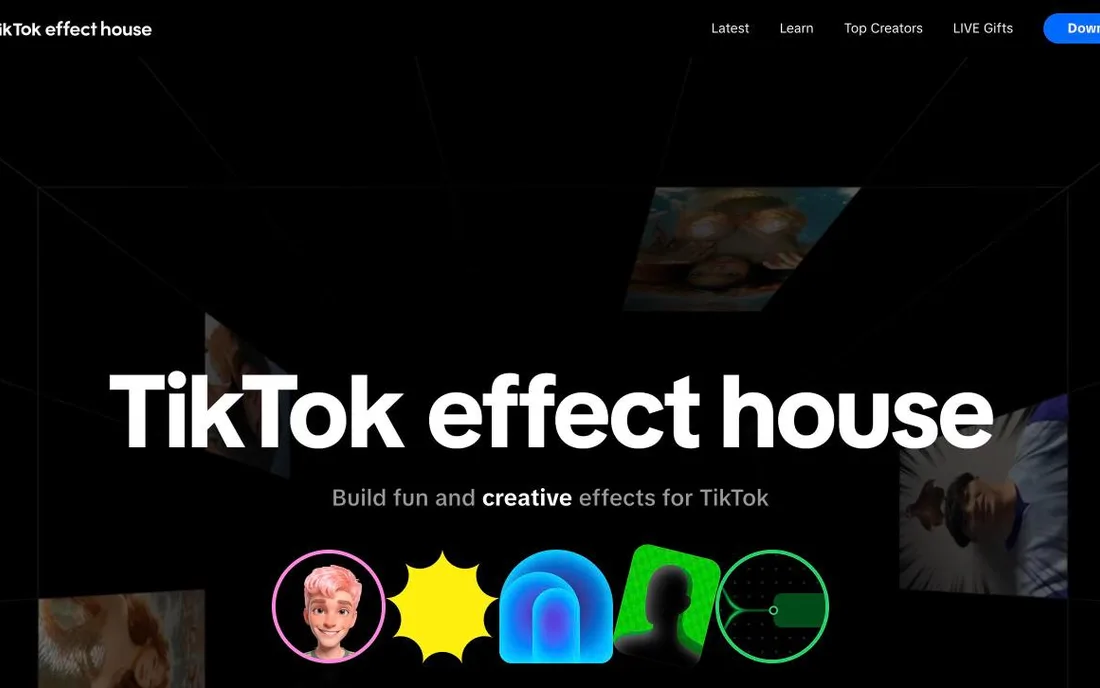
Effect House is TikTok's tool for building AR effects, from face filters and beauty effects to games, music-reactive effects and green-screen scenes. It comes in two downloads, an AI-first version and Effect House Classic, and the site offers beginner guides, demos and a Discord community for learning.
TikTok shows no price for the software. Creators can earn cash rewards and badges as their effects gain users, enter monthly challenges and collaborate with brands, which makes it a practical first step for anyone who wants their AR seen by a large audience. Effects only run inside TikTok.
What we like
- Builds effects, filters, games and green-screen effects for TikTok
- AI tools plus a Classic version for existing projects
- Rewards, monthly challenges and brand collaborations for creators
Watch out for
- Effects publish to TikTok only
- No paid support tier or business plan shown

Unity
Best for: Developers building native AR and VR apps and games, including for Apple Vision Pro
Unity is the engine behind many native AR apps. Unity Personal is free and publishes to web, desktop, mobile and AR/VR devices, with 1,000 monthly AI credits, but it is limited to games and entertainment. Unity Pro costs $210 a month billed monthly, or from $2,310 a year, and adds builds for consoles and Apple Vision Pro plus 2,000 AI credits.
Pro is required once a business passes $200,000 in revenue or funding, and Enterprise above $25 million. AR for industrial, retail or training uses falls under Unity Industry, which is priced by quote. It suits teams with developers who need full control over an AR app.
What we like
- Personal is free and publishes to web, desktop, mobile and AR/VR
- Pro adds Apple Vision Pro and console builds
- Large asset store and developer community
Watch out for
- Personal is for games and entertainment only; other industries need Unity Industry
- Pro is required once revenue or funding passes $200,000

Vuforia Engine
Best for: Industrial and enterprise AR apps that track real objects and spaces
Vuforia Engine, from PTC, is an AR toolkit for apps that need to recognise real things: printed images, cylinders, coded VuMarks, flat floors and, with Model Targets, physical objects matched to their CAD models. Area Targets map whole rooms or sites for navigation and training, which is why it is common in manufacturing and field service.
The Basic plan is free and includes image targets, VuMarks, multi-targets, cylinder targets, ground plane and barcode scanning, with 20 Model Target generations for prototyping only. Premium includes 500 generations a year and Enterprise adds on-prem options; both, and the cloud recognition add-ons, are priced on request.
What we like
- Basic plan free with image, multi and cylinder targets, VuMarks and ground plane
- Model Targets recognise real objects from CAD data
- Enterprise adds on-prem Model Targets and Step Check
Watch out for
- Basic allows only 20 Model Target generations, for prototyping
- Premium, Enterprise and cloud recognition add-ons are priced by quote
The best AR software lets you place digital content on the real world through a phone camera, a browser or AR glasses, without building the tracking technology yourself. We compared six tools across three routes — WebAR, social media lenses and native app engines — on features, publishing options, ease of use and real cost, and every price below comes from the vendor's own website as checked in November 2026.
How to choose the best AR software
- Pick where people will see it. A browser link, Snapchat, TikTok and a native app each need different tools.
- Check commercial terms. Several free or cheap plans are for non-commercial or games-only use.
- Match the tracking you need. Faces, flat images, floors and real objects each need different tracking features.
- Count your views. Hosted WebAR plans often include a set number of views and charge for more.
- Be honest about skills. No-code builders are quick; native engines need developers and 3D artists.
- Plan hosting. Self-hosted open-source tools save fees but need somewhere fast to serve 3D files.
AR campaigns work best when people can find them. Our guide to video SEO helps your AR demos rank on Google and YouTube, and our monthly SEO service keeps the landing pages behind your campaigns visible.
AR software pricing: what you will actually pay
For a brand running one WebAR campaign for a year, 8th Wall costs nothing in licences, but you pay for hosting and development time. On ZapWorks, the same campaign needs Pro for commercial use: $2,640 billed yearly or $315 a month, with 12,000 views a year included. If the campaign reaches 30,000 views, the extra 18,000 cost $30 per thousand, or $540 more.
Social lenses cost nothing in software: Lens Studio is free and Effect House shows no price, so the budget goes on design. For a native AR app, Unity Personal is free for games and entertainment, while a business over $200,000 in revenue pays $210 a month for Pro, or from $2,310 a year. Vuforia Engine's Basic plan is free for image and floor tracking; Premium and Enterprise are by quote.
Know the difference: WebAR vs app-based AR
WebAR runs in the phone's browser. People scan a code or tap a link and the experience opens with no download, which makes it ideal for packaging, print and short campaigns. 8th Wall and ZapWorks work this way. The trade-off is power: browsers limit file sizes, tracking precision and access to device features.
App-based AR runs inside an installed app, either your own or a social platform's. Unity and Vuforia Engine build your own app, with the best tracking and performance but an install barrier. Lens Studio and Effect House publish into Snapchat and TikTok, where the app is already installed and the audience is built in, but you work within those platforms' rules.
Quick comparison: tool type by need
| Buyer | Best pick | Why |
|---|---|---|
| Free WebAR you host yourself | 8th Wall | Open source, no login, image, face and world effects |
| Brands wanting hosted WebAR | ZapWorks | No-code and pro tools, commercial Pro from $2,640/year |
| Snapchat lenses | Lens Studio | Free, no code to start, publishes to Snapchat and Spectacles |
| TikTok effects | Effect House | AI and Classic versions, creator rewards |
| Native AR apps and games | Unity | Free Personal; Pro $210/month adds Apple Vision Pro |
| Industrial AR | Vuforia Engine | Free Basic; object and area tracking on paid plans |
Mistakes to avoid
- Publishing commercial work on a non-commercial plan. Check licence terms before a client launch.
- Ignoring file size. Heavy 3D models load slowly in a browser; optimize before you publish.
- Forgetting the call to action. Every AR experience should lead somewhere, such as a product page or offer.
- Underestimating view costs. A popular campaign can exceed the views included in a hosted plan.
- Skipping device testing. Test on older phones and both iOS and Android before printing a QR code on packaging.
How we chose
We read each vendor's own pricing page or website on November 21, 2026 and recorded prices exactly as shown, noting where a vendor lists none. We covered the three main ways to publish AR — browser, social platforms and native apps — and left out tools that have been discontinued. We have not shown review-site ratings, because we did not read those pages for this guide. No vendor paid for a place in this list, and none of the links here are affiliate links.
What to do next
Decide where your audience will meet your AR — a link, Snapchat, TikTok or an app — then build one small test in the free tool for that route and try it on three phones. If you want the campaign pages behind your AR to rank, book a free search visibility review.
Frequently asked questions
What is the best AR software?
For free WebAR, 8th Wall, which is now open source. For Snapchat and TikTok filters, Lens Studio and Effect House. For a hosted commercial WebAR platform, ZapWorks, and for native AR apps, Unity or Vuforia Engine.
Is there free AR software?
Yes. 8th Wall is open source and free, Lens Studio is free on macOS and Windows, Unity Personal is free for games and entertainment, and Vuforia Engine has a free Basic plan. TikTok's Effect House shows no price.
How much does AR software cost?
ZapWorks costs $12.99 a month for non-commercial use and $315 a month or $2,640 a year for commercial Pro. Unity Pro costs $210 a month billed monthly or from $2,310 a year. Vuforia Engine Premium and Enterprise are priced by quote.
What is WebAR?
WebAR runs augmented reality in a phone's web browser, so people scan a QR code or tap a link instead of installing an app. 8th Wall and ZapWorks are built for WebAR.
Can I make AR without coding?
Yes. Lens Studio lets you start without code, ZapWorks Designer is a no-code AR builder, and Effect House has beginner guides and templates for TikTok effects. Complex interactive experiences still need scripting.
What AR software do businesses use for training and maintenance?
Industrial AR apps often use Vuforia Engine, whose Model Targets and Area Targets recognise real equipment and spaces, built into an app with Unity.
Sources we checked (6)
- 8th Wall — 8thwall.org (checked November 21, 2026)
- ZapWorks — zap.works/pricing (checked November 21, 2026)
- Lens Studio — lensstudio.com (checked November 21, 2026)
- Effect House — effecthouse.tiktok.com (checked November 21, 2026)
- Unity — unity.com/pricing (checked November 21, 2026)
- Vuforia Engine — www.ptc.com/en/products/vuforia/vuforia-engine/pricing (checked November 21, 2026)
Make one of these tools?
We re-check this list every quarter. Send a correction, request a review, or ask about a clearly labeled sponsored spot.
Request a listingShamim
Founder of SerpAstra
A full-stack digital marketer and SEO strategist covering technical and local SEO, AI search visibility, paid ads and lead generation for local businesses, e-commerce brands and SaaS teams.
Free SEO and AI visibility audit
Find out what is holding your rankings back
Send us your site. Within 2 business days you get a written audit, an AI visibility check and a short fix list ranked by impact. Free, with no contract attached.
Request my free audit→Related buying guides
 Graphic Design & Creative9 Best 3D Design Software in 2026, ComparedCompare the 9 best 3D design software for modeling, animation, product and architectural design, with free versions, licences and real yearly costs checked.Read guide →
 Graphic Design & Creative8 Best Animation Software in 2026, ComparedCompare the 8 best animation software for 2D, 3D and explainer work on features, free options and real cost, with every price checked on vendor pages.Read guide →
 Real Estate & Property Management6 Best Free 360 Virtual Tour Software in 2026, ComparedCompare the 6 best free 360 virtual tour software on free-plan limits, branding, tour expiry and the first paid tier, with every price checked on vendor pages.Read guide →