
8 Best Blogging Platforms for Writers in 2026, Compared
Compare the 8 best blogging platforms for writers on the editor, readers, newsletters, ownership and real cost, with every price checked on vendor pages.
 Shamim Mia, Founder, SerpAstraLast verified November 2, 20268 min read
We compare pricing pages, documentation and public reviews. We never accept payment for rankings.

Key takeaways
- Ghost is the best blog platform for writers who want a distraction-free editor, a newsletter and paid memberships in one place, from $18 a month or $15 billed annually.
- Substack and Medium are the best free starts: Substack for building your own subscriber list, Medium for reaching readers who are already there.
- WordPress.com and WordPress.org suit writers who want a full website around the writing, with the largest plugin library of any platform.
- Writers who publish through email first should compare beehiiv, which is free up to 2,500 subscribers and takes 0% of paid subscriptions from Lite.
On this page
Quick comparison
| Tool | Best for | Starting price | Free plan |
|---|---|---|---|
| Ghost | Essayists and columnists who want a clean editor, a newsletter and memberships together | $18/mo | No (14-day trial) |
| Substack | Newsletter writers who want to build a subscriber list at no upfront cost | Free; 10% of paid subs | Yes (free plan) |
| Medium | New writers who want readers on day one without building a website | Free; Member $5/mo | Yes (free plan) |
| WordPress.com | Writers who want a full website with WordPress's editor and none of the server work | Free; Business $40/mo | Yes (free plan) |
| WordPress.org | Professional writers and authors who want full control of their site and content | Free (software) | Yes (software free) |
| Squarespace | Authors who want a polished portfolio and blog site with little setup | $25/mo | No (14-day trial) |
| beehiiv | Writers whose main channel is a growing email newsletter | Free; Lite $59/mo | Yes (free plan) |
| Blogger | Hobby writers who want a free blog with a custom domain | Free | Yes (free) |
Make one of these tools?
We re-check this list every quarter. Send a correction, request a review, or ask about a clearly labeled sponsored spot.
Request a listingThe best blogging platforms for writers

Ghost
Best for: Essayists and columnists who want a clean editor, a newsletter and memberships together
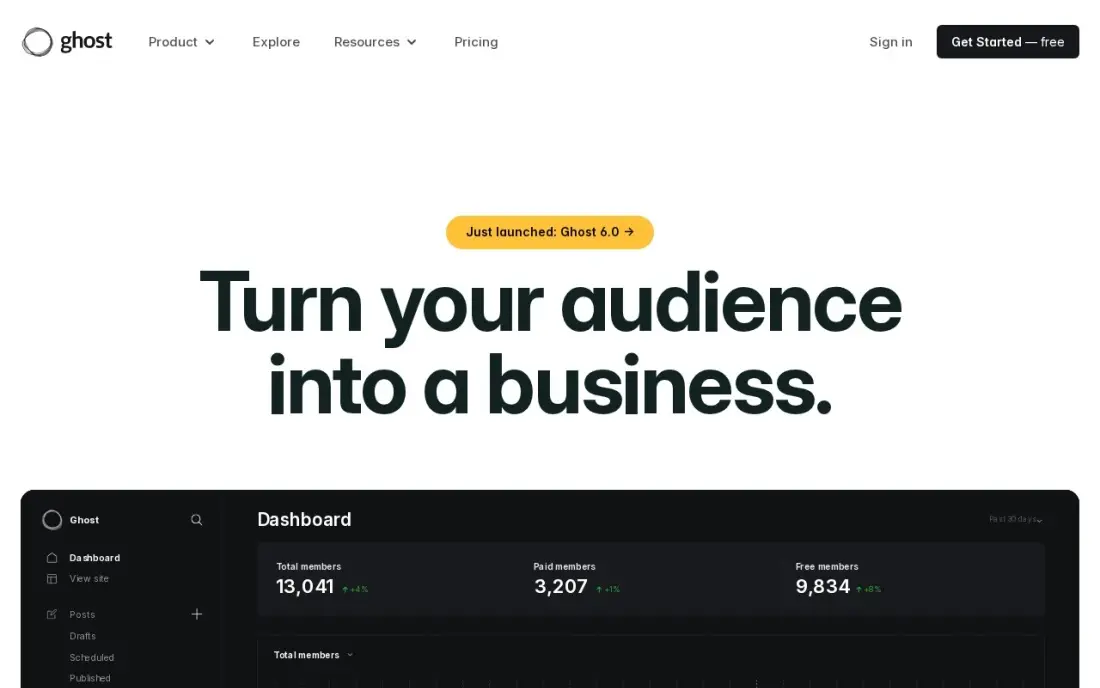
Ghost was designed for people who write, not people who build pages. The editor is fast and uncluttered, each post goes out as a newsletter and lives on a quick website at the same time, and readers can subscribe for free or pay. Ghost takes 0% of subscription revenue, and the self-hosted version is free if you run your own server.
Starter costs $18 a month, or $15 billed annually, for up to 1,000 members, with one staff user and official themes. Paid subscriptions need Publisher, at $35 a month or $29 billed annually, and prices rise with the member count. For a writer who wants a serious home for their work, it is the most complete choice here.
What we like
- Takes 0% of subscription revenue on every plan
- Newsletters, memberships and the site in one product — no plugins needed
- A fast, clean editor built for publishing, not for page building
- Free to self-host if you run your own server
Watch out for
- Starter cannot sell paid subscriptions — that needs Publisher from $35/month billed monthly ($29/month billed annually)
- The price rises with member count, not just with features
- One staff user and official themes only on Starter

Substack
Best for: Newsletter writers who want to build a subscriber list at no upfront cost
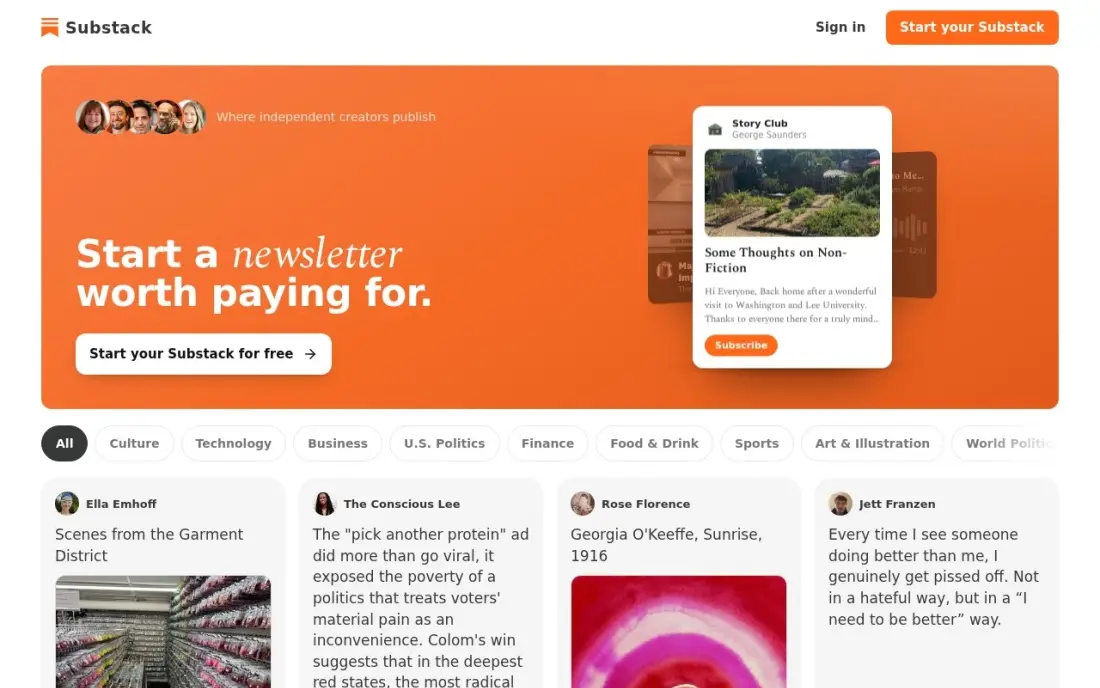
Substack lets a writer start publishing in minutes with no cost and no list limit, and every post reaches subscribers by email and appears on a simple web page. Recommendations from other Substack writers are one of the most reliable ways for a new newsletter to find readers, and turning on paid subscriptions is a single setting.
In return Substack keeps 10% of paid subscription revenue plus Stripe fees, and your publication carries its branding and follows its rules. Design options are limited and the site is an archive more than a website. A custom domain costs a one-time $50. For a writer who thinks in issues rather than pages, it is the easiest start.
What we like
- $0 to start, with no subscriber cap and no send limit
- Paid subscriptions are a switch, not a project
- Built-in recommendations bring new readers to the publication
- A custom domain is available for a one-time $50
Watch out for
- The 10% cut never falls — no tier lowers it as you grow
- Your publication lives inside Substack's branding and discovery rules
- It is a newsletter first — there is no real website builder

Medium
Best for: New writers who want readers on day one without building a website
Medium solves the problem most new writers have: nobody reads a new blog. It has an existing readership, publications that accept submissions from outside writers, and a clean editor with nothing to set up. Publishing is free, and the Partner Program pays from the time paying members spend reading your stories.
You give up ownership in exchange. There is no subscriber list to export, a custom domain and the Partner Program both need the Member plan at $5 a month or $50 a year, and Medium sets the rules for distribution and pay. Use it to find readers and test ideas, and point them toward a site or newsletter you own.
What we like
- Free to publish with a clean editor and a built-in audience
- Publications group writers under one masthead
- The Partner Program pays from member reading time
- No hosting, security or maintenance work at all
Watch out for
- You do not own the audience — there is no subscriber list to export
- A custom domain and the Partner Program need the $5/month membership
- Earnings depend on Medium's changing payout formula

WordPress.com
Best for: Writers who want a full website with WordPress's editor and none of the server work
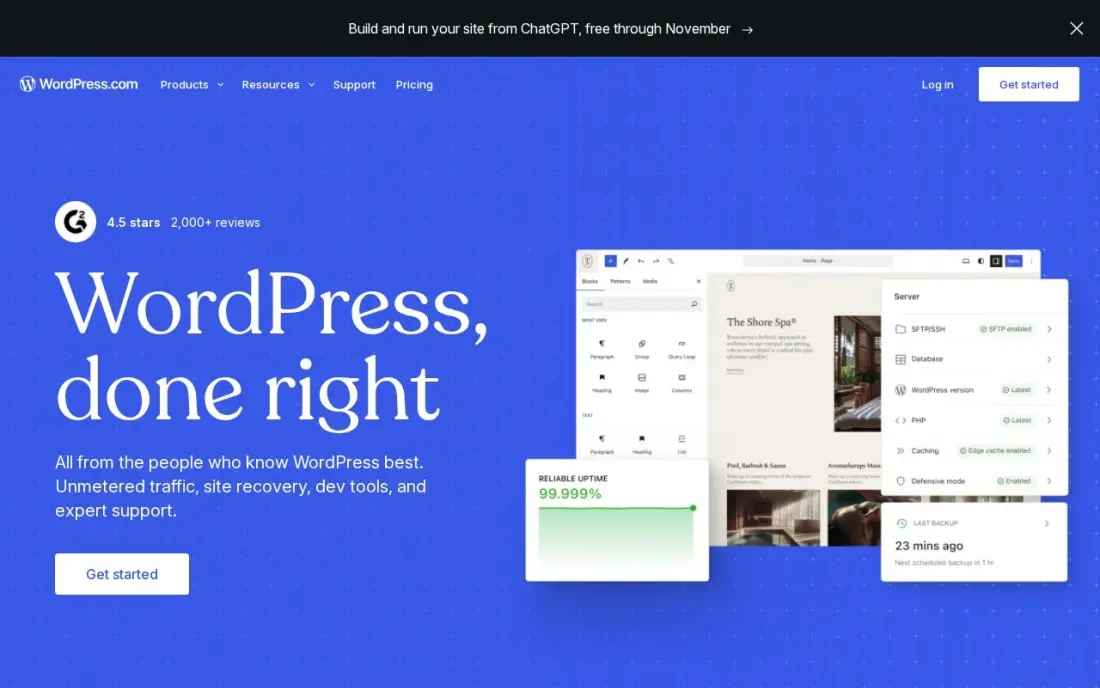
WordPress.com gives a writer the WordPress block editor and theme library on managed hosting, so there are no updates, backups or security patches to manage. The free plan is enough to start a writing site, and Personal costs $4 a month billed annually and can install plugins, including newsletter and portfolio tools.
Business, with staging, real-time backups and developer access, costs $40 a month or $25 a month billed annually in the first year, renewing at $28. Each site needs its own plan. It suits a writer who wants pages for books, speaking and contact details alongside the blog, without learning hosting.
What we like
- The lowest-friction way to run a manufacturing website: hosting, security, updates and CDN included
- Business adds staging, real-time backups, SFTP, WP-CLI and GitHub deployments for developer teams
- More than 60,000 plugins cover product catalogues, quote forms, dealer locators and multilingual sites
- A free plan exists, and Personal at $4 a month billed annually can now install plugins too
Watch out for
- The $25 a month annual figure is a first-year price; Business renews at $28 a month
- Each site needs its own plan, so a second brand site doubles the bill
- Plugin and theme choice is broad, but deep custom development still needs a developer

WordPress.org
Best for: Professional writers and authors who want full control of their site and content
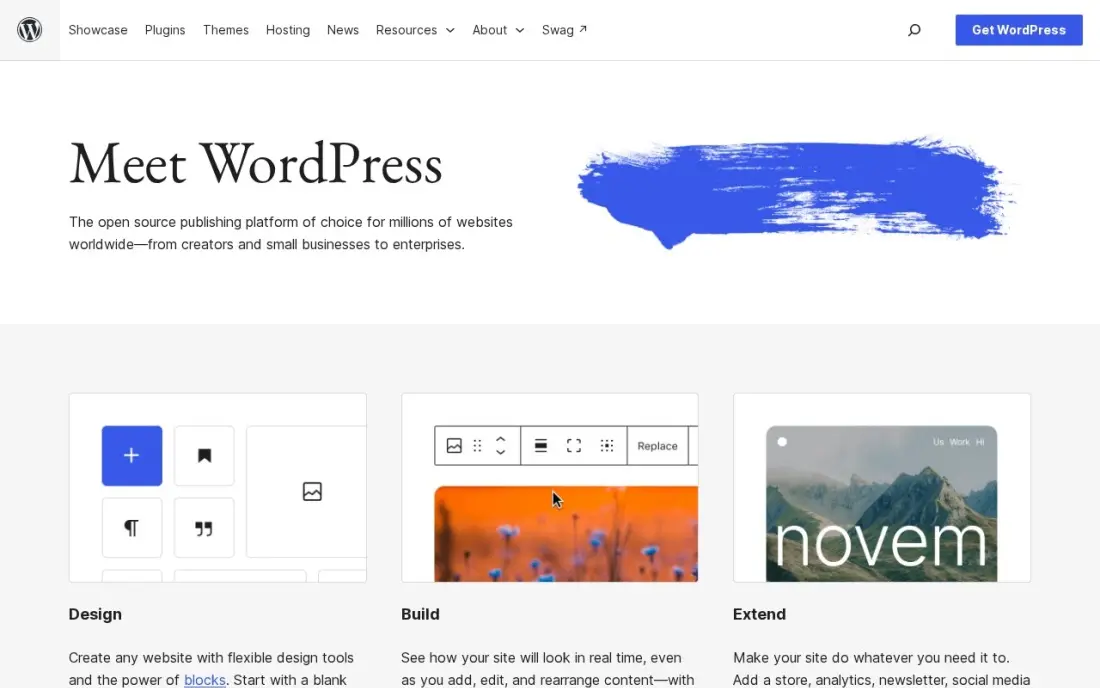
Self-hosted WordPress is the platform for a writer who treats the website as a long-term body of work. The software is free, every design and SEO setting is yours, and plugins add newsletters, book pages, reading-time estimates and member areas. Content and data stay fully portable if you change hosts.
You pay for hosting and handle backups, security and updates, or pay someone to. That is more work than any other option here, but it is also the only one where nobody else can change the rules on you. Pick it if writing is your career and the site will hold years of archives.
What we like
- Full control of technical SEO: URLs, redirects, schema, sitemaps and robots rules are all yours to change
- Largest plugin ecosystem of any platform here, including free SEO plugins such as Rank Math and Yoast SEO
- No platform lock-in: move hosts, change themes and keep your content and data
Watch out for
- You arrange hosting, security, backups and updates yourself, or pay someone to do it
- Speed and security depend on your host and plugin choices, so a bad setup can hold rankings back

Squarespace
Best for: Authors who want a polished portfolio and blog site with little setup
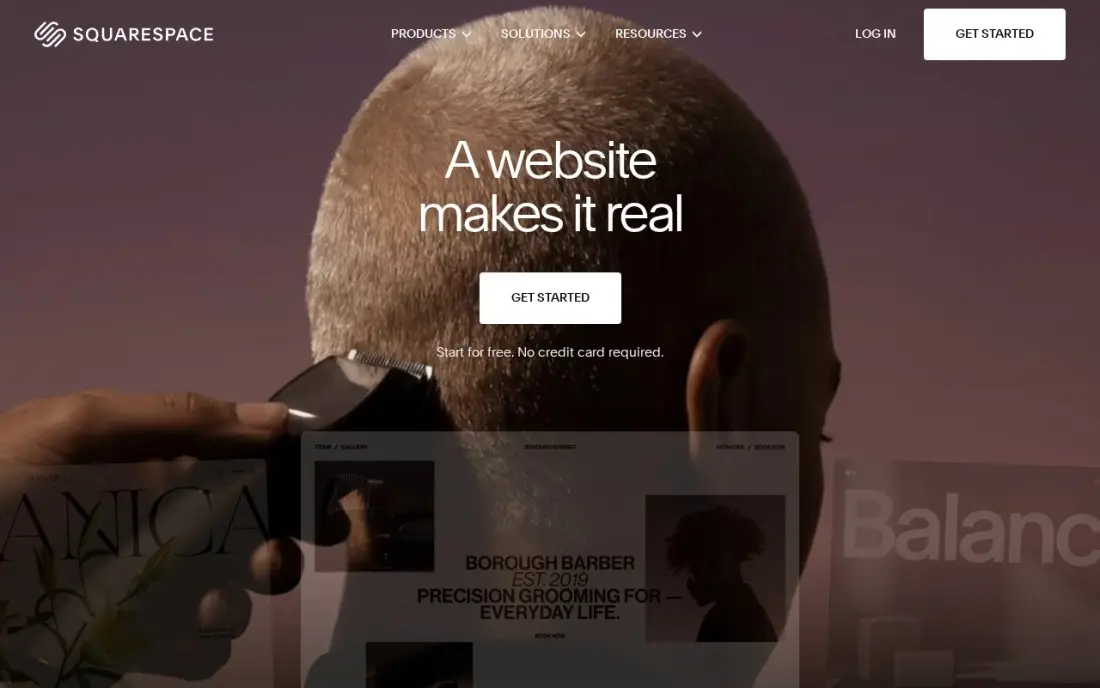
Squarespace suits an author or freelance writer whose site needs to look professional: polished templates, a blog, portfolio pages and a store for signed copies or digital downloads, all included with hosting and SSL. Annual billing adds a free custom domain for the first year.
Basic costs $25 a month, or $19 billed annually, with a 14-day trial and no free plan. It allows two contributors and no code injection on Basic, and its blog tools are simpler than Ghost or WordPress. For a writer who needs a handsome site more than a publishing engine, it is the quickest route.
What we like
- The most polished templates here, with strong photography and video presentation for skin care
- Unlimited products, subscription products and abandoned cart recovery on every plan
- Hosting, SSL and a free custom domain for the first year are included on annual billing
- Invoices, memberships and digital content are built in, not add-ons
Watch out for
- Basic adds a 2% Squarespace fee on every online store sale, on top of card processing
- Only two contributors on Basic, so a team quickly outgrows it
- No code injection on Basic, which limits custom tracking and widgets

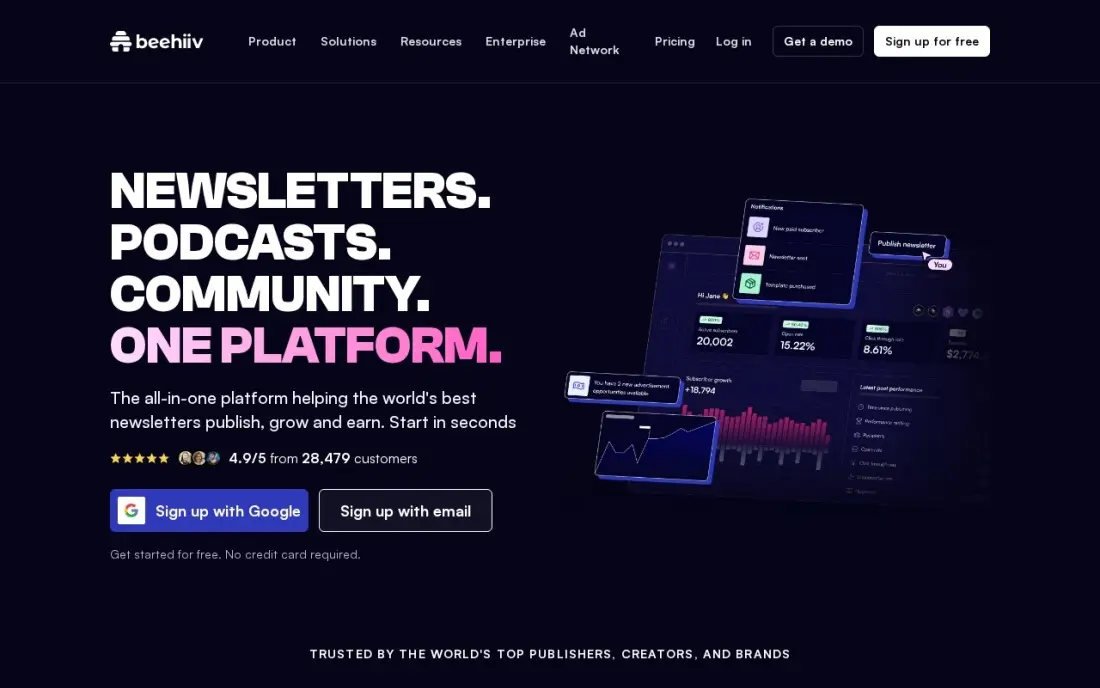
beehiiv is built for writers who publish primarily by email and want growth tools. Every plan includes a website and unlimited sends, and from Lite a referral program, an ad network for sponsors and paid subscriptions with a 0% beehiiv cut. The free plan covers up to 2,500 subscribers.
Lite costs $59 a month billed monthly or $49 billed annually at the entry tier and rises with the list, to $139 a month at 10,000 subscribers. The free plan blocks paid subscriptions and the ad network. It suits a writer who wants Substack's simplicity with more growth tools and no revenue cut.
What we like
- Free plan covers 2,500 subscribers with unlimited sends
- Lite takes 0% of paid subscription revenue
- An ad network and a referral program are built in from Lite
- Priced by subscribers, not by sends
Watch out for
- The paid price climbs with list size — $139/month at 10,000 subscribers on Lite
- The free plan blocks paid subscriptions and the ad network
- No print workflow — it is email-first, not a full newspaper CMS

Blogger costs nothing at all: hosting, a blogspot.com address, HTTPS and themes are free, you can connect your own domain at no charge, and there are no platform ads on your pages. A writer with a Google account can publish a first post within minutes and never think about updates.
It shows its age. Themes are dated, there is no plugin library, SEO settings are basic and there are no newsletter or membership tools, so it cannot grow with a writing career. Google can change or close the service, so keep backups. It is a fine place for a personal journal or a writing habit.
What we like
- Completely free, including hosting, a blogspot.com address, HTTPS and themes, with no stated storage limit
- The only free platform here that lets you connect your own domain at no charge and keep your own AdSense money
- Setup takes minutes with a Google account, and there is nothing to update or patch
- No platform ads on your pages
Watch out for
- Themes and design tools feel dated, with no plugin ecosystem and no major update in years
- You build on rented ground: Google can change or close the service, as it has with other products
- Basic SEO controls only, with no built-in newsletter or membership features
The best blogging platform for writers gets out of the way: a calm editor, a simple way for readers to subscribe and a home for your work that you will not have to move in two years. We compared eight blog platforms for writers on the writing experience, how readers find and follow you, who owns the audience and the real yearly cost. Every price comes from the vendor's own pricing page, checked in November 2026.
How to choose the best blogging platform for writers
- Write a test post first. The editor is where you will spend your time; try drafting a real piece on a free plan or trial before you commit.
- Decide between a website and a newsletter. Some platforms are sites that send email, others are newsletters with a web archive. Pick the one that matches how your readers want to follow you.
- Own your reader list. Make sure you can export subscribers. Writers who build on platforms without exports have to start over when they leave.
- Check discovery. Medium and Substack bring readers through their networks; a self-hosted blog relies on search and social, which takes longer.
- Look at monetization terms. Compare a flat monthly fee against a percentage of subscription revenue at the income you hope to reach.
- Keep it simple. A platform with fewer settings is often a better writing tool than one that does everything.
Good writing still has to be findable. Our guide to writing SEO content that ranks shows how to shape a post around what readers search for, and the free headline checker for title tags helps a post's title fit in search results.
Blogging platforms for writers pricing: what you will actually pay
Take a writer with a growing list who wants a custom domain. Over a year, Ghost Starter costs $180 at its $15 annual rate, or $216 billed monthly at $18; Squarespace Basic costs $228 at $19 a month billed annually; and WordPress.com Personal costs $48 at $4 a month billed annually. Medium's Member plan, needed for a custom domain and the Partner Program, costs $50 a year.
Substack costs nothing until you charge readers, then keeps 10% of paid subscription revenue plus Stripe fees, plus $50 once for a custom domain. A writer with 200 paying readers at $5 a month earns $12,000 a year and gives $1,200 to Substack. On Ghost Publisher, the same writer pays $348 a year at the $29 annual rate. beehiiv's free plan covers 2,500 subscribers, and Lite, which unlocks paid subscriptions, costs $49 a month billed annually at its entry tier.
Know the difference: newsletter platform vs blog platform
A newsletter platform, such as Substack or beehiiv, treats each post as an email first. Subscribers get every piece in their inbox, the web archive is secondary, and growth comes from referrals, recommendations and sign-up forms. It suits writers whose readers want to be told when something new is out.
A blog platform, such as WordPress, Squarespace or Blogger, treats each post as a web page first. Readers arrive from search and links, the site can hold book pages, a portfolio and an about page, and email is an add-on. Ghost sits between the two, with a full website and a built-in newsletter, which is why so many independent writers choose it.
Quick comparison: tool type by need
| Buyer | Best pick | Why |
|---|---|---|
| Independent essayists | Ghost | Clean editor, newsletter and memberships, 0% revenue cut |
| Newsletter beginners | Substack | Free to start, recommendations bring readers |
| Writers seeking readers | Medium | Existing audience and publications |
| Writers wanting a full site | WordPress.com | Managed WordPress, Personal $4/month billed annually |
| Career authors | WordPress.org | Full control and portability, free software |
| Portfolio-first authors | Squarespace | Polished templates, Basic from $25/month |
| Growth-focused newsletters | beehiiv | Free to 2,500 subscribers, referrals and ads from Lite |
| Hobby writers | Blogger | Completely free with a custom domain |
Mistakes to avoid
- Spending a month on design. Readers come for the writing; pick a clean theme and publish.
- Building on a platform with no export. If subscribers cannot leave with you, the audience belongs to the platform.
- Publishing without a schedule. Readers follow writers they can rely on; a steady weekly or fortnightly rhythm beats bursts.
- Turning on paid too early. A small paid tier can stall free growth; build a free audience first.
- Ignoring search. Clear titles and descriptions help each post keep finding readers long after the newsletter has gone out.
How we chose
We checked each vendor's pricing page in November 2026 and recorded the starting price exactly as shown, with annual-billing rates where listed. We compared the eight platforms on the editor, reader discovery, newsletter features, audience ownership, monetization terms and yearly cost for a single writer. Ratings come from G2 pages checked on the dates shown in the sources; platforms without a rating we verified show none. No vendor paid for a place in this list, and none of the links here are affiliate links.
What to do next
Draft one real piece on your two favourite platforms this week and publish it on whichever felt easier to write in. Then connect your own domain so the audience you build is yours. Book a free content strategy call.
Frequently asked questions
What is the best blogging platform for writers?
Ghost is the best blog platform for writers who want a clean editor, a newsletter and paid memberships in one product, from $18 a month or $15 billed annually. Substack and Medium are the best free options.
Is Substack or Medium better for writers?
Substack is better for building your own subscriber list, which you can export. Medium is better for reaching existing readers quickly, but it gives you no list and its Partner Program needs the $5-a-month Member plan.
What is the best free blogging platform for writers?
Substack and Medium are free to publish on, Blogger is completely free with a custom domain, and WordPress.com and beehiiv have free plans — beehiiv's covers up to 2,500 subscribers.
Should a writer use WordPress or Ghost?
Choose Ghost if you mainly publish essays and newsletters and want memberships built in. Choose WordPress if you need a full site with book pages, events and plugins, and are comfortable managing more settings.
Can writers get paid on a blogging platform?
Yes. Ghost and beehiiv let you sell paid subscriptions with a 0% platform cut, Substack keeps 10% of paid revenue, and Medium pays Partner Program writers from member reading time.
Do writers need their own domain?
It helps. A custom domain keeps your readers and search authority if you move platforms. Substack charges a one-time $50, Medium needs the Member plan, and Blogger connects one at no platform cost.
Sources we checked (12)
- Ghost — ghost.org/pricing (checked November 12, 2026)
- Ghost reviews on G2 (checked November 12, 2026)
- Substack — substack.com/pricing (checked November 12, 2026)
- Medium — medium.com/plans (checked November 12, 2026)
- WordPress.com — wordpress.com/pricing (checked November 12, 2026)
- WordPress.com reviews on G2 (checked November 12, 2026)
- WordPress.org — wordpress.org (checked November 2, 2026)
- WordPress.org reviews on G2 (checked November 2, 2026)
- Squarespace — www.squarespace.com/pricing (checked November 12, 2026)
- Squarespace reviews on G2 (checked November 12, 2026)
- beehiiv — www.beehiiv.com/pricing (checked November 12, 2026)
- Blogger — www.blogger.com (checked November 5, 2026)
Make one of these tools?
We re-check this list every quarter. Send a correction, request a review, or ask about a clearly labeled sponsored spot.
Request a listingShamim
Founder of SerpAstra
A full-stack SEO and digital marketer who spends most days on Local SEO for dental practices, AI search visibility and lead generation.
Free SEO and AI visibility audit
Find out what is holding your rankings back
Send us your site. Within 2 business days you get a written audit, an AI visibility check and a short fix list ranked by impact. Free, with no contract attached.
Request my free audit→Related buying guides
 Marketing9 Best Newsletter Platforms for 2026 (Pros, Cons and Pricing)Compare the 9 best newsletter platforms on price, free plans, automation and monetization, with every starting price checked November 6, 2026.Read guide →
 Productivity & Office10 Best Apps for Writing a Book in 2026: Free and Paid Apps RankedCompare the 10 best app for writing a book picks on price, free plans and formatting, with every price checked November 4, 2026, and ranked by use case.Read guide →
 Website Builders & Hosting11 Best Platforms to Start a Blog for 2026 (Pros, Cons and Pricing)Compare the 11 best platforms to start a blog on price, free plans, SEO control and ownership, with every price checked November 5, 2026, before you commit.Read guide →