
7 Best Customer Data Platforms in 2026, Compared
Compare the 7 best customer data platforms on event collection, warehouse-native audiences, identity resolution and real cost, with prices from vendor pages.
 Shamim Mia, Founder, SerpAstraLast verified November 4, 20268 min read
We compare pricing pages, documentation and public reviews. We never accept payment for rankings.
Key takeaways
- Segment is the best customer data platform for most teams starting out: a free plan for 1,000 monthly tracked users, Team from $120 a month and 700+ destinations.
- RudderStack is the high-volume alternative, with a free plan for 250,000 events a month and Growth at $265 a month for 1 million events, 15% less billed annually.
- If your customer data already lives in Snowflake or Databricks, a warehouse-native CDP such as Hightouch starts free with 2 active syncs.
- Tealium, Bloomreach and Insider One publish no prices; they suit enterprises and ecommerce brands that want the CDP bundled with personalization or orchestration.
On this page
Quick comparison
| Tool | Best for | Starting price | Free plan |
|---|---|---|---|
| Segment | Product and marketing teams that want one event stream feeding every analytics and marketing tool | $120/mo (Team) | Yes (1,000 MTUs) |
| RudderStack | Data teams with high event volume that want warehouse-first event collection at a lower price | Free; Growth $265/mo | Yes (250K events) |
| Hightouch | Companies whose customer data already lives in a warehouse and want audiences synced to every tool | Free; CDP custom quote | Yes (2 syncs) |
| Tealium | Enterprises that want tag management, data collection and a CDP from one vendor | Custom quote | No (demo) |
| Bloomreach | Ecommerce brands that want a CDP with product recommendations and campaigns built in | Custom quote | No (demo only) |
| Insider One | Retail brands that want one platform for customer data and campaigns across web, app and messaging | Custom quote | No (demo only) |
| Bloom Intelligence | Multi-location restaurant groups that want a CDP built from WiFi, POS, ordering and review data | $115/mo | No (no trial published) |
Make one of these tools?
We re-check this list every quarter. Send a correction, request a review, or ask about a clearly labeled sponsored spot.
Request a listingThe best customer data platforms

Segment
Best for: Product and marketing teams that want one event stream feeding every analytics and marketing tool
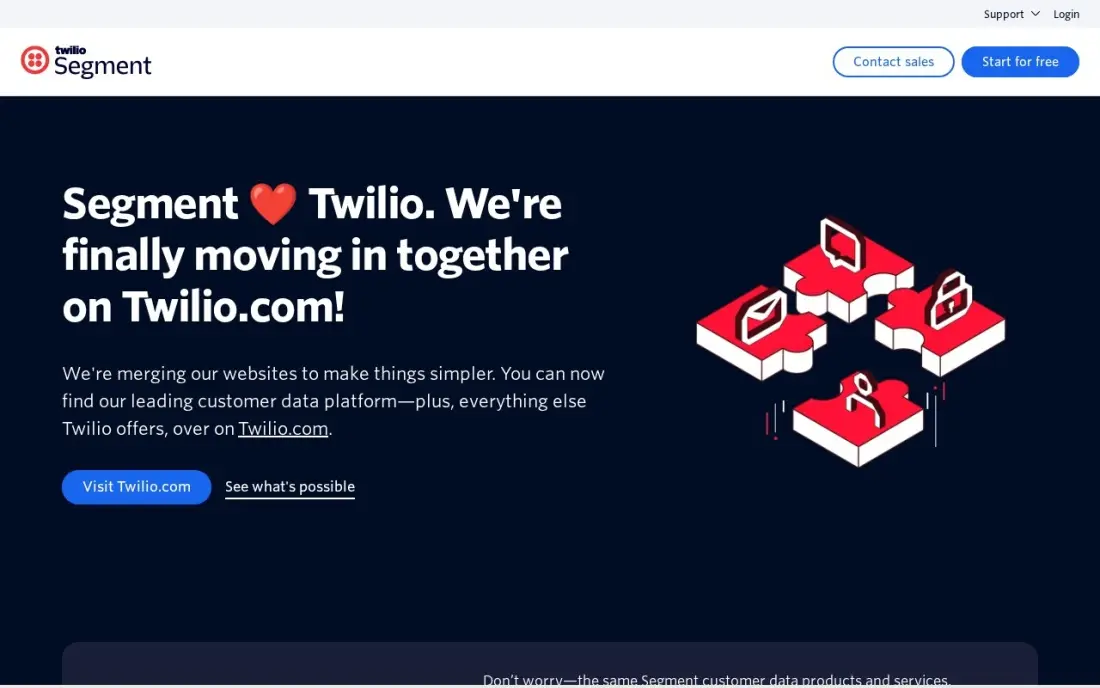
Segment is the best-known customer data platform and the easiest place to start. You install its tracking once on your site and app, and it sends the same clean events to more than 700 destinations, so your analytics, warehouse, email and ad tools all agree. The Free plan covers 1,000 monthly tracked users and 2 sources with no credit card, and Team starts at $120 a month for 10,000.
Watch the billing unit. Anonymous visitors count as monthly tracked users, so a high-traffic consumer site can burn the allowance on people who never sign up. Identity resolution, data quality controls and AI predictions need the custom-priced Business tier. For a product-led company with several downstream tools, it is still the default choice.
What we like
- One tracking implementation feeds 700+ destinations, so tools never drift apart
- Published pricing with per-1,000-user overage rates — the most transparent CDP pricing here
- Free plan covers 1,000 MTUs with no credit card, plus a 14-day Team trial
Watch out for
- Anonymous visitors count as MTUs, so high-traffic B2C sites burn the allowance fast
- Identity resolution, data quality and AI predictions need the custom-priced Business tier
- Segment routes data but does not analyse it — you still need an analytics tool downstream

RudderStack
Best for: Data teams with high event volume that want warehouse-first event collection at a lower price
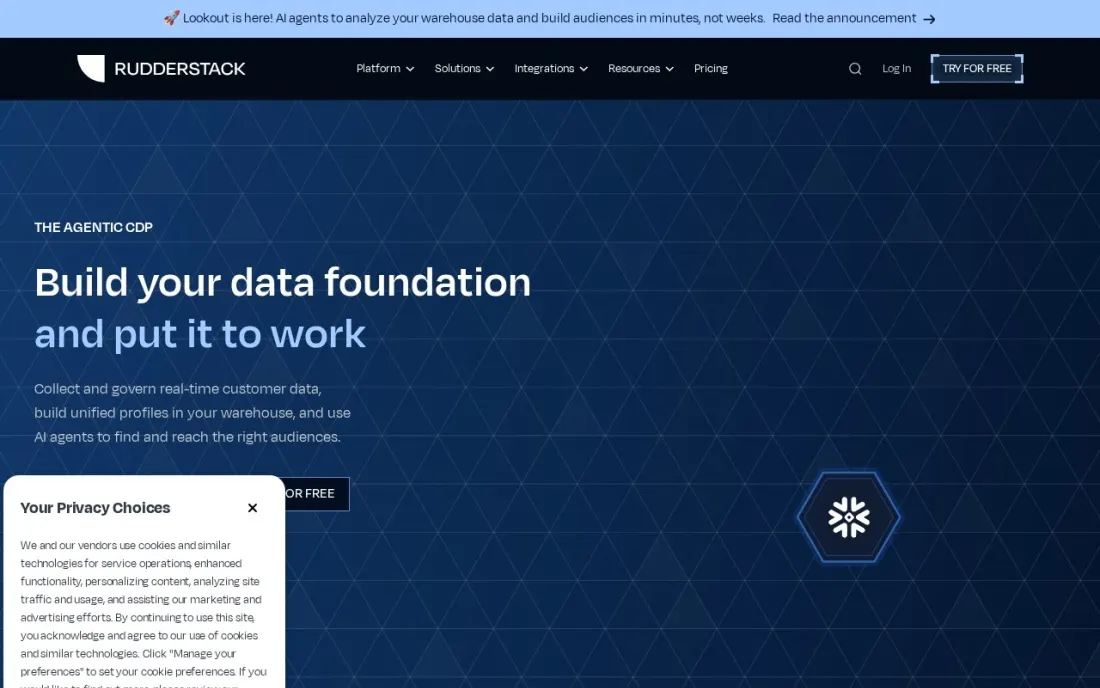
RudderStack does the same core job as Segment, collecting events from your site, app and servers and sending them to 200+ cloud destinations and your warehouse, but it bills by events rather than tracked users. The free plan covers 250,000 events a month with reverse ETL, 5 transformations and 10 team members, which is enough for a startup's first year of tracking.
Growth costs $265 a month for 1 million events, with 15% off on annual billing and a 30-day free trial, and adds unlimited team members, 30-minute warehouse syncs and separate dev and production workspaces. Profiles, Data Apps, SSO and HIPAA wait for Enterprise. It suits engineering-led teams that already treat the warehouse as the source of truth.
What we like
- Free plan covers 250,000 events a month with 200+ cloud destinations, warehouse destinations and reverse ETL
- Priced by events rather than tracked users, which suits high-traffic sites with many anonymous visitors
- Growth adds unlimited team members, 30-minute warehouse sync and dev and production workspaces, with a 30-day free trial
Watch out for
- Profiles, identity features and HIPAA support are on the custom-priced Enterprise plan
- The free plan syncs the warehouse every 3 hours and stops processing after a second consecutive overage
- Growth's published price covers 1 million events; higher tiers need a quote above 25 million

Hightouch
Best for: Companies whose customer data already lives in a warehouse and want audiences synced to every tool
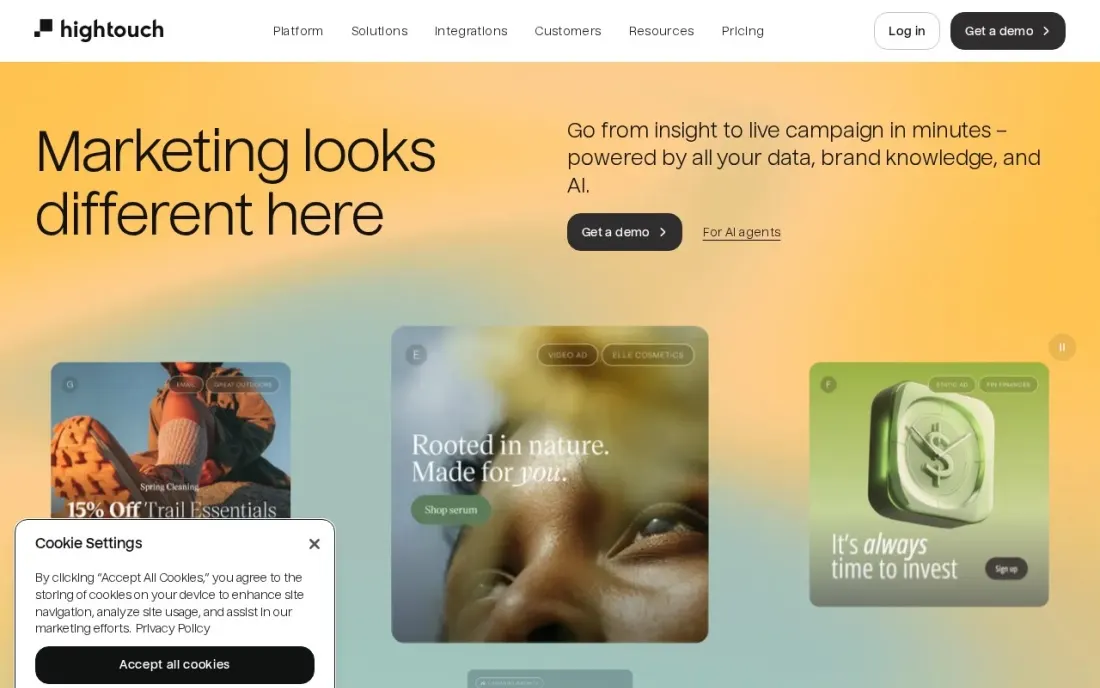
Hightouch is a warehouse-native, or composable, customer data platform: instead of copying your customer data into another system, it reads it from your existing warehouse and syncs audiences and fields out to ad platforms, CRMs and email tools. The free Basic Reverse ETL tier allows 2 active syncs with unlimited destinations and seats, which is enough to prove the approach.
The full Composable CDP adds Customer Studio for marketers to build audiences without SQL, plus identity resolution, Hightouch Events and real-time personalization, on usage-based pricing with no caps on sources, destinations or seats. It publishes no price, so expect a demo and quote. Choose it when your data team already maintains clean customer tables in the warehouse.
What we like
- Free tier includes 2 active syncs with unlimited destinations and unlimited user seats
- Composable CDP adds Customer Studio audiences, identity resolution, events and real-time personalization
- Usage-based pricing with no caps on sources, destinations or seats
Watch out for
- The Composable CDP has no published price — you book a demo
- Works on top of your warehouse, so you need Snowflake, Databricks or similar data in place first
- The free tier is reverse ETL only, without audiences

Tealium
Best for: Enterprises that want tag management, data collection and a CDP from one vendor
Tealium started in tag management and has grown into what it calls customer data infrastructure. Data collection covers tag management, an API hub and a mobile SDK, and the customer data platform adds identity resolution, visitor enrichment, profiles and reverse ETL, connecting to warehouses such as Snowflake, Databricks and BigQuery and to tools from Salesforce, Google, Adobe and Meta.
That breadth is the reason to choose it and the reason to plan carefully: a large brand can replace its tag manager and CDP with one vendor, but scoping the products takes time. Tealium publishes no prices and offers a demo rather than a trial. Budget it as an enterprise contract and get the full first-year cost in writing.
What we like
- Combines tag management, data collection, an API hub and a mobile SDK with its customer data platform
- Includes identity resolution, visitor enrichment, profiles and reverse ETL
- Connects to Snowflake, Databricks, BigQuery, Salesforce, Google, Adobe and other sources and destinations
Watch out for
- No published prices or free trial — every deal starts with a demo
- The product range is broad, so scoping what you actually need takes time
- Built for enterprise teams rather than small marketing departments

Bloomreach
Best for: Ecommerce brands that want a CDP with product recommendations and campaigns built in
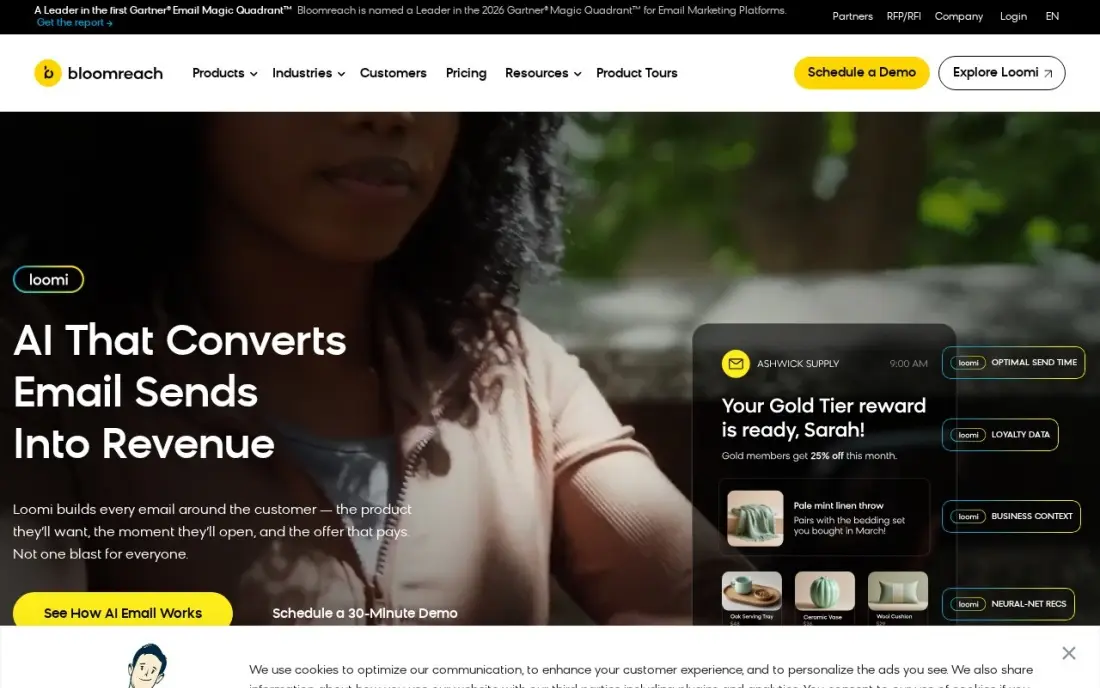
Bloomreach pairs a customer data platform with ecommerce marketing. Its built-in CDP unifies customer and product data in real time, so segments update on what a shopper just viewed rather than a nightly import, and Loomi AI uses that data for product recommendations and personalized email, SMS and web campaigns. G2 reviewers rate it 4.6 out of 5.
It is priced as an enterprise platform: custom annual contracts based on products, profiles, traffic and message volume, with no published starting price, and reviewers call it expensive. Time-to-value is slower than simpler tools, and B2B lead management is thin. Choose it when you want the CDP and the campaigns from one vendor.
What we like
- Loomi AI unifies real-time customer and product data for personalization across web, email and SMS
- Built-in CDP means segmentation runs on live commerce data, not nightly batch imports
- Rated 4.6/5 on G2 with feature depth and data unification its most-cited strengths
Watch out for
- Custom annual pricing only — costs depend on products, profiles, traffic and message volume
- G2 reviewers call it expensive, and time-to-value runs slower than simpler tools
- Ecommerce-first design means B2B lead management is thin, so B2B teams may need another tool

Insider One
Best for: Retail brands that want one platform for customer data and campaigns across web, app and messaging
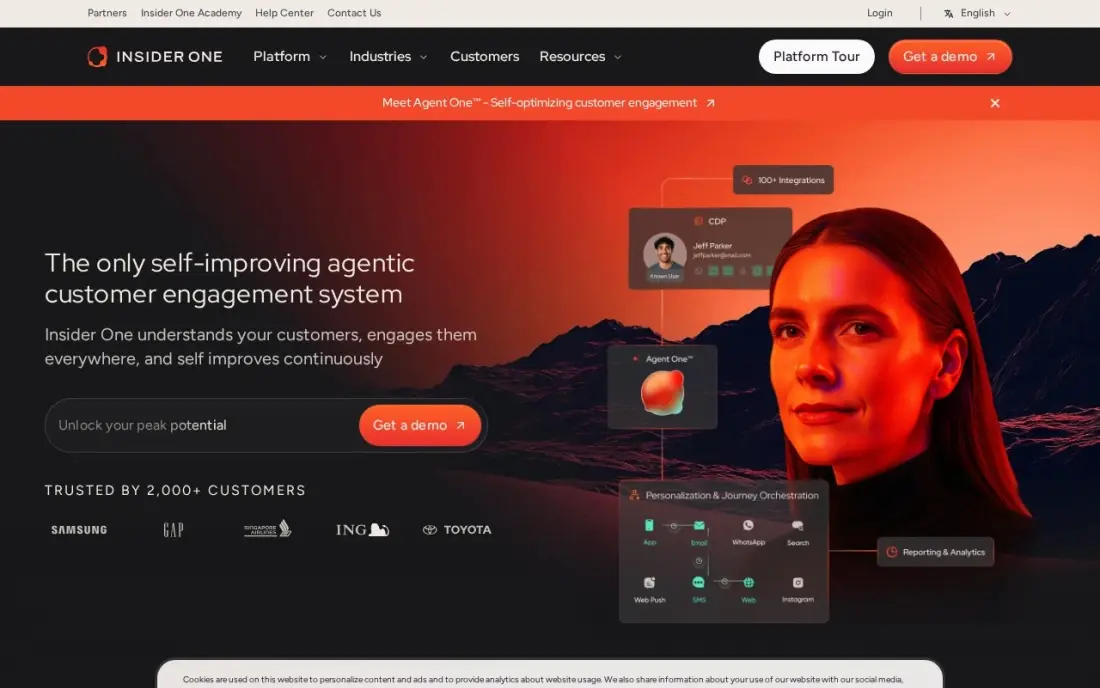
Insider One builds unified customer profiles and uses them across web, app, email, SMS, WhatsApp, push and on-site search from one platform, with Sirius AI creating predictive audiences and orchestrating journeys across more than 100 native integrations. It holds the highest G2 score in this list at 4.8 out of 5, with reviewers praising setup, support and ease of use.
Pricing is modular and quote-based with nothing published, and WhatsApp and SMS often meter separately from the base contract. Depth varies between channels inside the suite, and B2B references are thinner than retail ones. For a retail or ecommerce brand that wants the CDP and every channel together, it is the best-reviewed option.
What we like
- Highest G2 score in this list (4.8/5), leading on setup, support and ease of use
- Sirius AI powers predictive audiences and journey orchestration across 100+ native integrations
- Widest native channel set here: web, app, email, SMS, WhatsApp, push and on-site search in one platform
Watch out for
- No published prices — modular, quote-based annual contracts, and WhatsApp and SMS often meter separately
- Breadth means depth varies: some channels are stronger than others inside the same suite
- Smaller presence outside retail and ecommerce, so B2B references are thinner

Bloom Intelligence
Best for: Multi-location restaurant groups that want a CDP built from WiFi, POS, ordering and review data
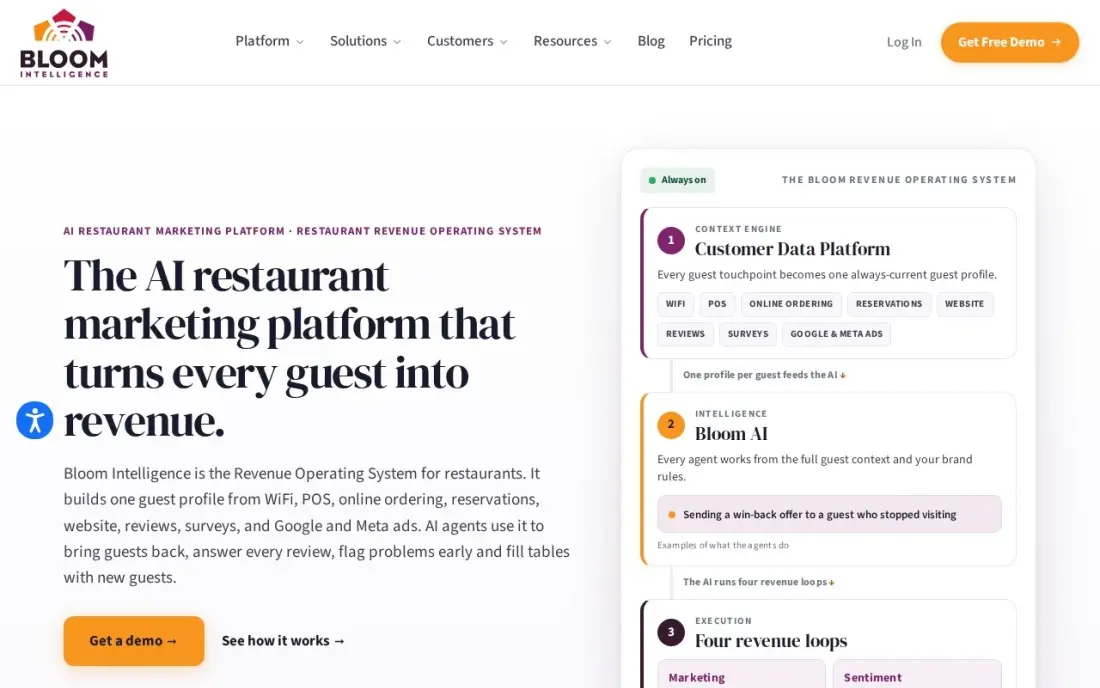
Bloom Intelligence is a customer data platform built for restaurants, where most guests never fill in a form. It captures them through guest WiFi logins and joins that data with POS, online ordering, reservations, reviews and surveys into one guest profile per person. The Customer Data Platform plan costs $115 a month per location billed monthly, or $105 billed annually.
Multi-location groups can pay as little as $70 per location, and Marketer at $175 a month billed monthly adds campaigns built and sent for you. Every plan is on a contract, though cancellation is allowed anytime in the first 90 days. It is the only industry-specific CDP here, and the only one with published per-location pricing.
What we like
- One guest profile built from WiFi, POS, online ordering, reservations, reviews and surveys
- Published per-location pricing, with multi-location groups paying as little as $70 per location
- Marketer tier adds campaigns built, sent and measured for the restaurant group
- Cancellation allowed anytime in the first 90 days on every plan
Watch out for
- The most expensive entry here at $115/month billed monthly, or $105 billed annually
- Every plan is on a contract, even though cancellation is allowed anytime in the first 90 days
- Campaigns built and sent for you wait for Marketer at $175/month billed monthly
The best customer data platform collects what customers do across your site, app and stores, joins it into one profile per person and sends that profile to every tool that needs it. We compared seven CDPs across three approaches — event-based platforms such as Segment and RudderStack, warehouse-native tools such as Hightouch, and marketing suites with a CDP built in — and every price below comes from the vendor's own pricing page as checked in November 2026.
How to choose the best customer data platform
- Start with where your data lives. If a data team already keeps clean customer tables in a warehouse, a composable CDP reuses them; if not, an event-collection CDP builds the pipeline for you.
- Check the billing unit. Segment bills by monthly tracked users, RudderStack by events and Bloom Intelligence by location, which changes the cost a lot for high-traffic sites.
- Ask where identity resolution sits. Joining anonymous visitors to known customers is the core of a CDP, and several vendors keep it on higher tiers.
- List your destinations. Make sure your ad platforms, email tool, CRM and analytics all have native connectors.
- Decide who builds audiences. Marketers need a visual audience builder; SQL-only tools leave them waiting on the data team.
- Plan for consent. A CDP must respect opt-outs across every destination, so check consent handling before you send data.
A CDP makes your marketing data accurate; it does not bring visitors on its own. Our monthly SEO service works on the traffic side, and the free UTM builder keeps campaign source data clean before it reaches your CDP.
Customer data platform pricing: what you will actually pay
Take a growing app with 10,000 monthly tracked users generating about 1 million events a month. On Segment, that is the Team plan from $120 a month, or $1,440 a year. On RudderStack, 1 million events fits Growth at $265 a month, or $3,180 a year, with 15% off on annual billing; at the free tier's 250,000 events a month, it costs nothing.
The picture changes with traffic. A consumer site with 100,000 mostly anonymous visitors counts every one as a tracked user on Segment, while RudderStack counts only events, so high-traffic sites often favour event-based billing. Hightouch's free tier covers 2 active syncs, but the full Composable CDP is quote-only. Tealium, Bloomreach and Insider One publish no prices and sell annual contracts, so get the full first-year cost, including implementation, in writing. For restaurant groups, Bloom Intelligence costs $1,380 a year per location billed monthly, or $1,260 billed annually.
Know the difference: packaged CDP vs composable CDP
A packaged CDP collects events through its own tracking code, stores the data itself, builds profiles and sends audiences to your tools. Segment, Tealium, Bloomreach and Insider One work this way. It is the faster route for a team without a data warehouse, because the vendor runs the pipeline and the profile store.
A composable CDP sits on top of the warehouse you already have. Your data team models customer tables in Snowflake or Databricks, and the CDP reads them to build audiences and sync them out. Hightouch is the clearest example, and RudderStack is warehouse-first. You avoid duplicate data and keep one source of truth, but you need the warehouse and the people to maintain it first.
Quick comparison: tool type by need
| Buyer | Best pick | Why |
|---|---|---|
| Most teams starting out | Segment | Free for 1,000 tracked users, Team from $120/month |
| High event volume | RudderStack | Free to 250K events, Growth $265/month for 1M events |
| Warehouse-first companies | Hightouch | Composable CDP, free tier with 2 active syncs |
| Enterprise data collection | Tealium | Tag management plus CDP, custom quote |
| Ecommerce personalization | Bloomreach | CDP with product recommendations, custom quote |
| Retail omnichannel | Insider One | CDP plus web, app and messaging, custom quote |
| Restaurant groups | Bloom Intelligence | WiFi, POS and review data, $115/month per location |
Mistakes to avoid
- Buying a CDP before you have a tracking plan. Decide which events and properties matter first, or you will pay to store noise.
- Underestimating anonymous traffic. Tracked-user pricing grows with every visitor, not just every customer.
- Expecting the CDP to analyze data. Most CDPs route and unify data; you still need an analytics tool to answer questions.
- Ignoring consent. Sending data to ad platforms without honoring opt-outs creates legal risk, whatever the tool's features.
- Signing an annual contract without a pilot. Use a free plan or a scoped pilot on one use case before committing a year.
Related comparisons: CRM Software for Customer Service · Customer Analytics Software · Customer Service Ecommerce Help Desks · Customer Review Platforms
How we chose
We checked each vendor's own pricing page in November 2026 and recorded the starting price exactly as shown, including the billing unit and annual discounts. We grouped the platforms by approach and ranked them by fit for the most common buyer, a company with several marketing and analytics tools that disagree about who its customers are. Tealium, Bloomreach, Insider One and Hightouch's full CDP publish no prices, so we list them as custom quote. Ratings come from G2 pages checked on the dates shown in the sources; tools without a verified rating show none. No vendor paid for a place in this list, and none of the links here are affiliate links.
What to do next
Write down the five customer events that matter most to your business, then send them through a free plan from Segment, RudderStack or Hightouch into two of your existing tools. If the data lines up and teams start using the audiences, scale up. If you need more of the right visitors to track in the first place, book a free SEO review.
Frequently asked questions
What is the best customer data platform?
Segment is the best starting point for most teams, with a free plan for 1,000 monthly tracked users and Team from $120 a month. RudderStack is cheaper at high event volumes, Hightouch suits warehouse-first companies, and Bloomreach and Insider One suit ecommerce brands that want campaigns built in.
Is there a free customer data platform?
Yes. Segment's Free plan covers 1,000 monthly tracked users, RudderStack's free plan covers 250,000 events a month, and Hightouch's free Basic Reverse ETL tier allows 2 active syncs. These are enough to prove the setup before paying.
How much does a CDP cost?
On published prices, Segment Team starts at $120 a month for 10,000 tracked users, RudderStack Growth costs $265 a month for 1 million events, and Bloom Intelligence costs $115 a month per location. Tealium, Bloomreach, Insider One and Hightouch's full CDP are quote-only, usually on annual contracts.
What is a composable CDP?
A composable or warehouse-native CDP reads customer data from your existing data warehouse, such as Snowflake or Databricks, instead of storing its own copy. Hightouch works this way, and RudderStack is warehouse-first. It suits companies with a data team and clean customer tables already in place.
What is the difference between a CDP and a CRM?
A CRM stores contacts and deals that sales and service teams update by hand. A CDP collects behavioral data automatically, such as page views, app events and purchases, joins it into one profile per person and sends audiences to marketing and analytics tools. Many companies feed CDP data into their CRM.
Do small businesses need a customer data platform?
Usually not until they run three or more tools that need the same customer data. Before that, an email or CRM platform's built-in segmentation is enough. When tools start disagreeing about who your customers are, a free plan from Segment or RudderStack is the low-risk next step.
What are examples of customer data platforms?
Segment and RudderStack are event-collection CDPs that feed analytics and marketing tools. Hightouch is a composable CDP that runs on top of your warehouse. Tealium pairs a CDP with tag management. Bloomreach and Insider One build campaigns and personalization on top of their CDP for ecommerce and retail, and Bloom Intelligence is a CDP for multi-location restaurant groups.
What does CDP stand for?
CDP stands for customer data platform: software that collects customer data from your website, app and other sources, joins anonymous visitors to known customers through identity resolution, and sends unified profiles and audiences to your ad platforms, email tool, CRM and analytics. Segment, for example, feeds one tracking implementation into 700+ destinations, while Hightouch syncs audiences from data already in a warehouse.
Sources we checked (11)
- Segment — www.twilio.com/en-us/segment/pricing (checked November 12, 2026)
- Segment reviews on G2 (checked November 12, 2026)
- RudderStack — www.rudderstack.com/pricing (checked November 16, 2026)
- Hightouch — hightouch.com/pricing (checked November 16, 2026)
- Tealium — tealium.com (checked November 16, 2026)
- Bloomreach — www.bloomreach.com (checked November 4, 2026)
- Bloomreach reviews on G2 (checked November 4, 2026)
- Insider One — useinsider.com (checked November 4, 2026)
- Insider One reviews on G2 (checked November 4, 2026)
- Bloom Intelligence — bloomintelligence.com/pricing (checked November 5, 2026)
- Bloom Intelligence reviews on G2 (checked November 5, 2026)
Make one of these tools?
We re-check this list every quarter. Send a correction, request a review, or ask about a clearly labeled sponsored spot.
Request a listingShamim
Founder of SerpAstra
A full-stack digital marketer and SEO strategist covering technical and local SEO, AI search visibility, paid ads and lead generation for local businesses, e-commerce brands and SaaS teams.
Free SEO and AI visibility audit
Find out what is holding your rankings back
Send us your site. Within 2 business days you get a written audit, an AI visibility check and a short fix list ranked by impact. Free, with no contract attached.
Request my free audit→Related buying guides
 Data, Analytics & AI11 Best Real-Time Analytics Platforms in 2026, ComparedCompare the 11 best real-time analytics platforms on price, free plans and live reporting for 2026, with every price verified November 12, 2026.Read guide →
 Marketing12 Best Enterprise Marketing Platforms in 2026, Compared12 best enterprise marketing platforms compared on price, channels and AI features. Only 4 publish a starting price — the rest are custom quote.Read guide →
 Marketing10 Best Customer Analytics Software in 2026, Compared10 best customer analytics software tools compared on price, free plans and fit, from Mixpanel and Amplitude to free GA4, with prices checked November 2, 2026.Read guide →