
8 Best Ecommerce Personalization Platforms in 2026, Compared
Compare the 8 best ecommerce personalization platforms on product recommendations, testing, email personalization and real cost, with every price checked.
 Shamim Mia, Founder, SerpAstraLast verified November 4, 20268 min read
We compare pricing pages, documentation and public reviews. We never accept payment for rankings.
Key takeaways
- Bloomreach and Insider One are the ecommerce-first personalization suites, both rated highly on G2 and both sold on custom annual contracts with no published price.
- Klaviyo is the affordable way to personalize by behaviour for most stores, free for 250 active profiles and $20 a month for 500 on the Email plan.
- Testing tools such as VWO and AB Tasty personalize the site itself, but since their 2026 merger under Wingify both are custom-quote only.
- Every on-site personalization platform here is quote-only; only the email tools, Klaviyo and Omnisend, publish prices.
On this page
Quick comparison
| Tool | Best for | Starting price | Free plan |
|---|---|---|---|
| Bloomreach | Mid-size and enterprise stores that want real-time product personalization across site, email and SMS | Custom quote | No (demo only) |
| Insider One | Retail brands that want one vendor for personalization across web, app, email, SMS and WhatsApp | Custom quote | No (demo only) |
| Klaviyo | Shopify stores that want behaviour-based personalized email flows at a low entry price | Free; Email $20/mo | Yes (free plan) |
| Omnisend | Small stores that want personalized email, SMS and push in one automation at the lowest price | Free; Standard $16/mo | Yes (250 contacts) |
| Optimizely One | Enterprise merchants that want content, experimentation and personalization from one vendor | Custom quote | No (demo only) |
| SAP Emarsys | Retailers on SAP Commerce that want AI recommendations, loyalty and omnichannel campaigns | Custom quote | No (demo only) |
| VWO | Marketing teams that want to personalize and test on-site experiences with a visual editor | Custom quote | No (free trial) |
| AB Tasty | European marketing teams that want testing, personalization and recommendations in one suite | Custom quote | No (trial on request) |
Make one of these tools?
We re-check this list every quarter. Send a correction, request a review, or ask about a clearly labeled sponsored spot.
Request a listingThe best ecommerce personalization platforms

Bloomreach
Best for: Mid-size and enterprise stores that want real-time product personalization across site, email and SMS
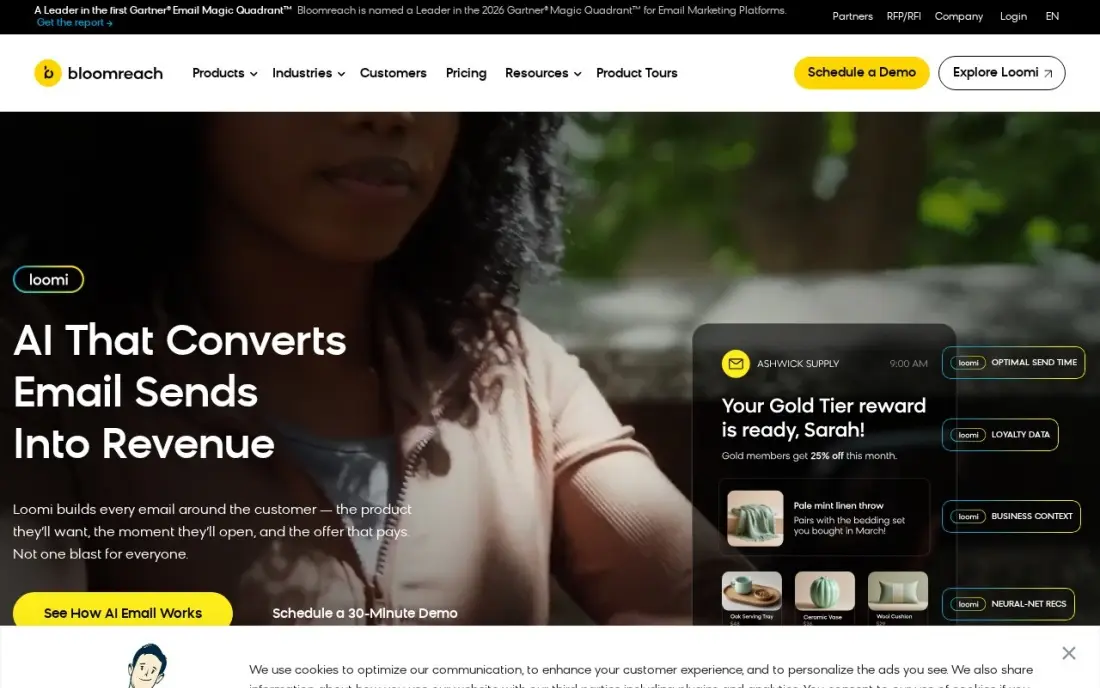
Bloomreach is built for ecommerce personalization from the data up. Its built-in customer data platform joins customer and product data in real time, so recommendations and segments react to what a shopper viewed a minute ago rather than yesterday's batch import. Loomi AI turns that into personalized product recommendations and campaigns across the website, email and SMS, and G2 reviewers rate it 4.6 out of 5, citing feature depth and data unification.
Pricing is a custom annual contract based on products, profiles, traffic and message volume, with no published starting point. Reviewers call it expensive, and time to value is slower than simpler tools. Choose it when personalization is a core growth lever and the team can run it.
What we like
- Loomi AI unifies real-time customer and product data for personalization across web, email and SMS
- Built-in CDP means segmentation runs on live commerce data, not nightly batch imports
- Rated 4.6/5 on G2 with feature depth and data unification its most-cited strengths
Watch out for
- Custom annual pricing only — costs depend on products, profiles, traffic and message volume
- G2 reviewers call it expensive, and time-to-value runs slower than simpler tools
- Ecommerce-first design means B2B lead management is thinner than Marketo or Eloqua

Insider One
Best for: Retail brands that want one vendor for personalization across web, app, email, SMS and WhatsApp
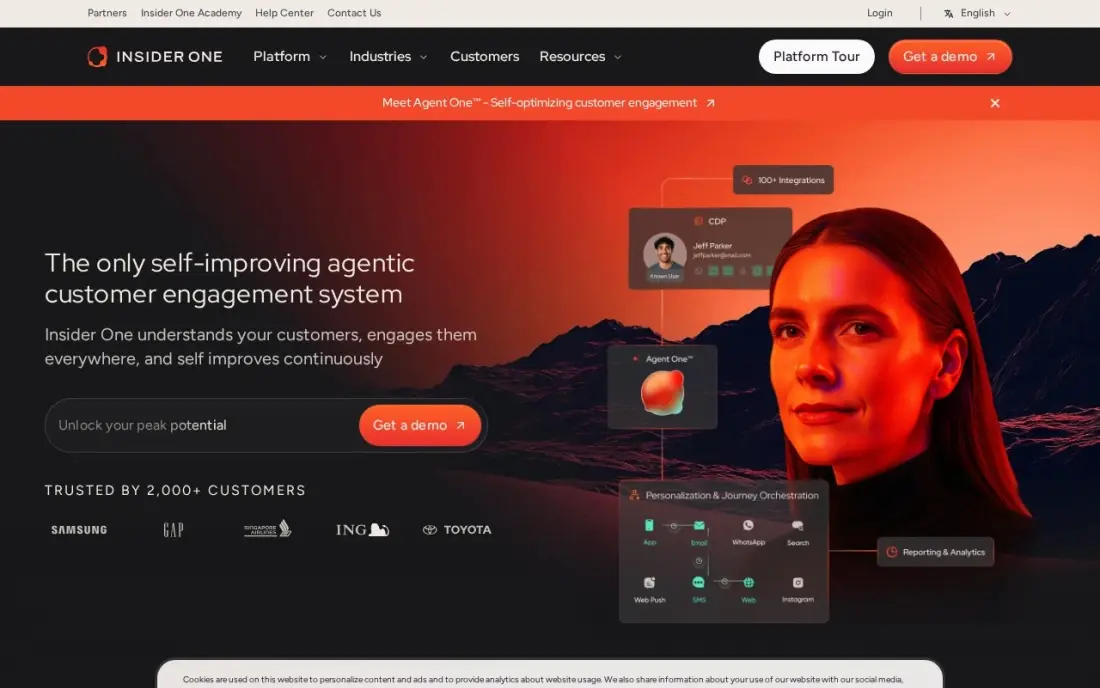
Insider One covers more channels than any other platform here: web, app, email, SMS, WhatsApp, push and on-site search in one platform, with Sirius AI building predictive audiences and orchestrating journeys across more than 100 native integrations. It has the highest G2 score in this list at 4.8 out of 5, and reviewers single out setup, support and ease of use.
There are no published prices; contracts are modular and quoted annually, and WhatsApp and SMS often meter separately. With that much breadth, some channels are stronger than others. Choose Insider One when a retail brand wants one personalization vendor for every channel rather than several tools stitched together.
What we like
- Highest G2 score in this list (4.8/5), leading on setup, support and ease of use
- Sirius AI powers predictive audiences and journey orchestration across 100+ native integrations
- Widest native channel set here: web, app, email, SMS, WhatsApp, push and on-site search in one platform
Watch out for
- No published prices — modular, quote-based annual contracts, and WhatsApp and SMS often meter separately
- Breadth means depth varies: some channels are stronger than others inside the same suite
- Smaller presence outside retail and ecommerce, so B2B references are thinner

Klaviyo
Best for: Shopify stores that want behaviour-based personalized email flows at a low entry price
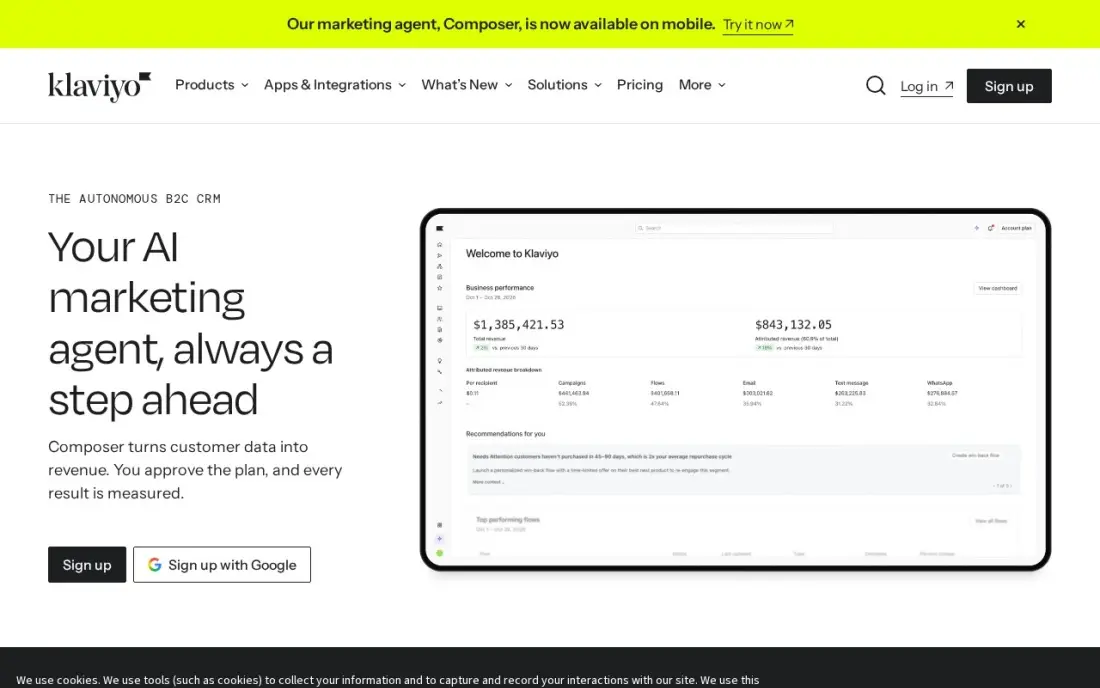
Klaviyo is how most small and mid-size stores personalize first. Flows triggered by browsing, cart and purchase behaviour send each shopper the products they looked at, and the Shopify integration shows which email drove each sale. The free plan covers 250 active profiles and 500 emails a month, the Email plan costs $20 a month for 500 active profiles, and only active profiles count toward the bill.
It personalizes the inbox rather than the storefront, and the bill rises with each profile tier as the list grows. The learning curve is steeper than simpler email tools, and the $1 first-month Marketing offer renews at $25 a month. For a store under enterprise scale, it delivers most of the personalization payoff.
What we like
- Only active profiles count — inactive contacts cost nothing
- Multi-step flows are included on every plan, including the free one
- Deep Shopify integration shows which email actually drove each sale
- SMS credits are included on the free plan
Watch out for
- The bill rises with every profile tier, so a growing list gets dear fast
- The learning curve is steeper than Mailchimp's
- The $1 first-month Marketing offer renews at $25 a month — check the renewal price

Omnisend
Best for: Small stores that want personalized email, SMS and push in one automation at the lowest price
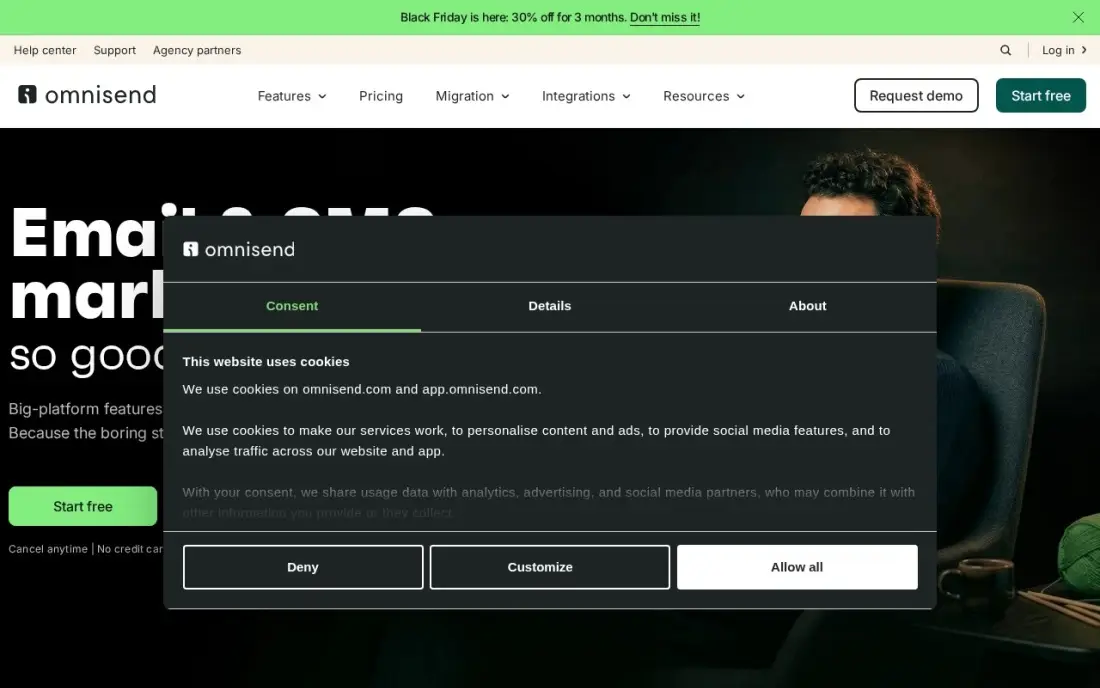
Omnisend personalizes across channels in one workflow: a browse-abandonment series can start with email, follow with SMS and finish with a push notification, each showing the products the shopper viewed. Every feature is included on every plan, the free plan covers 250 contacts and 500 emails a month, and Standard costs $16 a month for 500 contacts and 6,000 emails.
SMS is Pro-only for accounts created after May 4, 2026, and bills as credit packs on top, there is no annual billing discount, and advanced reports wait for Pro at $59 a month. Choose Omnisend for affordable multichannel flows; choose Klaviyo when deeper reporting matters more.
What we like
- Email, SMS and web push run in the same automation workflows, not separate tools
- Every feature is included on every plan, including the free one — no feature gating
- Pre-built ecommerce flows for carts, browse abandonment and post-purchase sequences
- 24/7 live chat and email support on all plans, including the free plan
Watch out for
- SMS is Pro-only for accounts created after May 4, 2026, and is billed separately as credit packs
- No annual billing option, so there is no discount for paying yearly
- Reporting is thinner than Klaviyo, and advanced reports wait for Pro at $59/month

Optimizely One
Best for: Enterprise merchants that want content, experimentation and personalization from one vendor
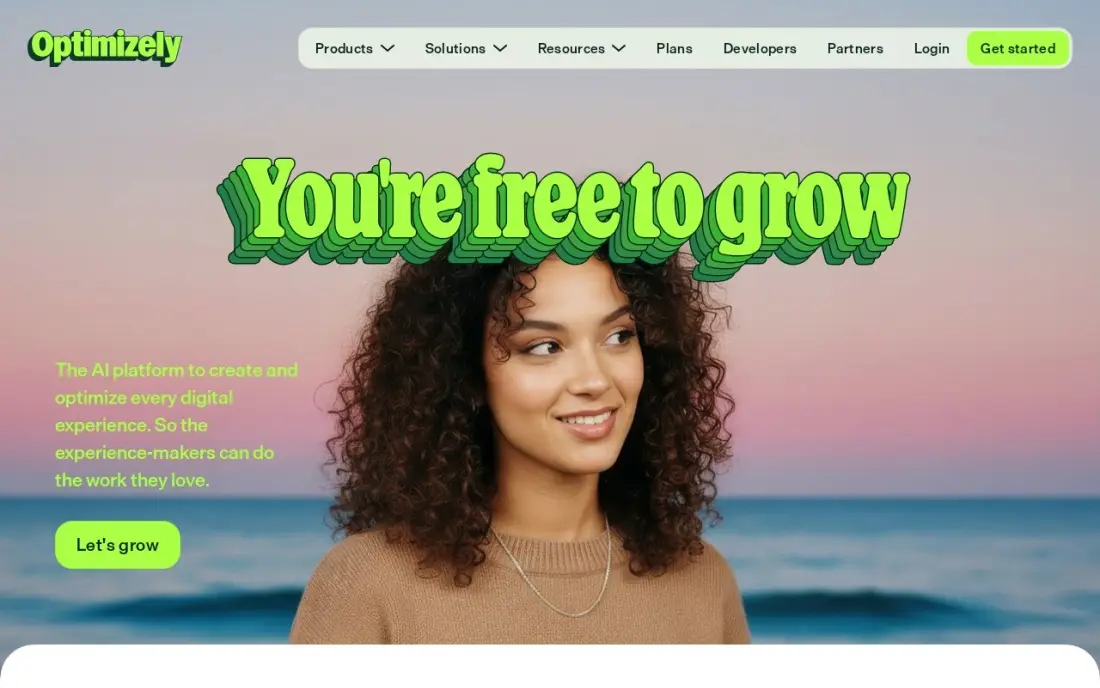
Optimizely One pairs a CMS with built-in A/B testing and personalization, so a merchandising team can publish a landing page, test two versions and personalize it for an audience without buying three products. Content, analytics, commerce and feature management share one login, and editors build pages in a drag-and-drop Visual Builder.
There is no published price; the pricing page builds a custom quote, and implementation most often takes 6 to 12 months. The CMS scores 4.0 on G2, with reviewers noting clunky navigation. Choose it when the business wants one enterprise suite for content and personalization, with the budget and time to implement it.
What we like
- The only DXP here that pairs a CMS with built-in A/B testing and personalization from the same vendor
- Visual Builder lets editors build pages by drag-and-drop, with GraphQL and REST APIs for developers
- Content Marketing Platform, Analytics, Commerce and Feature Management share one login
- Reusable content components and workflows give editors independence from developers
Watch out for
- No published price — the pricing page builds a custom quote from your requirements
- Implementation most often takes 6–12 months, and the CMS alone scores only 4.0 on G2
- Reviewers note navigation can feel clunky and the media library is hard to search

SAP Emarsys
Best for: Retailers on SAP Commerce that want AI recommendations, loyalty and omnichannel campaigns
SAP Emarsys is the personalization engine for retailers in the SAP world. AI product recommendations, predictive send times and Smart Insight analytics are built in, campaigns across email, SMS, push, web and ads run from one audience record, and loyalty, referral and coupon tools are native. For a retailer on SAP Commerce or S/4HANA, customer and order data flow without middleware.
Pricing is quoted annually on audience size and modules, setup is complex, and G2 reviewers flag a long learning curve. Outside an SAP stack, much of the integration advantage disappears. Choose it when SAP already runs the business.
What we like
- AI product recommendations, predictive sending and Smart Insight analytics are built into the platform
- Omnichannel campaigns across email, SMS, push, web and ads run from one audience record
- Loyalty, referral and coupon tooling is native, not a bolt-on, for retail retention programs
Watch out for
- No published prices — annual contracts are quoted by SAP on audience size and modules
- Initial setup is complex, with G2 reviewers flagging a long learning curve and query limitations
- Deepest value comes with SAP Commerce or SAP S/4HANA, so non-SAP stacks get less of the integration payoff

VWO
Best for: Marketing teams that want to personalize and test on-site experiences with a visual editor
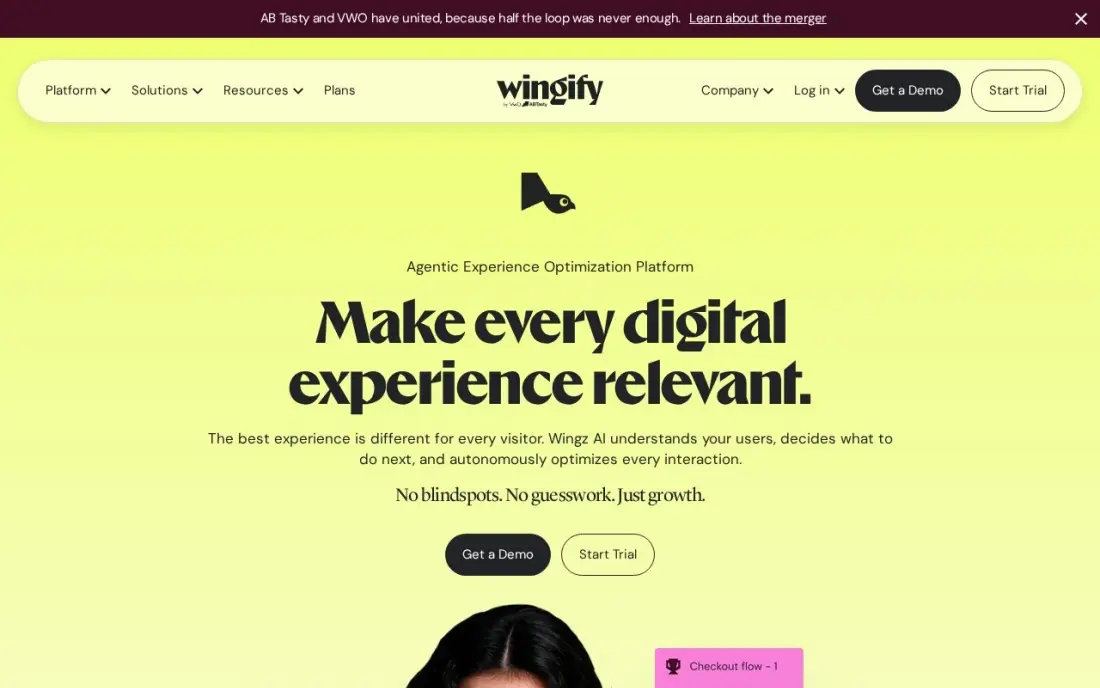
VWO personalizes the storefront through experiments. Its visual editor lets a marketer change a banner, product layout or offer for a segment and measure the result, and heatmaps and session recordings sit in the same suite, so you can see why a variant worked. Every tier includes unlimited experiments, variations and metrics, and Wingz AI analysis is included on Growth.
Since the merger with AB Tasty under Wingify, VWO publishes no prices, every tier is a custom proposal, and pricing scales on monthly active users. The old free tier is gone, replaced by a free trial. Choose VWO when you want personalization backed by testing rather than a recommendation engine.
What we like
- The most mature visual editor here, with heatmaps and session recordings in the same suite
- Wingz AI Core is included on the Growth plan, with AI analysis of campaigns
- 929 G2 reviews, the largest reviewer base of any tool in this list
- Unlimited experiments, variations and metrics on every plan tier
Watch out for
- No published price: every tier is a custom proposal, so budgeting needs a sales conversation
- The old free Starter tier is gone under the Wingify rebrand — evaluation is a free trial, not a free plan
- Pricing scales on monthly active users, so a traffic spike can move the quote

AB Tasty
Best for: European marketing teams that want testing, personalization and recommendations in one suite
AB Tasty bundles testing, personalization, product recommendations and feature flags in one platform built for marketers. The drag-and-drop editor and widget library make variants quick to launch, and EmotionsAI segments visitors by behaviour profile so a hesitant shopper and a decisive one can see different messages. Reviewers praise its support most.
Every plan is a custom proposal priced by traffic, modules and domains, with reported entry prices around €15,000 a year, and reviewers repeatedly call it expensive for small businesses. Choose AB Tasty when a mid-size team wants personalization and testing from one vendor.
What we like
- A drag-and-drop visual editor built for marketers, with a widget library for fast variants
- Bayesian, frequentist and sequential statistics in one engine, with EmotionsAI segmentation
- Testing, personalization, recommendations and feature flags in a single platform
- Support reviewers praise most: fast, flexible and responsive
Watch out for
- No published prices — every plan is a custom proposal priced by traffic and modules
- Enterprise pricing pressure since the January 2026 merger with VWO under Wingify
- Reviewers repeatedly call it expensive for small businesses and startups
The best ecommerce personalization platform shows each shopper the products and offers most likely to matter to them, on the site, in email and on the phone, without a team hand-building every segment. We compared eight platforms across three approaches: ecommerce personalization suites, testing tools that personalize the storefront, and email platforms that personalize by behaviour. Every price below comes from the vendor's own pricing page as checked in November 2026, and we say plainly where a vendor publishes none.
How to choose the best ecommerce personalization platform
- Start with traffic and catalog size. Real-time on-site personalization pays off at high traffic and large catalogs; small stores get more from personalized email.
- Check the data model. A built-in customer data platform that joins products, behaviour and profiles in real time beats nightly imports.
- Decide which channels matter. Site, email, SMS, app and WhatsApp are covered unevenly; match the platform to where your shoppers are.
- Ask how results are measured. Holdout groups and revenue attribution show whether personalization is adding sales or just moving them.
- Budget for the team, not just the licence. Enterprise platforms need someone to build segments, write content and read results.
- Protect SEO. Personalize blocks, not core product content, so search engines still see the full page.
Personalization lifts conversion on traffic you already have. If the store needs more of that traffic, see our guide to SEO for ecommerce, and our SEO audit checks that personalization scripts are not hiding content from Google.
Ecommerce personalization pricing: what you will actually pay
Take a store with 5,000 active email profiles and 100,000 monthly visitors. The email route is the only one with published prices: Klaviyo is free up to 250 active profiles and $20 a month at 500 on the Email plan, rising with each profile tier, and Omnisend is free for 250 contacts and $16 a month on Standard for 500, with no annual discount. At 5,000 profiles both cost more than their entry price, so check the vendor's calculator for your exact list size.
On-site platforms are all quote-only. Bloomreach and Insider One price annual contracts on products, profiles, traffic and messages; SAP Emarsys on audience size and modules; Optimizely One from your requirements; VWO on monthly active users. AB Tasty's entry is reported around €15,000 a year. Ask each vendor for a first-year total including implementation, and compare it with the extra revenue a 1% lift in conversion would bring.
Know the difference: on-site personalization vs email personalization
On-site personalization changes what shoppers see on the store itself: recommended products, banners, search results and offers that depend on behaviour, location or segment. Bloomreach, Insider One, Optimizely One, SAP Emarsys, VWO and AB Tasty do this, usually through a script on every page and a data layer behind it. It reaches every visitor, including first-time ones, but needs traffic to learn and a team to run it.
Email and SMS personalization changes what shoppers receive after they leave: abandoned-cart reminders with the exact products, browse follow-ups and post-purchase cross-sells. Klaviyo and Omnisend do this well at small-store prices, and it often produces the fastest return because it targets shoppers who already showed intent. Most stores should start there and add on-site personalization once traffic justifies it.
Quick comparison: tool type by need
| Buyer | Best pick | Why |
|---|---|---|
| Ecommerce-first enterprise | Bloomreach | Real-time CDP and Loomi AI recommendations, priced by quote |
| One vendor, every channel | Insider One | Web, app, email, SMS and WhatsApp, rated 4.8 on G2 |
| Shopify stores | Klaviyo | Behaviour-based email flows, Email plan $20/month |
| Small multichannel stores | Omnisend | Email, SMS and push in one flow, Standard $16/month |
| Content plus personalization | Optimizely One | CMS, testing and personalization in one suite, priced by quote |
| SAP retailers | SAP Emarsys | AI recommendations and loyalty tied to SAP Commerce |
| Test-led personalization | VWO | Visual editor with heatmaps and recordings, priced by quote |
| Mid-size European teams | AB Tasty | Testing, personalization and recommendations, entry around €15,000/year |
Mistakes to avoid
- Personalizing without a holdout. Keep a control group, or you cannot tell whether personalization added revenue.
- Buying before you have traffic. Recommendation models need data; low-traffic stores rarely see a lift worth an enterprise fee.
- Over-segmenting. Dozens of tiny segments are hard to maintain; start with three or four that matter.
- Ignoring consent. Personalization relies on tracking; make sure consent and privacy settings are handled properly.
- Slowing the page. Heavy personalization scripts can delay rendering; measure page speed before and after.
How we chose
We checked each vendor's own pricing page in November 2026 and recorded the starting price exactly as shown, or noted that the vendor publishes none. We ranked platforms for the most common buyer, a growing online store that wants more revenue from existing visitors and customers, weighing ecommerce focus, channels covered and how results are measured. Ratings come from G2 pages checked on the dates shown in the sources. No vendor paid for a place in this list, and none of the links here are affiliate links.
What to do next
Set up one behaviour-based flow this month, such as browse abandonment with the viewed products, and measure it against a holdout group. If it pays, add on-site recommendations next. When conversion is improving and you want more visitors to personalize for, book a free SEO call.
Frequently asked questions
What is the best ecommerce personalization platform?
Bloomreach and Insider One are the strongest ecommerce-first platforms, with real-time product personalization across channels, but both are quote-only. For most small stores, Klaviyo delivers personalized email flows from $20 a month for 500 active profiles.
How much does an ecommerce personalization platform cost?
On-site platforms such as Bloomreach, Insider One, Optimizely One, SAP Emarsys, VWO and AB Tasty publish no prices and sell annual contracts; AB Tasty's entry is reported around €15,000 a year. Email personalization is cheaper: Klaviyo from $20 a month and Omnisend from $16.
Can small stores personalize without an enterprise platform?
Yes. Behaviour-based email and SMS flows in Klaviyo or Omnisend, plus the product recommendation features built into most store platforms, cover most of the value for a small store. Enterprise platforms pay off at high traffic and large catalogs.
What is the difference between personalization and A/B testing?
A/B testing shows different versions to random visitors to find the best one for everyone. Personalization shows different content to different segments based on who they are or what they did. VWO and AB Tasty do both; Bloomreach and Insider One focus on personalization.
What data does ecommerce personalization need?
Product catalog data, browsing and purchase behaviour, and customer profiles with marketing consent. Platforms with a built-in customer data platform, such as Bloomreach, join these in real time, which keeps recommendations current.
Does personalization affect SEO?
It can if search engines see different content from users. Keep core product and category content the same for everyone, personalize blocks such as recommendations and banners, and avoid hiding main content behind scripts.
Sources we checked (16)
- Bloomreach — www.bloomreach.com (checked November 4, 2026)
- Bloomreach reviews on G2 (checked November 4, 2026)
- Insider One — useinsider.com (checked November 4, 2026)
- Insider One reviews on G2 (checked November 4, 2026)
- Klaviyo — www.klaviyo.com/grow/pricing-packages (checked November 12, 2026)
- Klaviyo reviews on G2 (checked November 12, 2026)
- Omnisend — www.omnisend.com/pricing (checked November 6, 2026)
- Omnisend reviews on G2 (checked November 6, 2026)
- Optimizely One — www.optimizely.com (checked November 12, 2026)
- Optimizely One reviews on G2 (checked November 12, 2026)
- SAP Emarsys — emarsys.com (checked November 4, 2026)
- SAP Emarsys reviews on G2 (checked November 4, 2026)
- VWO — www.vwo.com/pricing (checked November 5, 2026)
- VWO reviews on G2 (checked November 5, 2026)
- AB Tasty — www.wingify.com/pricing (checked November 5, 2026)
- AB Tasty reviews on G2 (checked November 5, 2026)
Make one of these tools?
We re-check this list every quarter. Send a correction, request a review, or ask about a clearly labeled sponsored spot.
Request a listingShamim
Founder of SerpAstra
A full-stack SEO and digital marketer who spends most days on Local SEO for dental practices, AI search visibility and lead generation.
Free SEO and AI visibility audit
Find out what is holding your rankings back
Send us your site. Within 2 business days you get a written audit, an AI visibility check and a short fix list ranked by impact. Free, with no contract attached.
Request my free audit→Related buying guides
 Marketing12 Best Enterprise Marketing Platforms in 2026, Compared12 best enterprise marketing platforms compared on price, channels and AI features. Only 4 publish a starting price — the rest are custom quote.Read guide →
 Marketing12 Best Tools for Visual A/B Testing in 2026 (Free and Paid, Compared)Compare the 12 best tools for visual a/b testing on price, visual editors and free plans, with every price checked on vendor pricing pages on November 5, 2026.Read guide →
 Ecommerce12 Best Email Marketing Platforms for Ecommerce in 2026, Compared12 best email marketing platforms for ecommerce compared on real starting prices, free plans and store automation. Klaviyo $20/month, Brevo $9.Read guide →