
6 Best Apps for Kids to Learn Math in 2026, Compared
Compare the 6 best apps for kids to learn math on grade range, game style, free versions and real yearly cost, with every price checked on official pages.
 Shamim Mia, Founder, SerpAstraLast verified November 4, 20269 min read
We compare pricing pages, documentation and public reviews. We never accept payment for rankings.
Key takeaways
- Khan Academy Kids is the free starting point for ages 2 to 8, with maths alongside reading and no ads, subscription or in-app purchases.
- Prodigy Math is free to play for grades 1 to 8, with all 11 zones in the free Basic version; paid membership adds pets, gear and parent tools from $6.25 a month.
- Beast Academy is the pick for a child who finds school maths too easy, at $99 a year with up to 6 students on a family account.
- SplashLearn, Reading Eggs and ABCmouse bundle maths with reading, so you pay for both subjects; check App Store prices, which vary by plan.
On this page
Quick comparison
| Tool | Best for | Starting price | Free plan |
|---|---|---|---|
| Khan Academy Kids | Families who want free early maths for ages 2 to 8 with no ads or upsells | Free | Yes (free) |
| Prodigy Math | Children in grades 1 to 8 who will practise maths more if it feels like a role-playing game | Free; Core from $6.25/mo | Yes, Basic |
| SplashLearn | Parents of preschool to grade 5 children who want maths and reading games in one subscription | From $69.99/yr | Free trial |
| Beast Academy | Children aged 6 to 13 who find school maths too easy and need real problem solving | $99/yr | Demo only |
| Reading Eggs | Parents who want a structured maths and reading programme for ages 2 to 13 under one plan | $13.99/mo | No (30-day trial) |
| ABCmouse | Parents of a 2- to 8-year-old who want maths inside a full early-learning path | $14.99/mo | Yes (Basic tier) |
Make one of these tools?
We re-check this list every quarter. Send a correction, request a review, or ask about a clearly labeled sponsored spot.
Request a listingThe best apps for kids to learn math

Khan Academy Kids
Best for: Families who want free early maths for ages 2 to 8 with no ads or upsells
Khan Academy Kids is the first maths app to try because it costs nothing: more than 4,000 activities, videos and books with no ads, no subscription and no in-app purchases. Counting, shapes, early addition and number sense sit beside reading and social-emotional lessons for ages 2 to 8, built with the Stanford Graduate School of Education and aligned to Head Start and Common Core standards.
A parent dashboard shows which skills your child practised and where they need more work. The limit is depth: maths is one strand of a broad curriculum, so a child who is racing ahead in numbers will want a dedicated maths app by the end of first or second grade.
What we like
- Completely free for families: 4,000+ activities, videos and books with no ads, no subscriptions and no in-app purchases
- Built with the Stanford Graduate School of Education and aligned to Head Start and Common Core standards
- Covers reading, phonics, math and social-emotional skills in one app for ages 2 to 8
- Parent dashboard shows what the child practiced and which skills need more work
Watch out for
- Maths is one subject among several, so it is less focused than a maths-only app
- No offline mode for the full library on every device
- School reporting costs $5 per student a year for districts, not for families

Prodigy Math
Best for: Children in grades 1 to 8 who will practise maths more if it feels like a role-playing game
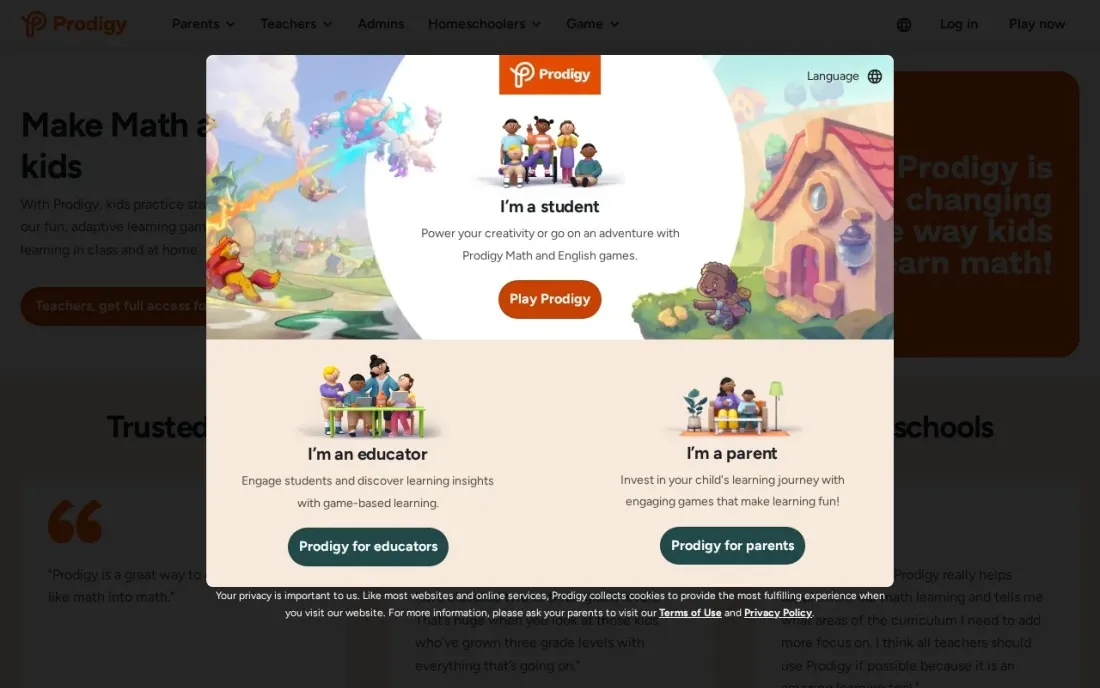
Prodigy Math turns practice into a fantasy game: a child customises a wizard, collects pets and explores zones, answering maths questions to progress. It covers grades 1 to 8, and Prodigy says the game is free to play, with all 11 zones, hundreds of quests and the standard maths content in the free Basic version. Parents get a free account with a dashboard, monthly report cards and weekly progress updates.
Membership is about the game, not the maths. Core, from $6.25 a month on Prodigy's blog, adds evolvable pets, members-only gear and areas plus parent goals and printable practice sheets; Plus starts at $8.33 a month, and Ultra costs about $118 a year. Prodigy's membership page itself shows no prices, so confirm at checkout.
What we like
- Free to play, with all 11 zones and hundreds of quests in Prodigy Basic
- Covers maths for grades 1 to 8, so one game lasts through elementary and middle school
- Free parent account with a dashboard, monthly report cards and weekly progress updates
Watch out for
- Paid membership mostly unlocks pets, gear and members-only areas, so children may nag to upgrade
- The membership page shows no prices; figures come from Prodigy's blog and are listed as starting prices
- The game wrapper means a lot of screen time is spent on play rather than maths

SplashLearn
Best for: Parents of preschool to grade 5 children who want maths and reading games in one subscription
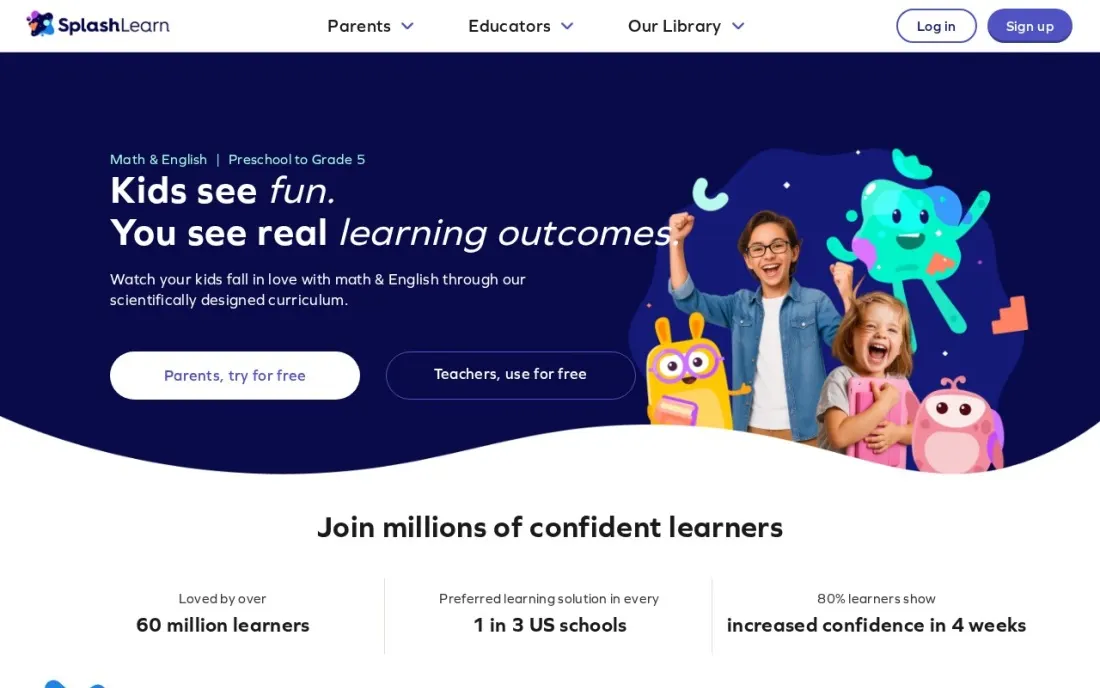
SplashLearn is a game-based curriculum for ages 2 to 11 that runs from counting and addition in preschool to multiplication, fractions, decimals and geometry by grade 5, with reading and phonics in the same app. Lessons are short games with rewards, which suits a child who resists worksheets, and the free trial gives full access before you pick a plan.
Pricing is the weak spot. The US App Store lists Membership Yearly at $69.99 to $89.99 and Membership Monthly at $7.99 to $11.99, with no explanation of the differences, and the website shows prices only after you sign in. Monthly and Annual plans cover one child; the Family Annual plan covers up to three.
What we like
- Maths curriculum from preschool to grade 5, covering counting through fractions, decimals and geometry
- Reading, phonics and decodable books are included in the same app
- Family Annual plan covers up to three children
- Free trial gives full access before you choose a plan
Watch out for
- The App Store lists the same plan name at several prices, from $7.99 to $11.99 a month
- SplashLearn's own help page shows no prices; you see them only after signing in
- Monthly and Annual plans cover one child; siblings need the Family Annual plan

Beast Academy
Best for: Children aged 6 to 13 who find school maths too easy and need real problem solving
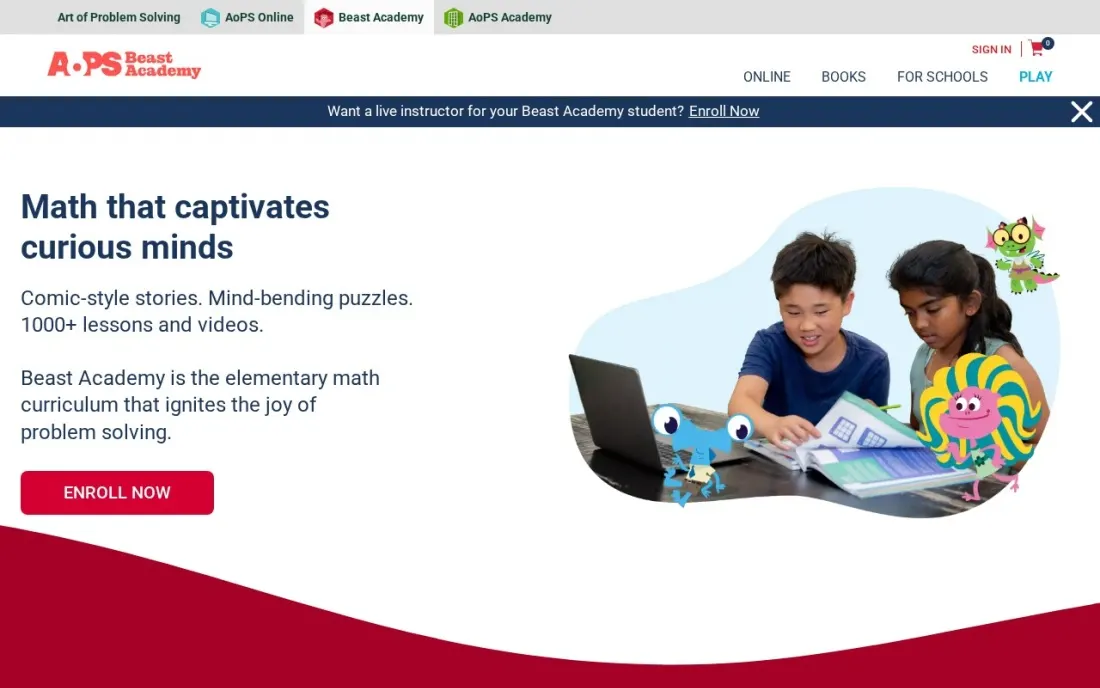
Beast Academy is the maths app for a child who is bored by easy questions. Its online lessons and challenges run across five levels for ages 6 to 13 and favour puzzles over drills, so a child learns to reason through a problem rather than recall a fact. Optional live classes with instructors run for Levels 2 to 5.
Beast Academy Online costs $99 a year, and each extra student costs $64.99 a year, with up to six subscriptions on a family account. There is no free version, only a demo, but you get a full refund if you cancel within 14 days of the first purchase. A child who struggles with arithmetic should build confidence elsewhere first.
What we like
- Challenging online maths lessons and challenges in five levels for ages 6 to 13
- Family accounts hold up to 6 student subscriptions
- Full refund if you cancel within 14 days of the first purchase
- Optional live online classes with instructors for Levels 2 to 5
Watch out for
- No free version; the demo is the only way to try it before paying
- The monthly price for a first student was not shown on the enrolment page when we checked
- Harder than most school maths, so a struggling child may find it frustrating

Reading Eggs
Best for: Parents who want a structured maths and reading programme for ages 2 to 13 under one plan
Reading Eggs is known for reading, but its US entry plan is Reading & Math, so maths lessons come with every subscription. A placement test puts each child at the right level, the programme covers ages 2 to 13, and up to four children share one subscription with their own profiles. Every plan starts with a 30-day free trial, which is long enough to see whether the maths lessons stick.
Reading & Math costs $13.99 a month, or $99.99 a year billed annually, and there is no maths-only plan, so it is best value for a family that wants both subjects. Twelve monthly payments cost $167.88, so buy the annual plan once the trial has proved its worth.
What we like
- The US entry plan is Reading & Math, so maths lessons come with every subscription
- Covers ages 2 to 13, so one subscription grows from preschool maths into the later school years
- Up to 4 children on one subscription, each with their own profile and placement test
- KidSAFE certified, with a 30-day free trial on every plan
Watch out for
- The entry plan bundles math with reading; there is no maths-only plan on the US pricing page
- Monthly billing at $13.99 is near the top of this list; the value is in the annual plan
- Homeschool Max at $41.90 a month is a separate, much pricier tier for full homeschooling

ABCmouse
Best for: Parents of a 2- to 8-year-old who want maths inside a full early-learning path
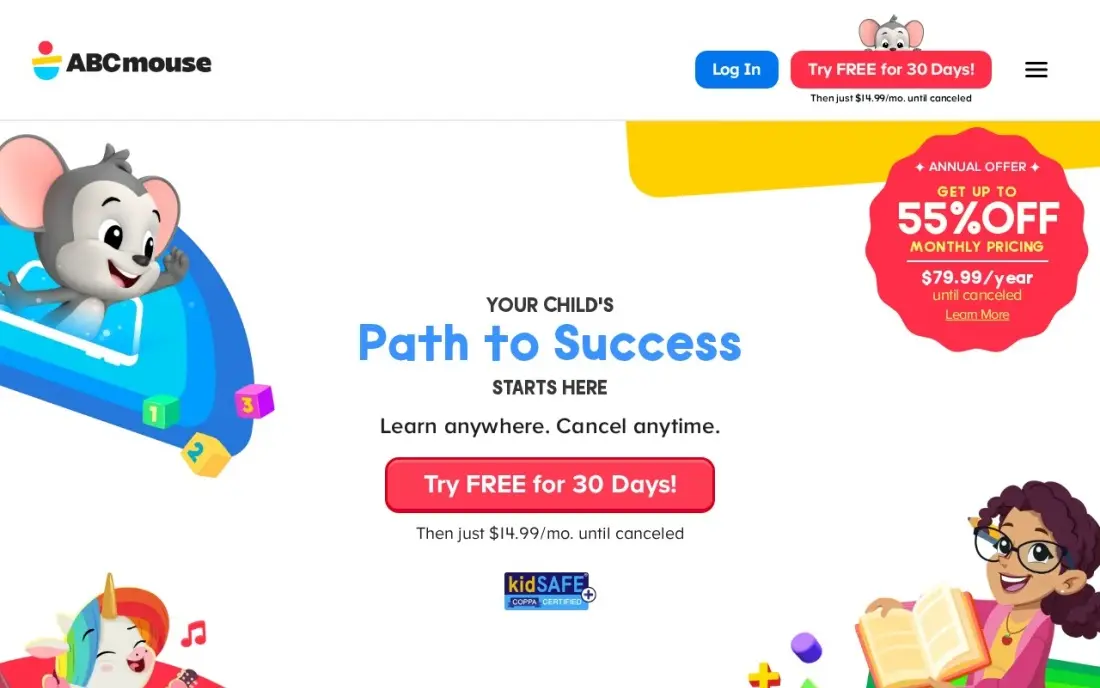
ABCmouse puts maths inside a full early-learning path of 13,000+ activities across reading, maths, science, art and music for ages 2 to 8. Its personalised Math Learning Path adjusts to the child's level, and one subscription covers up to three child profiles with progress tracking for parents. The app is KidSAFE and COPPA certified with no third-party ads.
Monthly billing costs $14.99, the highest monthly rate here, and the $45 first-year annual offer renews at $79.99 a year, so the second year costs more. The free Basic tier allows 10 activities a day, enough to test it. Choose it when you want one subscription for several subjects rather than a maths specialist.
What we like
- 13,000+ activities across reading, math, science, art and music for ages 2 to 8
- Personalized Reading and Math Learning Paths that adjust to the child's level
- Up to 3 child profiles on one subscription, with progress tracking for parents
- KidSAFE and COPPA certified, with no third-party ads in the paid app
Watch out for
- Monthly billing at $14.99 is the most expensive monthly rate in this list
- The $45 first-year annual price renews at $79.99 a year, so the second year costs more
- Maths sits inside a broad curriculum, so a child who only needs maths pays for subjects they will not use
The best apps for kids to learn math make practice feel like play without hiding the maths, show parents what their child actually did, and cost less than a tutor. We compared six apps on grade range, game style, free versions and the real yearly cost, from free early-learning apps to a challenging curriculum for gifted children. Every price below was checked on the vendor's own page, blog or app store listing in November 2026.
How to choose the best apps for kids to learn math
- Match the grade range. Khan Academy Kids and ABCmouse stop around age 8, SplashLearn at grade 5, Prodigy Math runs grades 1 to 8 and Beast Academy ages 6 to 13.
- Decide how much game you want. Prodigy wraps questions in a fantasy game; Beast Academy is almost all maths. A reluctant child may need the game, a keen one will find it a distraction.
- Check what the free version really includes. Khan Academy Kids is free in full and Prodigy's Basic version keeps all the maths; other apps here offer only a trial or a daily cap.
- Count the children. Beast Academy holds six students on a family account, Reading Eggs four, ABCmouse three and SplashLearn's Family Annual plan three.
- Look for a real parent view. Khan Academy Kids and Prodigy include free parent dashboards, and Prodigy adds monthly report cards.
- Avoid paying for subjects you will not use. SplashLearn, Reading Eggs and ABCmouse bundle maths with reading.
If you run a maths tutoring centre or an after-school class and want local parents to find you, our local SEO service covers Google Maps visibility, and the free Google review link generator helps happy parents leave a review.
Apps for kids to learn math pricing: what you will actually pay
Take one child aged seven using an app for a full school year. Khan Academy Kids costs $0, and Prodigy Math's free Basic version costs $0. Beast Academy Online costs $99 for the year. Reading Eggs costs $99.99 a year billed annually, against $167.88 if you pay $13.99 a month. ABCmouse costs $45 for the first annual year, then $79.99. SplashLearn's App Store listing shows Membership Yearly from $69.99 to $89.99, depending on the plan shown to you.
For two children the sums shift. A second Beast Academy student adds $64.99 a year, bringing the family to $163.99. Reading Eggs and ABCmouse cover extra children on the same plan, and SplashLearn needs its Family Annual plan for siblings. Prodigy membership, if you choose it, starts at $6.25 a month for Core on Prodigy's blog, and Ultra costs about $118 a year, but none of that is needed for the maths itself.
Know the difference: game-based practice vs structured curriculum
Game-based apps such as Prodigy Math and SplashLearn wrap questions in a story, a reward loop or a character. They are good at getting a reluctant child to answer many questions, and they keep a child coming back. The risk is that time goes on battles, pets and menus instead of maths, so check the parent report for questions answered, not minutes played.
A structured curriculum such as Beast Academy or Reading Eggs teaches topics in order, with lessons that explain a concept before practising it. It suits a child who needs to understand why a method works, a homeschooling family, or a parent who wants to fill a specific gap. Many families use both: a curriculum app for the lesson and a game app for extra practice.
Quick comparison: tool type by need
| Buyer | Best pick | Why |
|---|---|---|
| Free early maths, ages 2 to 8 | Khan Academy Kids | No ads, no subscription, parent dashboard |
| Reluctant child, grades 1 to 8 | Prodigy Math | Free fantasy game for maths practice |
| Maths and reading games to grade 5 | SplashLearn | From $69.99/year on the App Store, family plan for 3 |
| Gifted child, ages 6 to 13 | Beast Academy | Challenging curriculum, $99/year, up to 6 students |
| Structured maths plus reading | Reading Eggs | $99.99/year for Reading & Math, up to 4 children |
| Maths inside a full curriculum | ABCmouse | 13,000+ activities, $45 first year then $79.99 |
Mistakes to avoid
- Paying to unlock rewards rather than maths. Prodigy's free Basic version already includes the maths; membership adds pets and gear.
- Choosing an app the child has outgrown. Khan Academy Kids and ABCmouse stop around age 8, so an older child needs SplashLearn, Prodigy or Beast Academy.
- Giving a struggling child the hardest app. Beast Academy is designed to stretch; a child who is behind needs confidence and practice first.
- Forgetting renewal prices and trial dates. ABCmouse's $45 first year renews at $79.99, and Beast Academy's refund window closes 14 days after the first purchase.
- Measuring minutes instead of answers. Check the parent report for questions answered and skills mastered, not time on screen.
Related comparisons: Apps for Kids to Learn English · Learn to Read Apps for Kids · Apps for Kids · Apps to Learn English
How we chose
We checked each vendor's own pricing page, blog, help centre or app store listing in November 2026 and recorded prices exactly as shown, including where a vendor lists only a starting price or hides prices until sign-in. We grouped the apps by how they teach — free early learning, game-based practice or structured curriculum — and ranked them for the most common buyer, a parent of a child aged 4 to 10. None of these apps had a review-site score we could verify for this topic, so we list no ratings. No vendor paid for a place in this list, and none of the links here are affiliate links.
What to do next
Start your child on Khan Academy Kids or Prodigy's free version for two weeks and check the parent dashboard each weekend. If they are flying through it, try the Beast Academy demo; if they are struggling, try a structured trial from Reading Eggs. If you run a tutoring business and want more local parents to call, book a free visibility check.
Frequently asked questions
What is the best app for kids to learn math?
Khan Academy Kids is the best free start for ages 2 to 8. Prodigy Math is the most popular game-style option for grades 1 to 8 and is free to play, and Beast Academy at $99 a year is the best choice for a child who needs harder problem solving.
Is there a free math app for kids?
Yes. Khan Academy Kids is free with no ads, subscription or in-app purchases, and Prodigy Math's free Basic version includes all 11 zones and the standard maths content. ABCmouse has a free tier of 10 activities a day, and SplashLearn and Reading Eggs offer free trials.
How much do math apps for kids cost?
On published prices, Beast Academy Online costs $99 a year, Reading Eggs $99.99 a year with reading included, ABCmouse $45 for the first year and then $79.99, and SplashLearn from $69.99 a year on the App Store. Prodigy membership starts at $6.25 a month on Prodigy's blog, and Khan Academy Kids is free.
Which math app is best for a gifted child?
Beast Academy is built for children who find school maths too easy. Its online lessons and challenges push reasoning across five levels for ages 6 to 13, and a family account holds up to six students.
Is Prodigy Math worth paying for?
Usually not for the maths alone. Prodigy says the free Basic version includes all 11 zones and the standard maths content; membership mainly adds pets, gear, members-only areas and extra parent tools. Pay if those rewards keep your child practising, not to unlock more maths.
How much screen time should a math app take?
Short, regular sessions work better than long ones. Fifteen to twenty minutes a few times a week is enough for most young children; check the parent dashboard to make sure the time goes on questions rather than menus and rewards.
What is the best app for kids to practise math facts?
Prodigy Math and SplashLearn suit regular, repeated practice best. Prodigy wraps maths questions in a role-playing game for grades 1 to 8, and the free Prodigy Basic keeps all 11 zones and the standard maths content. SplashLearn's curriculum runs from counting through fractions, decimals and geometry up to grade 5, with a full-access free trial. For ages 2 to 8, Khan Academy Kids is completely free.
What are the most fun math apps for kids?
Prodigy Math is the most game-like: questions sit inside a fantasy role-playing game with quests across 11 zones, which helps a reluctant child practise more. SplashLearn and ABCmouse turn maths into games and activities for younger children, and Khan Academy Kids adds videos and books with no ads. A keen child may find the game a distraction and do better with Beast Academy, which is almost all maths.
Sources we checked (6)
- Khan Academy Kids — www.khanacademy.org/kids/pricing (checked November 4, 2026)
- Prodigy Math — www.prodigygame.com/main-en/blog/is-prodigy-membership-worth-it (checked November 16, 2026)
- SplashLearn — apps.apple.com/us/app/id672658828 (checked November 16, 2026)
- Beast Academy — beastacademy.com/online/enroll (checked November 16, 2026)
- Reading Eggs — www.readingeggs.com/pricing (checked November 4, 2026)
- ABCmouse — www.abcmouse.com/learn/abcmouse/abcmouse-vs-homer/11387 (checked November 4, 2026)
Make one of these tools?
We re-check this list every quarter. Send a correction, request a review, or ask about a clearly labeled sponsored spot.
Request a listingShamim
Founder of SerpAstra
A full-stack digital marketer and SEO strategist covering technical and local SEO, AI search visibility, paid ads and lead generation for local businesses, e-commerce brands and SaaS teams.
Free SEO and AI visibility audit
Find out what is holding your rankings back
Send us your site. Within 2 business days you get a written audit, an AI visibility check and a short fix list ranked by impact. Free, with no contract attached.
Request my free audit→Related buying guides
 Education & E-Learning10 Best Learning Apps for Kids: Free Picks for 2026, ComparedCompare the 10 best learning apps for kids: free picks rated on ads, age range and subjects, with free tiers and paid upgrades checked on official pages.Read guide →
 Education & E-Learning10 Best Learn to Read Apps for Kids in 2026: Free and Paid Apps RankedCompare the 10 best learn to read apps for kids for ages 2 to 8 on price, free plans and phonics teaching, with every price checked November 4, 2026.Read guide →
 IT Security11 Best Cross-Platform Parental Control Apps in 2026, ComparedCompare the 11 best cross-platform parental control apps on price, device coverage and monitoring, with every price checked November 7, 2026.Read guide →